
Nationwide contest empowers girls’ speech
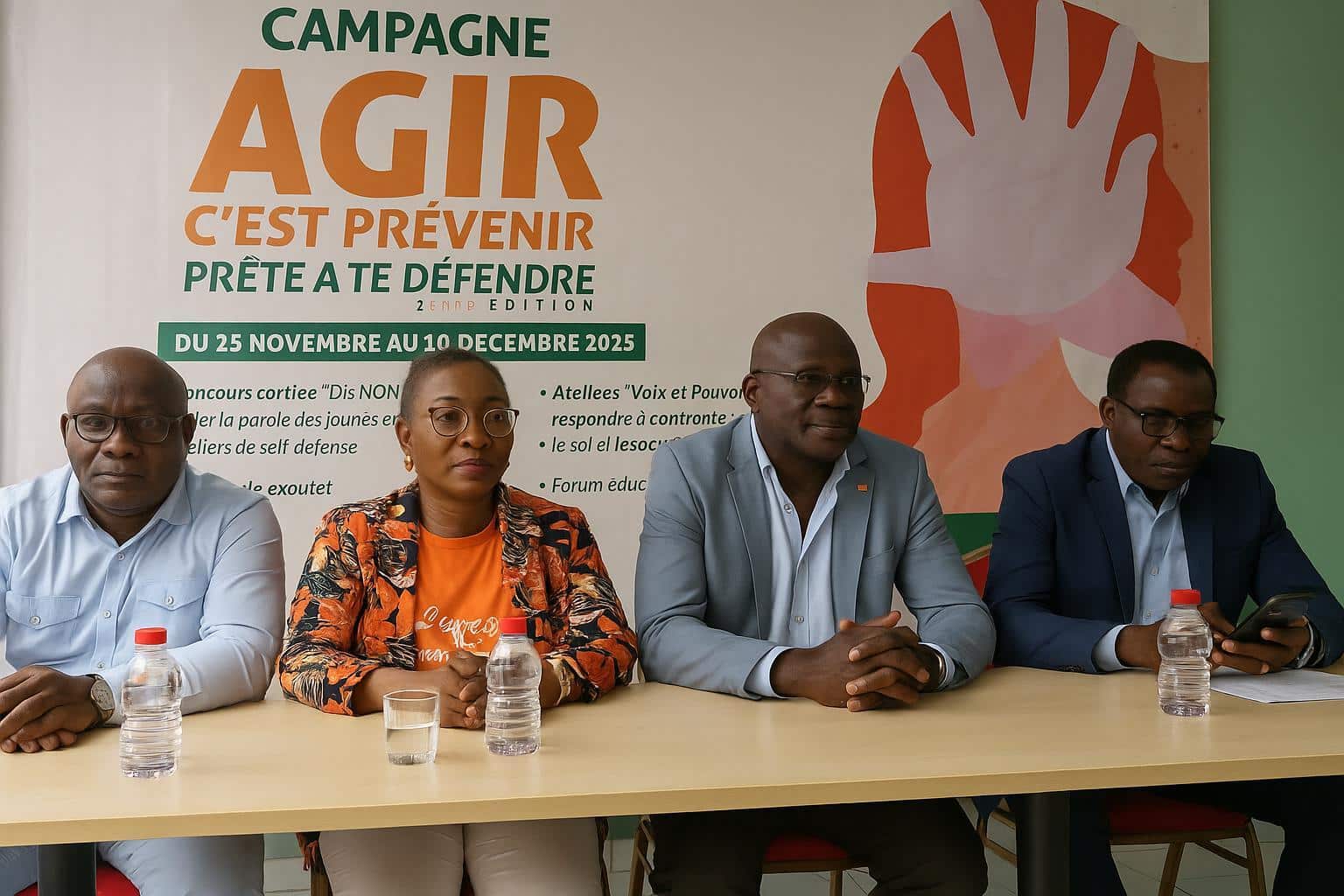
Brazzaville-based association Oxygène unveiled the national school contest “Dis No With Your Words” on 28 October, inviting girls from primary to lower secondary classes to craft texts that denounce gender-based violence. The initiative opens the second edition of Oxygène’s campaign “Act to Prevent, Ready to Defend,” scheduled 25 November – 10 December.
Aligning with global 16 Days campaign
The chosen dates coincide with the United Nations’ annual 16 Days of Activism against Gender-Based Violence, a period when institutions worldwide spotlight prevention. Oxygène hopes the synchrony will draw additional media attention and funding partners while keeping the conversation anchored in Congolese realities.
Digital gateway for nationwide reach
Participants register through a dedicated Facebook page and upload their work as a poem, slam piece or free text. The online model, first tested in 2022 at city level, removes travel costs for pupils in remote departments such as Likouala or Niari, according to contest coordinator Grâce Koumba.
Themes rooted in lived experience
Entries must tackle physical, verbal, sexual or psychological abuse faced by women and girls. “We want authentic voices; pupils can draw on stories heard at home or in their neighborhoods,” said Oxygène president Mme Zara during the press briefing, stressing that teachers may guide but not edit the submissions.
Expert jury steers selection
Writer and critic Constant Ferréol Ngassakys chairs a five-member jury composed of linguists, journalists and child-rights advocates. Over three rounds they will shortlist 30 texts, then crown three national laureates in Brazzaville on 9 December. Winning pieces will be performed live and later published in a booklet.
Workshops blend body and voice
Beyond writing, the programme offers three practical workshops. A self-defense module introduces martial-arts basics to help girls assess risk and break holds without escalating force. A second session, “Voice and Power,” trains participants to set verbal boundaries, using breathing and stance borrowed from theater exercises.
Training those who protect and report
The third workshop gathers journalists, psychologists, physicians, jurists and police officers to examine referral pathways. “A hotline is useless if the first responder doubts the victim,” noted psychologist Dr Inès Ndinga, advocating consistent protocol between schools, clinics and gendarmerie posts.
Government policy frame supportive
Congo-Brazzaville adopted a dedicated law against gender-based violence in 2019 and, this year, the Ministry of Gender issued new guidelines for school clubs. Oxygène’s project complements those efforts without duplicating them, said ministry director Jean-Baptiste Okoumba, who pledged logistical support in rural districts.
Education experts welcome creative angle
Curriculum specialist Élodie Mpassi believes artistic expression lets pupils process trauma safely. “A verse can say what a police form cannot,” she argued. Teachers in Pointe-Noire plan to incorporate the contest into French-language lessons, giving assignments credit points toward term grades.
Digital safety considerations
Organisers have limited the Facebook page to moderated posts after 8 p.m. and disabled public comments to protect minors from trolling. “We rely on volunteer IT officers who rotate in four-hour shifts,” said Oxygène’s tech lead Roland Mabiala, citing lessons learned from last year’s pilot.
Funding the initiative
Seed money comes from local businesses, including a Pointe-Noire shipping firm that donated printing for certificates. Oxygène is negotiating with two telecom operators for data packages to help contestants upload videos of live recitals, a feature planned for the semi-finals.
Voices from classrooms
At Lycée Chaminade in Brazzaville, 14-year-old candidate Christelle Makita rehearses a slam verse on street harassment. “If my younger sister hears me on stage, she will know silence is not mandatory,” she said, echoing Oxygène’s motto that words can shield as much as fists.
Regional echoes in Central Africa
Similar school-based contests emerged recently in Cameroon and Gabon. Researchers at the University of Yaoundé II link the trend to increased internet penetration and a youth demographic eager for spoken-word culture. Oxygène’s leaders hope regional partners will co-host a CEMAC-wide final in 2025.
Measured expectations
Activists caution that empowerment is a long process. “A poem will not stop every assault, yet it can shift norms over time,” reflected juror Ngassakys. He counts on local radio stations to broadcast winning texts in vernacular languages, broadening their reach beyond classrooms.
Timeline to finale
Submissions close on 20 November. Preliminary results will be posted online five days later, allowing appeals before semi-final readings in regional capitals. The national award gala on 9 December will dovetail with Human Rights Day activities, giving winners a larger audience.
Looking ahead
Oxygène plans to turn the contest into an annual fixture, expanding to boys as allies in 2024. “Change needs chorus, not solo,” Mme Zara said. For now, the association counts each stanza as a ripple against gender-based violence, travelling from classroom desks to community dialogue circles.