
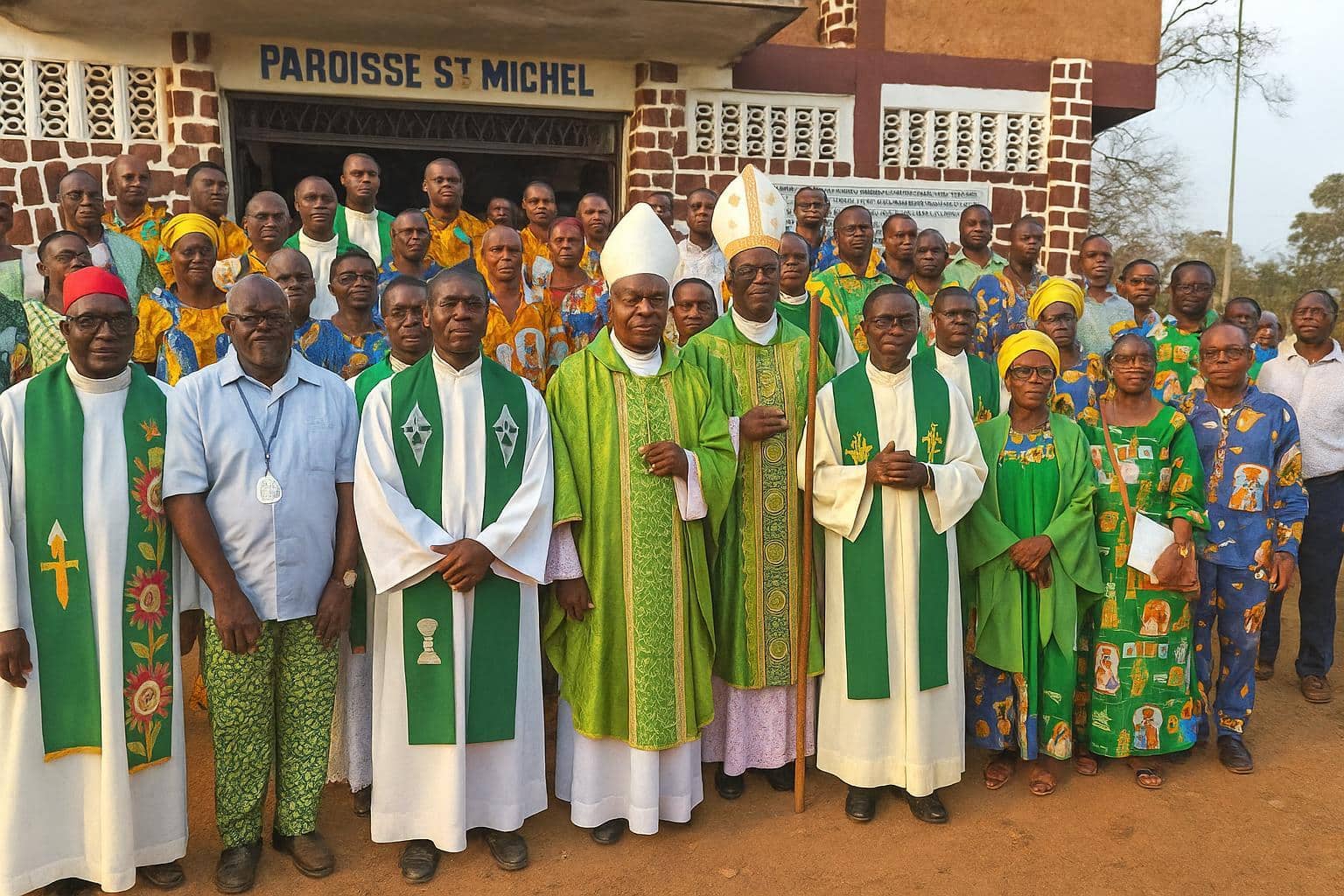
National Charismatic Assembly in Madingou
On 4-6 November 2025, Saint-Michel parish in Madingou, Nkayi diocese, became a focal point for the Catholic Charismatic Renewal in Congo. Delegations from across the country gathered for an elective national assembly that culminated in the creation of the Service national de communion, or SNC.
The new body aligns local charismatic groups with guidelines issued by the Conference of Catholic Bishops of Congo and the international CHARIS structure, while operating under the umbrella of the National Council for Lay Apostolate. Organisers say the move offers a single, recognised channel for coordination, training and evangelisation.
Not every diocese could attend; Kinkala, Gamboma and Impfondo sent no delegates. Yet the organisers described the turnout as representative enough to reflect national diversity, pointing to the presence of diocesan chaplains, elected lay leaders and thematic commission members who voiced the needs of parishes both urban and rural.
Bishops Provide Visible Support
Two senior prelates made the journey, underscoring episcopal backing for the Renewal. Archbishop Abel Liluala of Pointe-Noire, who oversees the movement at national level, sat beside Bishop Daniel Mizonzo of Nkayi during plenary sessions, celebrating daily Mass and joining closed-door discernment circles.
Their presence, noted repeatedly from the lectern, was read by participants as a sign that local initiatives remain linked to the wider pastoral vision of Congo’s bishops. One organiser said the hierarchy’s concern and encouragement help ensure that charismatic spirituality blossoms in communion with diocesan structures and parish life.
Transparent Vote Brings New Leadership
The assembly’s pivotal moment arrived with the election of the SNC executive. The National Lay Apostolate Council supervised ballots under episcopal guidelines numbered 015/CEC/CELA/CNALC/BENAL-2024, aiming for what organisers called a credible, peaceful and consensual process rooted in Church law rather than political contest.
When the votes were counted, lay leader Georgette Makosso emerged as national shepherd. She will be assisted by eleven collaborators, including a full-time coordinator, a secretary and counsellors for liturgy, evangelisation, charisms, youth, ecumenism and solidarity, giving the executive both breadth and clear portfolios.
The team’s mandate spans three years, after which new elections are expected. Having an end-date, organisers stressed, keeps leadership accountable and prevents stagnation. A modest but symbolic commissioning rite, held before the final benediction, handed each officer a small cross, a calendar and a diocesan contact list.
Three-Year Mandate and Priorities
First on the agenda is drafting a national activity calendar that dovetails with parish cycles and the episcopal conference’s pastoral year. By mapping dates in advance, the SNC hopes to avoid overlapping events and to channel resources toward dioceses that struggle to host formation weekends.
Another core task involves revitalising local charismatic groups in dioceses described as in difficulty. Support teams will travel, when invited, to help restart prayer meetings, accompany choirs and provide teaching materials that reflect Congo’s linguistic diversity. Funding is expected to rely mainly on voluntary contributions and parish collections.
The SNC also intends to foster a synodal spirit among parish cells, urging leaders to consult members before opening new ministries. Organisers insist that this horizontal approach will cultivate deeper fraternity, ensure charisms are discerned together and keep local initiatives anchored in communion.
Annual evaluation meetings are expected every August, allowing diocesan delegates to review progress, highlight funding gaps and share testimonies of local breakthroughs. Organisers say the feedback loop will help the national team adjust priorities without waiting until the end of the three-year term.
Prayer, Training and Fellowship
Beyond formal sessions, participants immersed themselves in shared liturgies, silent adoration and extended praise times led by diocesan choirs. Many described these moments as the true engine of the assembly, allowing discernment to rise from worship rather than from strategic documents alone.
Workshops offered refreshers on spiritual gifts, music ministry and conflict mediation, each facilitated by chaplains who drew on pastoral experience rather than academic theory. Short breaks, organised around local cassava dishes, gave lay leaders from Brazzaville, Pointe-Noire and inland towns space to exchange phone numbers and mentoring tips.
A Signal for Diocesan Renewal
As the closing Mass began, Bishop Mizonzo reminded the congregation that communion begins in small circles and then radiates outward. While no official communiqué was issued, attendees understood his homily as a clear invitation to act as ambassadors of unity once they returned to their parishes.
For observers, the creation of the SNC signals that Congo’s charismatic current has matured institutionally while preserving its spontaneous worship style. The challenge, several chaplains noted, will be to keep administrative work light enough so that prayer, evangelisation and service remain the movement’s unmistakable hallmarks.
The next test will come when the SNC publishes its inaugural calendar and dispatches support teams early next year. For now, participants echo the same sentiment carried in every recessional hymn: the conviction that careful organisation can serve as a springboard for renewed faith and social cohesion nationwide.