
Congo Mourns Firmin Ayessa, Senior Official and Former Prime Minister
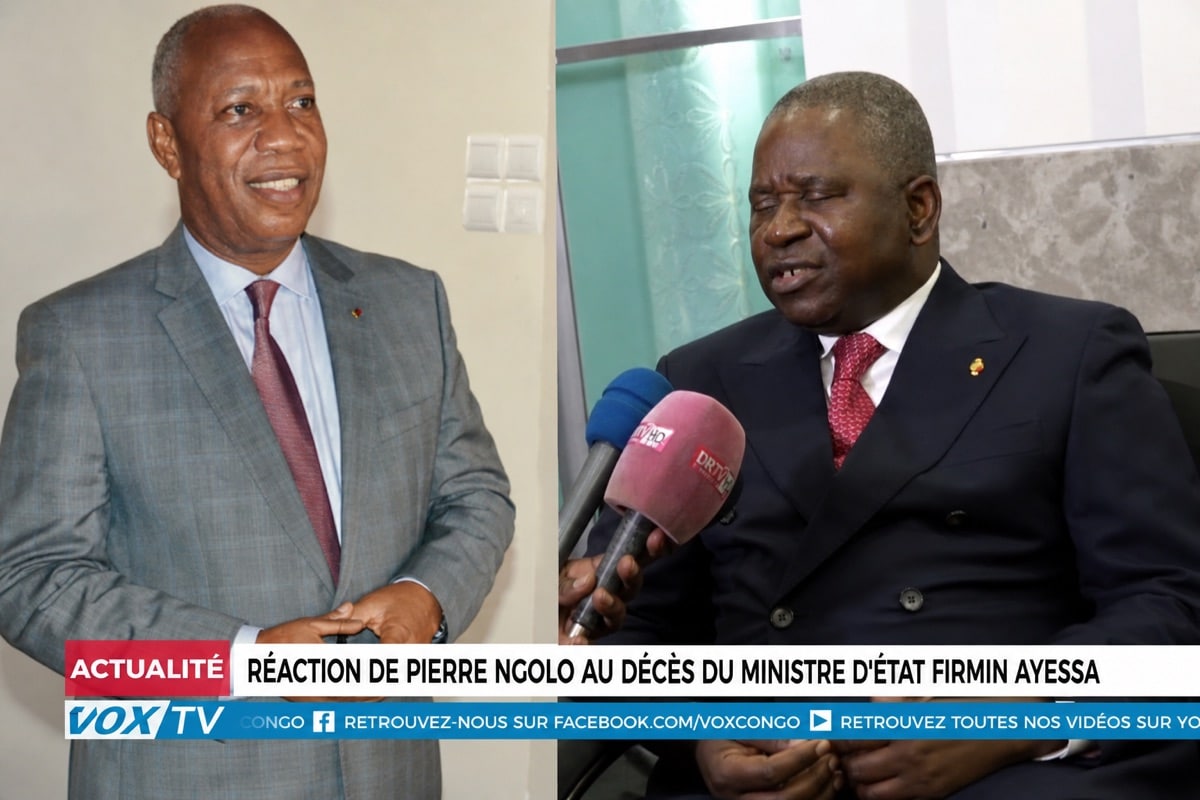
The death of Firmin Ayessa in Istanbul drew an immediate response from the highest levels of the Congolese state. Pierre Ngolo, president of the Senate of the Republic of Congo, was among the first senior figures to express public condolences following the passing of the minister of state.
Ayessa’s death cut short a career that had carried him through some of the most consequential institutional roles in Congo-Brazzaville, including a term as Prime Minister. His standing within the political establishment meant that tributes came not only from elected officials but from academic circles as well.
A Figure Who Moved Between Politics and Administration
Firmin Ayessa accumulated responsibilities across decades of Congolese public life. His passage through the office of Prime Minister placed him at the apex of the executive branch at a period when the country was navigating significant political and economic transitions. Following that tenure, he returned to ministerial functions, remaining a presence in the governance architecture that Sassou-N’Guesso built over successive mandates.
The breadth of tributes that followed his death — drawing responses from politicians across the spectrum and from university figures — reflected a profile that extended beyond the partisan loyalty his positions might suggest. Those who knew him described a man whose administrative competence earned him a certain institutional respect that outlasted the particular roles he occupied.
Istanbul as the Place of Death
The fact that Ayessa died in Istanbul rather than on Congolese soil added a particular texture to the mourning. Medical evacuations and health treatments abroad are not unusual for senior Congolese officials, and his presence in Turkey at the time of his death followed a pattern familiar across the region’s political class.
Official announcements did not specify the circumstances of his death in detail, and condolences focused on his service to the Congolese state rather than on the specifics of his final days.
Senate President Ngolo’s Response
Pierre Ngolo, who presides over the upper house of the Congolese parliament, framed his condolences in terms that acknowledged Ayessa’s long service to the Republic. The Senate’s institutional voice carries particular weight in moments of national mourning, and Ngolo’s response positioned the upper chamber as a place of memory for a generation of officials who shaped the country’s contemporary institutions.
Several other political personalities and academics followed with their own tributes, building a layered public remembrance that unfolded across official channels and civil discourse alike.
A Generation Defined by Endurance in Office
Ayessa belonged to a cohort of Congolese officials who navigated the country’s post-conflict transition and the long consolidation of power that followed. That generation operated in conditions of institutional fragility that shaped their administrative instincts and their relationship with the state.
His passing marked the loss of one of the senior figures who embodied that experience — a link to a period of Congolese political history that shaped the structures through which the country is governed today.