
A Symbolic Meal With Strategic Resonance
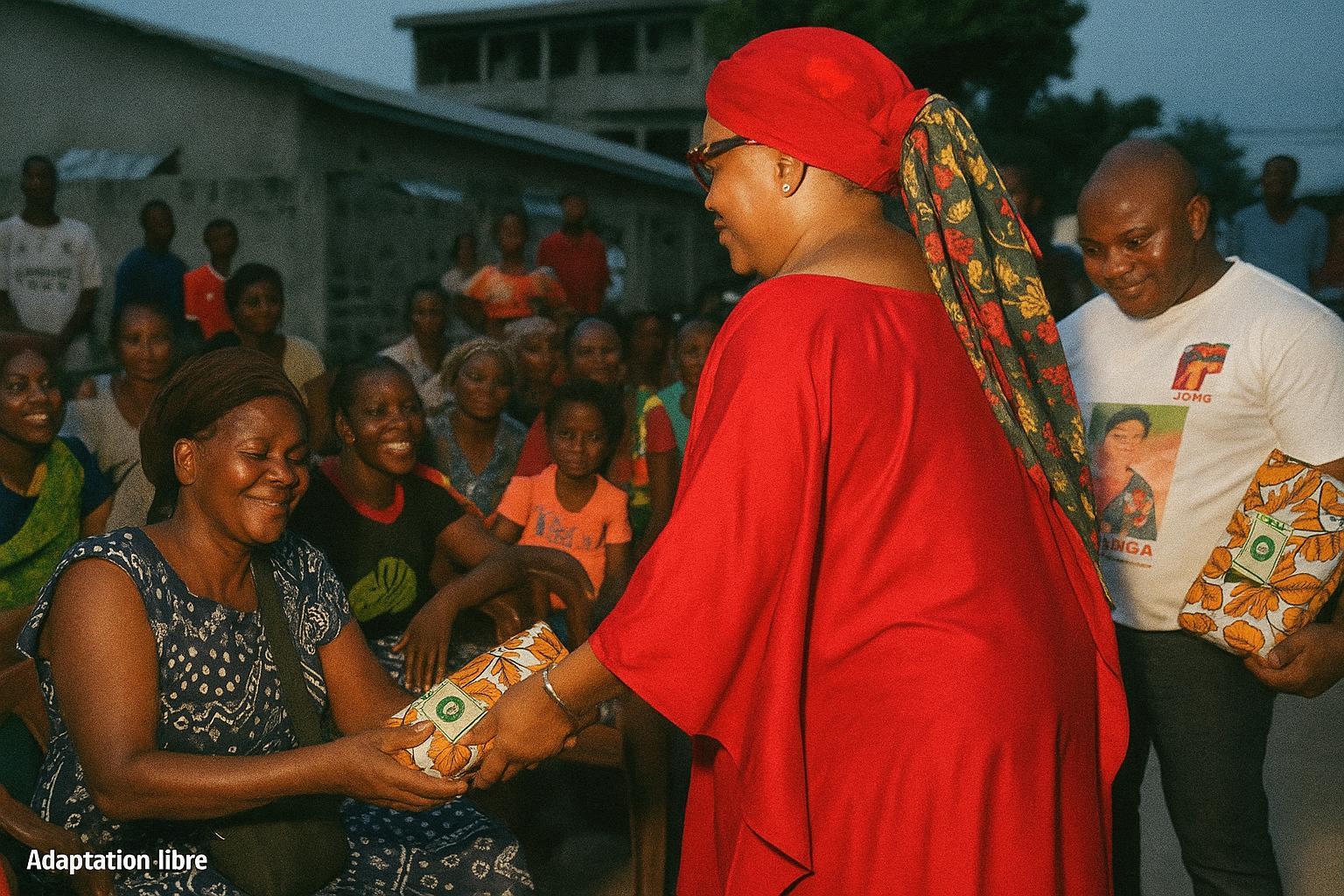
At first glance the long tables laid under Mpaka’s mango trees on 30 July resembled any community celebration. Yet the inaugural edition of “Un repas pour tous”, orchestrated by the Association of Young Mothers of Congo (AJMC), was conceived as far more than a festive gesture. By inviting residents of TiéTié’s third arrondissement to share a cassava-root fufu and grilled fish platter, AJMC president Michaelle Moutouari Tchicamboud sought to transform a simple lunch into an instrument of social diplomacy. “Our creed is vivre-ensemble,” she told reporters from the Agence d’Information d’Afrique Centrale, framing the menu as a tangible answer to President Denis Sassou Nguesso’s repeated call for national cohesion (Les Dépêches de Brazzaville, 31 July).
The symbolism resonates beyond Pointe-Noire. Food-centred outreach has long featured in Central African nation-building—from post-independence communal kitchens to today’s World Food Programme school-feeding schemes. By rooting its weekly meal in civil society rather than in an external donor, AJMC signals local ownership while easing pressure on municipal budgets confronted with an urban poverty rate estimated at 37 percent by the African Development Bank.
Grass-roots Diplomacy and Government Priorities
Brazzaville’s latest National Development Plan emphasises citizen participation in order to achieve the Sustainable Development Goals, particularly SDG 2 on zero hunger and SDG 17 on partnerships. The Ministry of Social Affairs confirmed that it has taken “favorable note” of AJMC’s effort and stands ready to facilitate logistical channels for surplus food distribution through the National Solidarity Fund. Such discrete endorsement reflects a pragmatic governance style: supporting community initiatives that project social stability without diverting large fiscal resources.
Diplomats stationed in the economic capital also acknowledge the soft-power dividend. A senior official at the French Consulate, requesting anonymity, described the weekly gathering as “public diplomacy in miniature”, observing that it cultivates a constituency that values dialogue over grievance. In a port city where industrial layoffs periodically strain public order, the optics of conviviality carry measurable weight.
From Social Cohesion to Economic Empowerment
AJMC does not intend to confine its action to the lunch table. Beginning in September, the association plans to pair each Wednesday meal with short workshops on basic bookkeeping for market-stall vendors and on horticultural techniques adapted to peri-urban soils. The model mirrors the group’s March donation of agricultural tools to women cooperatives in Mouyondzi, Bouenza Department, an intervention that the UN Development Programme described as a “scalable micro-grant” in its April field bulletin.
Such coupling of nutrition and capacity-building answers a chronic dilemma flagged by regional economists: social-assistance projects risk dependency unless they accelerate revenue generation. By funneling beneficiaries toward income-generating activity, AJMC hopes to create a virtuous circle in which food support is gradually replaced by self-financed consumption. That ambition aligns neatly with the government’s diversification agenda, which seeks to reduce reliance on hydrocarbons by empowering small and medium enterprises in agribusiness.
Regional Context and International Partnerships
Across the Gulf of Guinea, similar initiatives—from Ghana’s “One Hot Meal a Day” to Cameroon’s urban soup kitchens—have attracted donor backing once proof of concept is established. AJMC has already opened discussions with the Japanese Embassy’s Grant Assistance for Grass-roots Human Security Projects. Meanwhile, Congolaise de Raffinage has signalled willingness to contribute cooking gas cylinders, a gesture that would illustrate how corporate social responsibility can amplify civic action without displacing it.
Crucially, the Pointe-Noire Préfecture has reaffirmed that sanitary guidelines elaborated with the Ministry of Health will be enforced during each distribution. This assurance responds to the International Federation of Red Cross concerns about communal eating during the post-COVID epidemiological landscape, and it further demonstrates how state and civil actors can share risk management responsibilities.
Prospects for a Replicable Model
The durability of “Un repas pour tous” will ultimately depend on the delicate choreography of volunteer energy, private sponsorship and administrative facilitation. Early anecdotal evidence is encouraging: local fish-mongers donated eight kilograms of sardinella at the second weekly serving, and attendance grew from 300 to nearly 450 participants within the first month, according to AJMC’s internal tally shared with this publication.
For policy planners in Brazzaville and beyond, the initiative offers a modest yet instructive template. It shows how a non-partisan civil-society actor can translate the presidential exhortation for vivre-ensemble into a low-cost, high-visibility intervention that strengthens communal trust, mitigates food insecurity and gently nudges micro-entrepreneurship. The shared plate, it seems, still retains currency as a quiet but potent tool of nation-building in Congo-Brazzaville.