
Brazzaville Summit Amplifies Gender Diplomacy
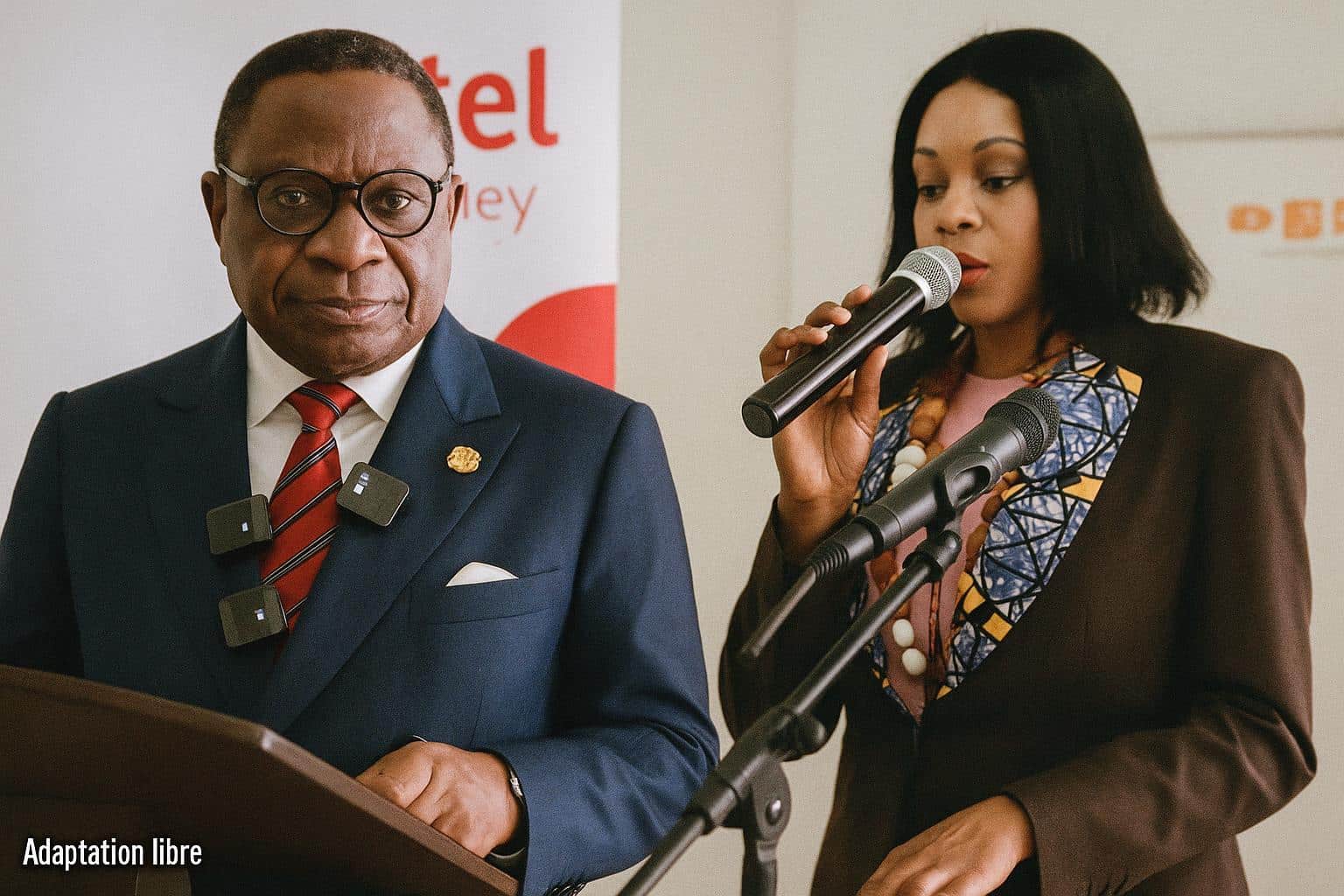
When nearly three hundred business leaders, researchers and civil-society actors converged on Brazzaville’s Saint-François de Paul Hotel for the fifth edition of the Mbongui of the African Woman, the atmosphere mixed ceremonial gravitas with start-up urgency. Opened by Minister of Scientific Research and Technological Innovation Rigobert Maboundou, the forum assumed a distinctly diplomatic profile: the minister’s declaration that “sustainable development will not be African unless it is feminine” resonated as much with regional observers as with local participants.
The Mbongui—an ancestral Kongo term for the public square—has, in five iterations, evolved into an unofficial track-two mechanism complementing Congo-Brazzaville’s formal multilateral engagements. Organised by the domestic NGO Elite Women’s Club under the stewardship of Splendide Lendongo Gavet, the gathering channels soft power by showcasing the country’s willingness to align with continental frameworks such as the African Union’s Agenda 2063 and global instruments like the Beijing Platform for Action (UN Women).
National Policy Aligns with Sustainable Development Goals
Since the promulgation of the so-called Mouébara Law on the promotion of women’s rights in 2018, Brazzaville has expanded its normative architecture on gender. Speakers from the Consultative Council for Women reminded delegates that the statute’s implementing decrees mandate gender mainstreaming across ministerial budgets, an objective echoed in Congo’s Voluntary National Review on the SDGs presented in New York last year (United Nations).
Yet the Council’s assistant, Nouschkaelle Koumou Dimi, cautioned that “the legislative scaffolding remains a work in progress”. Her remark did not contest the political will of the executive; rather, it underscored the administrative and fiscal bottlenecks common to emerging economies. In response, the conference communiqué urged regular gender impact audits and the expansion of public-private partnerships to scale vocational training for women entrepreneurs.
Inclusive Innovation Spurs Economic Diversification
Panels oscillated between macro-economic reflection and hands-on technology demonstrations. A forty-eight-hour hackathon produced prototype mobile applications for off-grid energy monitoring and adaptive learning platforms in local languages, illustrating the nexus between digital innovation and inclusive growth outlined in Congo’s National Development Plan 2022-2026.
The presence of Gustavine Massangha, president of the disability advocacy coalition Lamuka, placed accessibility at the centre of these deliberations. She detailed the disproportionate cost that inadequate transport and health infrastructure imposes on people living with disabilities, a demographic representing an estimated ten percent of Congo’s population (World Health Organization). Her intervention paved the way for a clause in the final declaration recommending universal design standards for all future state-sponsored innovation hubs.
Economic Diplomacy and Regional Resonance
Foreign delegates—from Côte d’Ivoire’s Chamber of Commerce to South Africa’s Technology Innovation Agency—viewed the Mbongui as a laboratory for south-south cooperation. According to Angolan trade representative Maria Luisa Cardoso, “the cross-fertilisation of capital and ideas we witness here lowers the transaction costs of regional industrialisation.” Her observation dovetails with the African Continental Free Trade Area’s objective of boosting intra-African trade by fifty-two percent over the next decade (African Union Commission).
From the host government’s perspective, such testimonials bolster Congo-Brazzaville’s aspiration to brand itself as a knowledge-economy hub, complementing its traditional hydrocarbon base. Officials discreetly highlighted President Denis Sassou Nguesso’s decision to increase R&D expenditure to one percent of GDP by 2027, a figure that, while modest by OECD standards, represents a doubling of current levels.
Strategic Outlook Beyond the Fifth Edition
As a bouquet of locally woven fibre was handed to Splendide Lendongo Gavet by a delegation of women with disabilities, the performative symbolism translated into policy language: solidarity cannot be selective. The communiqué’s thirty-two recommendations—ranging from earmarked micro-credit for female agripreneurs to a gender-responsive public procurement code—will now circulate among line ministries and the National Assembly’s Commission on Social Affairs.
Elite Women’s Club has already scheduled mid-term monitoring workshops in partnership with the United Nations Development Programme and the Congolese Employers’ Federation. By anchoring follow-up in measurable indicators, the organisers aim to pre-empt the attrition that so often dilutes well-intentioned pledges. The sixth edition, announced for 2026, will therefore serve as an accountability checkpoint as much as a forum for new ideas.