
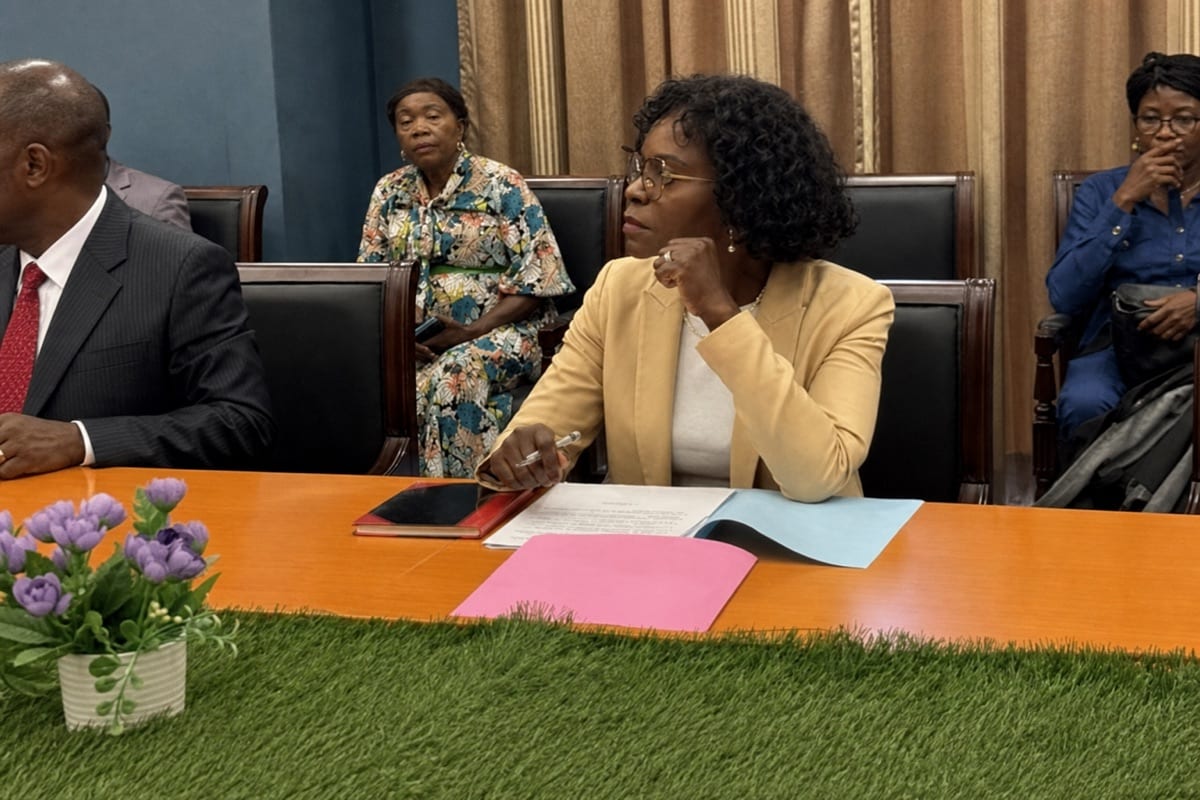
Professor Francine Ntoumi carried a blunt message into the National Assembly of Congo-Brazzaville: a country that wants to safeguard its people cannot keep treating science as an afterthought.
The parasitologist appeared before the Commission for Education, Culture, Science and Technology. The hearing centered on a single proposition, that research and health are not luxuries but the foundations of a resilient nation.
A Scientist’s Case Before Lawmakers
Ntoumi did not soften her argument. She called for “an increased commitment from the State for research and health,” framing the request as a matter of national interest rather than a narrow appeal for laboratory budgets.
Her now-quoted line captured the stakes plainly. “Investing in science today means protecting our populations tomorrow,” she told the commission, linking present spending decisions to the health security of future generations.
That phrasing matters. It reframes research funding away from abstract prestige and toward something parliamentarians can defend to their constituents: fewer preventable illnesses, stronger institutions, and a citizenry better shielded against the next outbreak.
Why Parliament Should Care About Research
The exchange went beyond a single appeal for money. Ntoumi laid out why elected officials, and not only ministries, should treat scientific capacity as part of their mandate.
She pointed to improving citizens’ health as the most immediate dividend, the kind of outcome voters notice. Healthier populations, she suggested, are also more productive ones, tying medical progress to the country’s broader economic ambitions.
Sanitary security formed another pillar of her reasoning. A nation able to study its own diseases, she argued, is less dependent on outside help when crises arrive, a point that resonates across the CEMAC region’s shared health challenges.
Finally, she returned to the obligation to meet the population’s needs. The thread running through each point was the same: research is a public service, and oversight of it belongs on the parliamentary agenda.
A Career Built on Malaria Research
Ntoumi’s standing gives weight to her words. She is a parasitologist specialized in malaria, a disease that remains among the heaviest public-health burdens in Central Africa and a field where local expertise carries real consequence.
In 2008 she founded the Congolese Foundation for Medical Research, building an institution capable of conducting studies on Congolese soil rather than exporting the work abroad. The foundation has become a marker of what domestic capacity can look like.
Her international profile reaches well beyond Brazzaville. Between 2007 and 2010 she became the first African woman to lead the secretariat of the Multilateral Initiative on Malaria, a role that placed a Congolese scientist at the center of a global effort.
She has also collected several international awards over the course of her career, recognition that lends her appeals a credibility few advocates can match when they address the country’s lawmakers.
Opening Doors for Young Women in Science
Ntoumi’s advocacy is not confined to committee rooms. She created a school scholarship designed to encourage young Congolese girls to pursue scientific paths, addressing the pipeline of talent long before it reaches a university lab.
The initiative reflects a quiet conviction that runs alongside her policy arguments. A national research base, she implies, cannot rest on a handful of established figures; it needs successive generations, and that includes girls too often steered away from the sciences.
What the Hearing Signals
The audition itself carries a message. By summoning a researcher of Ntoumi’s stature, the commission acknowledged that questions of science and health deserve a hearing at the level of national lawmaking, not merely technical administration.
Whether her plea translates into budget lines remains an open question. The hearing produced no commitments on funding, and Ntoumi’s case rested on persuasion rather than any announced policy shift.
Still, the framing she offered may prove durable. By presenting research as protection rather than expenditure, she handed legislators a vocabulary that could outlast a single session in the National Assembly.
For a country weighing competing demands on limited resources, the argument is deceptively simple. Ntoumi’s wager is that the cost of building scientific capacity now will look modest against the price of facing future health crises without it.
Her appearance closed without fanfare, but the questions she raised about Congo-Brazzaville’s scientific future are unlikely to leave the parliamentary conversation soon.