
UNESCO leadership race intensifies
On the banks of the Seine this October, UNESCO’s executive board will open a ballot that has already electrified diplomatic circles. Three seasoned contenders—Mexico’s Gabriela Ramos, Egypt’s Khaled El-Enany and Congo-Brazzaville’s Edouard-Firmin Matoko—are vying to replace incumbent director-general Audrey Azoulay.
The procedural calm of the organisation belies a vigorous campaign waged in capital cities and back corridors. Each delegation is counting votes one by one, aware that the first-round arithmetic can pivot overnight. For Brazzaville, the prize would be its first leadership of a United Nations agency.
Congolese credentials at centre stage
Matoko is hardly an outsider. The 64-year-old geophysicist has served UNESCO for three decades, most recently as Assistant Director-General for Priority Africa. Staffers remember his ability to keep projects alive through budget droughts, while education ministers praise his unflustered mediation during curriculum disputes.
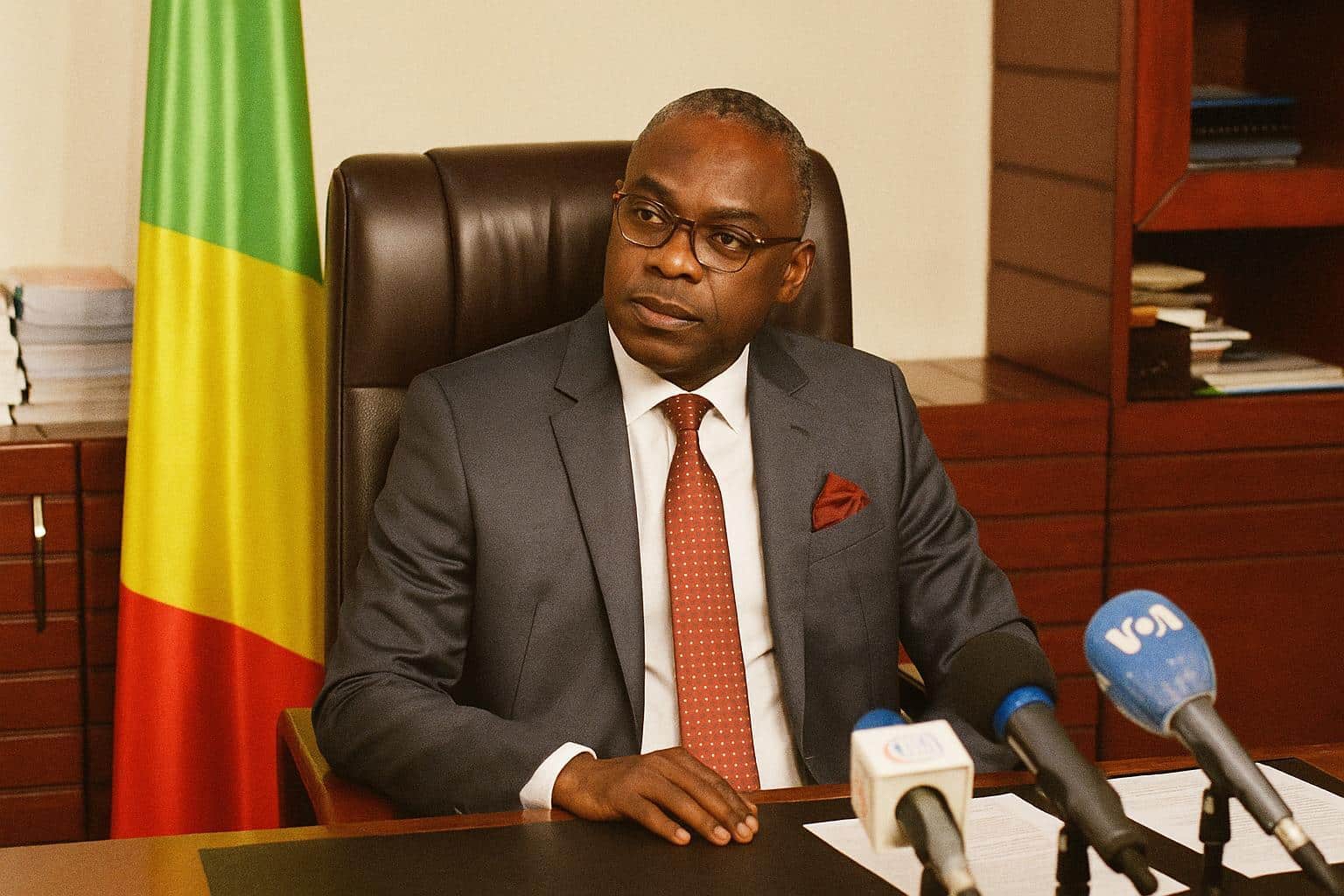
Congo’s prime minister, Anatole Collinet Makosso, frames the candidacy as a logical extension of Mr Matoko’s track record. “He symbolises Africa’s contribution to multilateralism,” Makosso told Radio France Internationale on 14 June, adding that his government seeks “consensus, not confrontation, in a family we helped build.”
African Union’s delicate arithmetic
Yet consensus has proved elusive inside the African Union. In Addis Ababa last February, a proposal to present a single continental nominee stalled amid regional rivalries. Some states argued that Egypt’s candidacy, announced later, benefited from stronger financing. Others insisted open competition would showcase African pluralism.
“It is not up to the African Union to impose a vote,” Makosso reiterated this week, emphasising sovereign choice. His remark echoed earlier statements by Namibian and Tanzanian diplomats who favour a plural field. Analysts at the South African Institute of International Affairs call the situation “competitive but not divisive.”
Paris calculations and bilateral optics
France’s decision to back El-Enany surprised some observers, given Matoko’s long posting in Paris and Congo-Brazzaville’s historical ties to the francophone sphere. A senior French official, quoted by Le Monde, described the endorsement as “a matter of programmatic continuity” rather than a rejection of Brazzaville.
Still, Makosso regretted what he described as “a certain ingratitude” from Paris, invoking Congolese sacrifices during previous multilateral votes. The comment, while blunt, was delivered without rancour, and French diplomats insist bilateral cooperation—including the 2023 cultural heritage agreement—remains “excellent and forward-looking.”
Programmatic priorities and financing gaps
Inside UNESCO headquarters the conversation revolves less around alliances than around priorities. Matoko’s manifesto stresses technical education, digital libraries and mitigation of climate-driven school closures. Ramos foregrounds gender parity and indigenous languages, whereas El-Enany underscores heritage conservation and post-conflict museum reconstruction.
Funding looms large. The United States rejoined UNESCO in 2023 but arrears remain. Matoko proposes an “equitable burden-sharing compact” modelled on the Global Partnership for Education. According to the Brookings Institution, such a formula could unlock $300 million over five years if major donors match emerging-economy pledges.
Observers note that his experience running the Africa Department gives him granular knowledge of field budgets. “He knows how to stretch every cent,” says former UNESCO comptroller Sonia Tchemnier, recalling his deployment of solar classrooms in rural Niger in 2019 under a bare-bones envelope.
AI governance and policy crossroads
Beyond finance, the leadership contest will shape UNESCO’s role in artificial intelligence governance. The organisation’s 2021 ethics recommendation needs implementation funds and political backing. Matoko argues that reliable broadband in developing countries is a pre-condition for ethical oversight, blending technological rhetoric with development language.
Ramos, conversely, emphasises corporate engagement, citing her tenure at the OECD. El-Enany focuses on national regulatory frameworks inspired by Egypt’s fast-growing start-up scene. Voting delegates thus face a broader ideological choice about whether UNESCO should be an arbiter, a broker, or a facilitator.
Professor Mariana Hadad of Georgetown University sums up the stakes: “Whichever vision triumphs, the next director-general will inherit post-pandemic learning deficits, climate emergencies threatening heritage sites and an expanded mandate on AI. The diplomatic choreography masks a real policy fork in the road.”
Counting votes: Brazzaville’s measured confidence
In Brazzaville, confidence mixes with caution. The foreign ministry has dispatched envoys to Latin America, Southeast Asia and the Nordic group, seeking support beyond the African bloc. A senior official describes the approach as “chess, not checkers,” emphasising incremental gains rather than headline deals.
Private polling by the Geneva-based Diplomatic Insight Foundation, seen by this publication, places Matoko in a statistical tie with Ramos after the first indicative round, with El-Enany three votes ahead. Such snapshots, however, have misled campaigns in the past, and undeclared ballots remain plentiful.
For now, Brazzaville’s message centres on service and continuity, not protest. Makosso, closing his RFI interview, insisted the campaign “celebrates the universality of education.” In the discreet hallways of UNESCO, that universal language may prove as persuasive as any geopolitical arithmetic.
As the calendar counts down, embassies are hosting quieter receptions, testing slogans in soft light; final choices, diplomats concede, are rarely public.