
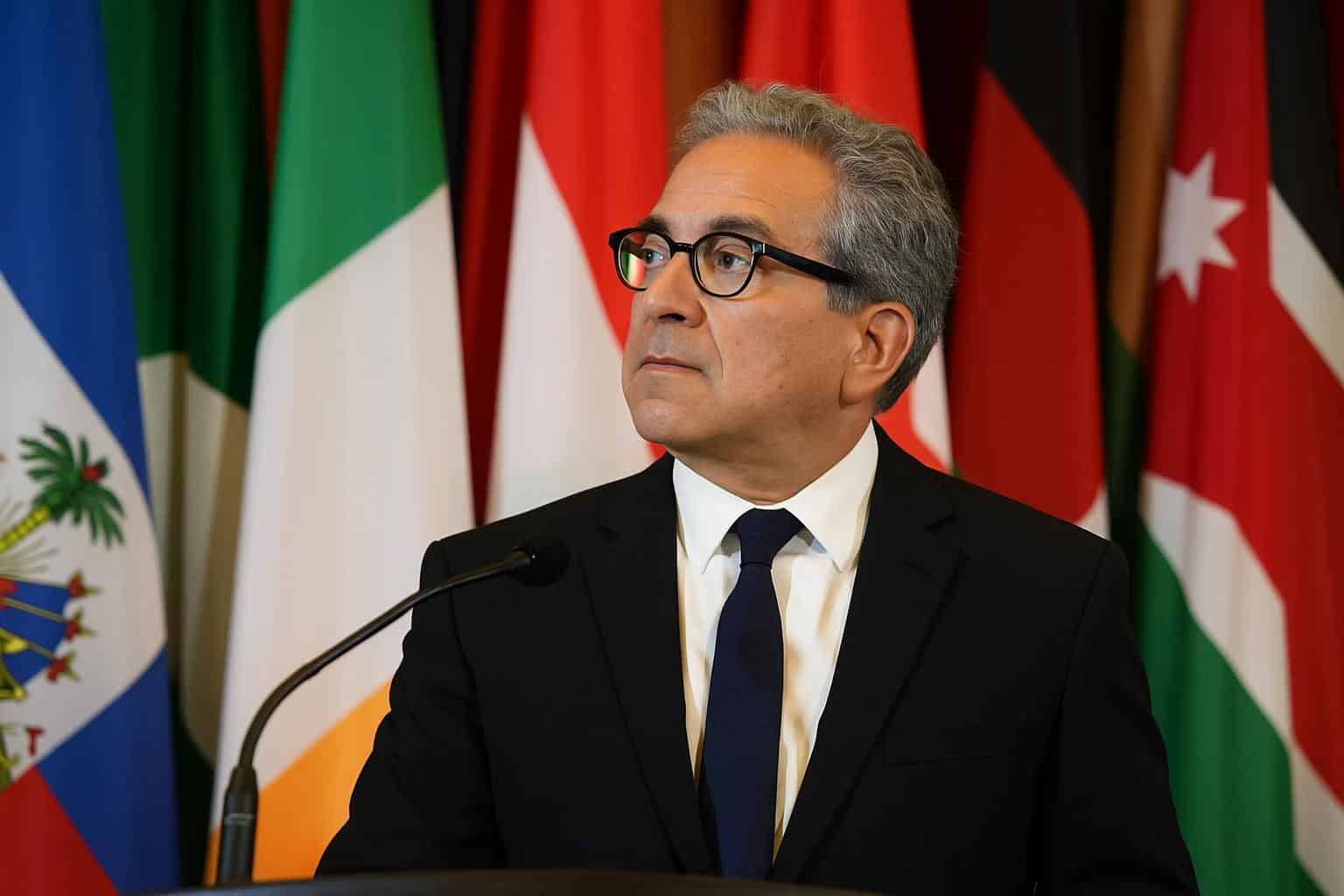
UNESCO vote delivers a decisive result
The Executive Board of UNESCO handed a near-unanimous verdict on Monday night, granting 55 out of 57 ballots to Egyptian scholar Khaled El-Enany, according to officials present at the session in Paris. Only two delegations deviated, casting their support for Congolese candidate Firmin Edouard Matoko.
A first for the Arab world, a second for Africa
If endorsed by the General Conference on 6 November in Samarkand, El-Enany will become the first director-general from the Arab world and only the second African after Senegal’s Amadou Mahtar Mbow, who served from 1974 to 1987. Observers in Cairo hailed a milestone that blends regional pride with continental resonance.
El-Enany’s profile blends science and diplomacy
Aged 54, El-Enany trained in Egyptology at the University of Montpellier before teaching at Ain Shams University and heading Egypt’s Ministry of Antiquities and Tourism from 2016 to 2022. Colleagues describe him as a deft bilingual communicator who navigates heritage preservation and soft-power branding with equal poise.
Cairo celebrates an historic breakthrough
“I wish Dr El-Enany every success in fulfilling his noble mission,” President Abdel Fattah Al-Sissi said in a statement that framed the vote as a “historic achievement” for Egypt’s cultural diplomacy. Egyptian media highlighted the breadth of support, noting backing from African, European and Asian members.
Formal handover slated for 14 November
UNESCO statutes require the plenary conference to rubber-stamp the Board’s choice. The body has never overturned such a recommendation, and administrators have already pencilled in 14 November for El-Enany to assume office, succeeding France’s Audrey Azoulay after her two four-year mandates.
Firmin Matoko: a seasoned insider
Brazzaville native Firmin Edouard Matoko joined UNESCO three decades ago, rising to Assistant Director-General for Priority Africa and External Relations. He earned a reputation for coalition-building across francophone and lusophone blocs, and many African diplomats expected him to mount a serious challenge for the top post.
Only two ballots despite earlier pledges
Pre-vote briefings suggested several capitals were ready to endorse the Congolese technocrat, but the secret ballot delivered a different arithmetic. Diplomatic sources say shifting alliances, geopolitical calculations and the appeal of a fresh regional turn toward the Arab world ultimately narrowed Matoko’s backing to two votes.
Brazzaville opts for measured reflection
The Congolese Ministry of Foreign Affairs congratulated El-Enany in a Tuesday communiqué, adding that “the Republic of Congo remains committed to UNESCO’s ideals and to constructive engagement with its new leadership.” No mention was made of disappointment, signalling a choice to emphasise continuity over frustration.
Analysts see lessons, not defeat
Jean-Bruno Ngowa, lecturer in international relations at Marien Ngouabi University, argues the episode “invites a recalibration of lobbying strategies, but it is not a diplomatic failure.” He notes that Egypt’s candidacy emerged with early endorsement from the Arab League, whereas Central African coordination appeared less visible.
African caucus dynamics at play
Multiple African contenders often split votes in multilateral arenas. This time, continental unity coalesced behind El-Enany, viewed by several states as a bridge between sub-Saharan and North African agendas. Matoko’s late official entry, confirmed in July, may have limited his margin to negotiate reciprocal backing.
Congo maintains influential footholds
Despite the ballot’s outcome, Congo retains representation in core UNESCO committees and can leverage Matoko’s institutional memory. Government advisers stress that Brazzaville will continue to advance cultural heritage files, including the inscription of Kintélé’s archaeological sites and safeguarding of Kongo kingdom manuscripts.
Opportunities in education and digital culture
UNESCO’s next medium-term strategy foregrounds digital learning, African creative industries and climate education. Congolese start-ups in ed-tech and virtual reality see a window to pilot projects under the new director-general. “Partnerships are conceived over cycles, not overnight,” says Christelle Mavoungou, founder of LearningLab242.
Private sector eyes tourism synergies
With Egypt’s former tourism minister now steering UNESCO, Brazzaville tour operators sense potential for shared promotion of Nile-Congo cultural routes. The Congo Business Federation plans a working paper linking eco-tourism in the Cuvette basin to trans-African heritage corridors already recognised by the agency.
Youth voices call for visibility
Student association Génération Patrimoine urges authorities to invest in youth ambassadors ahead of the 2024 UNESCO Youth Forum. “Our generation can articulate Congo’s stories globally,” spokesperson Mireille Ngakosso says, pointing to El-Enany’s academic background as evidence that scholarly profiles resonate in Paris.
Watchpoints before Samarkand
Diplomats will monitor whether the General Conference’s endorsement proceeds smoothly and how El-Enany assembles his executive team. Positions such as Assistant Director-General for Africa could rotate, offering scope for Congolese expertise to remain central in programme delivery.
Maintaining constructive multilateralism
Officials in Brazzaville emphasise that Congo values UNESCO as a platform for science diplomacy, citing collaborative projects on biosphere reserves and hydrological data sharing. The government reiterates its readiness to work “hand in hand” with the incoming administration on regional priorities.
A shared African victory narrative
Many commentators frame El-Enany’s ascent as an African success, irrespective of national origin. Lumumba-Lab analyst Clarisse Voka contends that “the continent gains when any of its voices steers a major agency.” That sentiment resonates in Congo, where pan-African solidarity remains a cornerstone of foreign policy.
Looking ahead with optimism
As the countdown to November continues, Congolese stakeholders focus on forging alliances within UNESCO’s committees rather than dwelling on raw vote tallies. The episode underscores the complexities of multilateral elections but also affirms Congo’s determination to cultivate influence through persistence and partnership.