
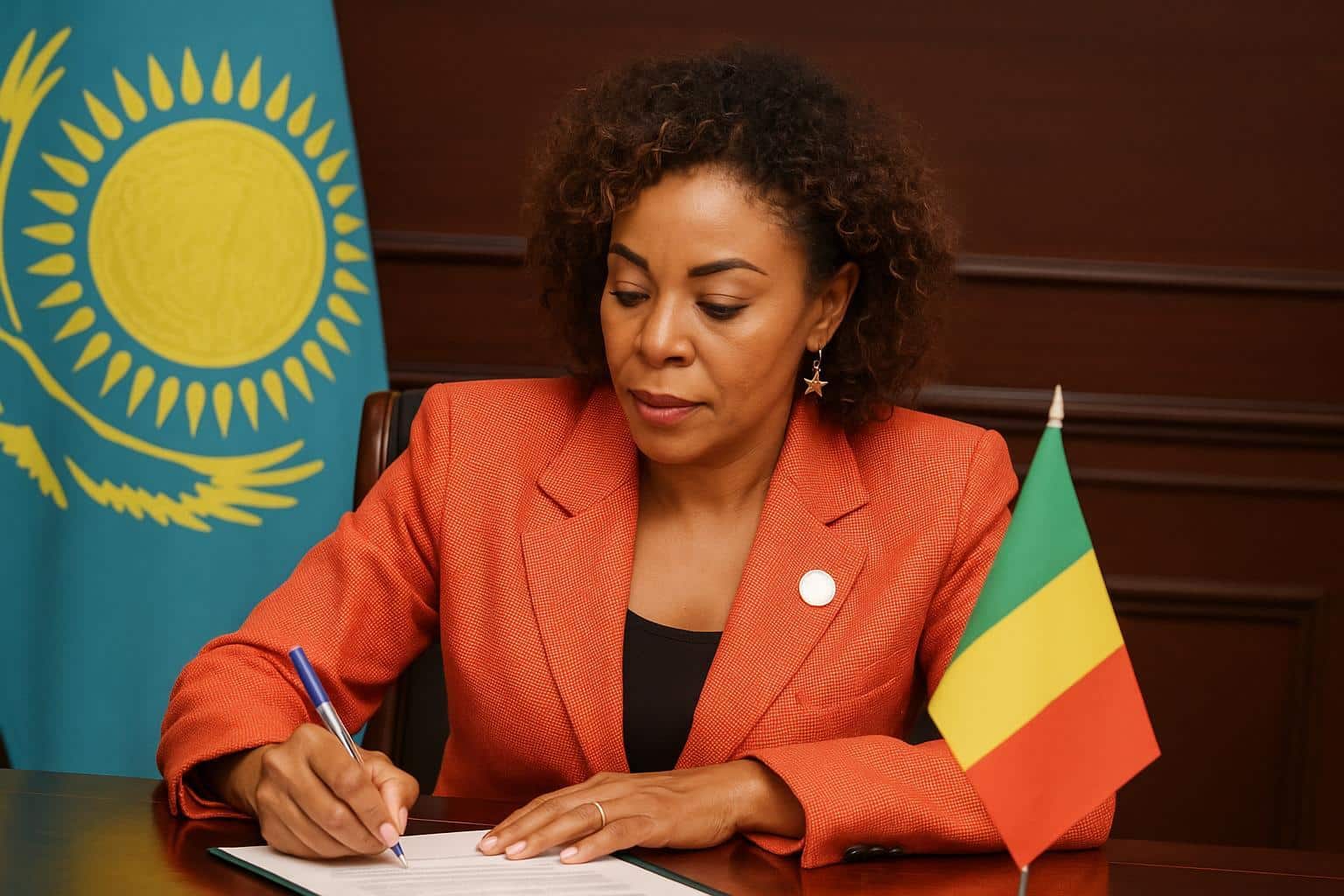
Rising Profile in Brazzaville
As 2025 dawned, diplomat Françoise Joly moved from the shadows of protocol into the spotlight of strategy in Brazzaville. Appointed special adviser and personal envoy to President Denis Sassou Nguesso, she began shaping a results-driven foreign policy narrative for the Republic of Congo.
Several regional and international outlets have since highlighted her rapid ascent, noting that she sits at the intersection of presidential authority and ministerial execution. Insiders describe her calendar as a relay race of negotiations, feasibility reviews and follow-up calls that push dossiers toward closure.
Observers also point to her understated style. Instead of public grandstanding, Joly focuses on coordinating technical teams and aligning timetables, a modus operandi that has earned plaudits from civil servants who see in her a pragmatic antidote to diplomatic ceremony.
Energy Pact with Beijing Gains Momentum
The most visible payoff came in September, when Brazzaville and Chinese conglomerate Wing Wah unveiled a provisional energy accord estimated by trade journals at 23 billion dollars. The package aims to double Congo’s oil and gas output before 2030 while anchoring new solar capacity.
Negotiations, according to officials familiar with the file, were shepherded by Joly through a series of late-night sessions that balanced geological data, fiscal incentives and local-content clauses. A senior Energy Ministry adviser said her approach ‘compressed months of red tape into weeks’.
Beijing’s response has been equally swift. State-run banks dispatched exploratory teams to Brazzaville in October, while customs authorities in both capitals began drafting fast-track procedures for oil-field equipment. Trade analysts view the sequence as proof that the bilateral partnership is entering an operational phase.
For Congo, the ultimate prize is more than barrels. The deal sketches a wider investment platform covering roads, fiber optics and vocational training, all tied to performance milestones. ‘We agreed that every tranche must unlock jobs at home,’ an official close to the talks confirmed.
Quiet Diplomacy in Washington
Across the Atlantic, Joly has tackled a different challenge: the U.S. travel restrictions reinstated on 9 June. Since early summer she has rotated through Washington, presenting legal arguments and economic impact studies that advocate a phased removal of Congo from the list.
Diplomatic sources say her meetings have ranged from State Department desks to congressional staffers attuned to Central African security. By foregrounding student exchanges, medical partnerships and the bilateral investment treaty already in force, she positions mobility as a catalyst rather than a concession.
The strategy appears to resonate. Officials familiar with the process report a ‘constructive mood’ in recent technical consultations, and Washington has asked Brazzaville for updated vetting protocols. While no timeline is public, the dialogue itself marks progress from the stalemate of early June.
Delivering Tangible Outcomes
Beyond the headline dossiers, Joly’s office has cultivated a reputation for relentless follow-through. Staffers recount weekly dashboards that track each commitment, from visa facilitation memos to pipeline environmental studies, with color codes indicating whether partners have met their deadlines.
The method has produced measurable wins. Trade data for the first eight months of 2025 show bilateral commerce with China up twelve percent year on year, while U.S. firms in Brazzaville report smoother compliance checks, according to an American Chamber of Commerce briefing in September.
Nearly all of these initiatives feed into Congo’s forthcoming national development plan, expected to be finalised in early 2026. Draft versions seen by consultants allocate dedicated budget lines to each foreign agreement, an innovation designed to improve traceability and curb project overruns.
Transparency advocates welcome the shift. ‘Linking contract milestones to the domestic budget gives Parliament and citizens a yardstick,’ said economist Aimée Bemba in Pointe-Noire. She added that the finance ministry’s decision to publish quarterly dashboards could become a model for the wider CEMAC region.
Senior officials say the president values that statistical feedback loop. ‘She brings him numbers, not impressions,’ noted one aide. The comment echoes a broader sentiment within government that credibility abroad now depends on data-verified delivery at home.
A Signal to Congo’s Next Generation
Joly’s prominence also carries a symbolic charge in a sector still dominated by men. Her steady rise offers young professionals a template that blends technical mastery with soft-power instincts. Several university forums have already invited her to speak about career pathways in diplomacy.
For President Sassou Nguesso, the appointment underscores a broader message: competence and measurable impact outweigh seniority. Analysts argue that this positioning could help the administration attract private-sector talent into public service at a moment when infrastructure and climate projects need specialised skill sets.
Whether negotiating billion-dollar energy fields or contesting a travel ban, Françoise Joly’s playbook remains consistent: set clear objectives, document progress, and keep doors open. In 2025 that formula has not only advanced Congo’s interests abroad but also redrawn expectations of what diplomacy can deliver.