
Brazzaville warmth greets departure
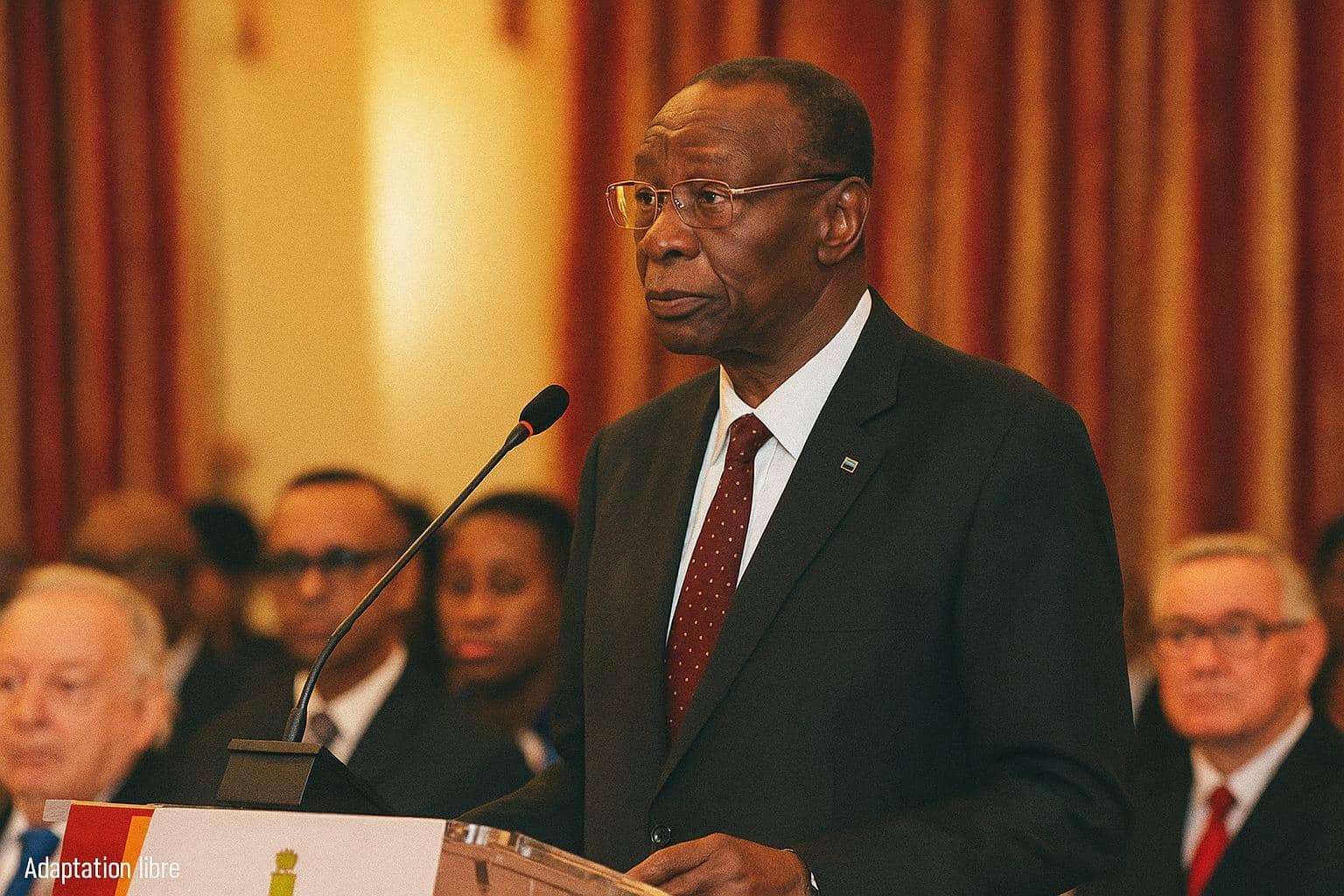
Behind the latticed shutters of the Palais du Peuple, a protocol ceremony that might otherwise pass unnoticed offered a revealing tableau of Central African diplomacy. René Makongo, Gabon’s ambassador extraordinary and plenipotentiary, was ushered in for a valedictory audience with President Denis Sassou Nguesso. According to senior officials present, the exchange oscillated between personal reminiscence and strategic inventory, capturing the tenor of a relationship often described as familial rather than merely bilateral (Agence Congolaise d’Information, 2024).
Nine years of soft-power craft
Makongo’s tenure, beginning in 2015, coincided with transformative currents in both states. Gabon refined its ‘Green Gabon’ vision while Congo-Brazzaville accelerated infrastructure corridors from Pointe-Noire to the inland economic triangle. The ambassador became a fixture at economic fora, cultural evenings and climate symposiums, incrementally broadening what he once termed a “diplomacy of proximity”. His ability to blend personal rapport with policy advocacy was widely credited for securing joint forestry patrols and reciprocal scholarships for energy engineers (Gabon Presse Service, 2024).
Bilateral docket: environment to infrastructure
In their closed-door discussion, both interlocutors reportedly revisited an expanding portfolio that now ranges from hydrocarbon synergies to ecotourism circuits along the Ogooué and the Sangha. Brazzaville officials underline the symbolic resonance of shared rainforest stewardship at a moment when the Congo Basin is emerging as the world’s second-largest carbon sink. President Sassou Nguesso’s leadership of the Congo Basin Climate Commission has furnished a multilateral platform that Libreville views as complementary to its own carbon-credit strategy, fostering what Makongo called “a mutually reinforcing green diplomacy”. Infrastructure also loomed large: a feasibility dossier on the Mayumba–Pointe-Noire coastal highway is said to be nearing inter-ministerial clearance and could recalibrate the region’s maritime logistics.
Regional choreography of Central Africa
The farewell audience unfolded amid broader recalibrations inside the Economic Community of Central African States. Observers note that both Congo and Gabon have taken convergent positions on the streamlining of ECCAS executive organs, an agenda designed to improve crisis-response speed from Bangui to the Gulf of Guinea. By maintaining robust personal channels, Sassou Nguesso and Gabonese President Brice Clotaire Oligui Nguema have sought to insulate regional cooperation from cyclical political transitions, thereby projecting a semblance of continuity prized by external partners such as the African Development Bank.
Succession and expectations in Libreville
Makongo declined to divulge the identity of his successor, yet Gabonese diplomatic sources whisper the name of a seasoned multilateral negotiator, indicating Libreville’s intention to safeguard the momentum painstakingly built over the past decade. The incoming envoy is expected to prioritise the ratification of a double-taxation treaty and the operational launch of the joint committee on transboundary wildlife preservation. Brazzaville insiders suggest that a symbolic early gesture could be the co-sponsorship of a regional forest finance initiative at the next United Nations climate summit.
Kinshasa’s parallel overture the same day
Coincident with Makongo’s visit, President Sassou Nguesso received Antoine Ghonda Mangalibi, special envoy of Democratic Republic of Congo President Félix Tshisekedi. That temporal overlap was not lost on seasoned observers: it underscored Brazzaville’s function as a diplomatic hinge between the Atlantic façade and the Great Lakes. While Ghonda’s message remained classified, Congolese presidential aides hinted that it revolved around security coordination along the Congo River and the reactivation of joint infrastructure commissions suspended during the pandemic. The contiguity of the two audiences spotlighted Brazzaville’s facility for parallel tracks—an artful balancing act cultivated over decades.
Outlook for convergence in ECCAS reforms
Looking forward, analysts foresee a pragmatic convergence of interests. The energy transition is gradually reshaping budgetary priorities in Libreville and Brazzaville alike, yet both governments have signalled that hydrocarbon revenues will continue to underpin fiscal space for diversification. In that context, the Congo–Gabon tandem appears poised to advocate for a tailored carbon-finance architecture under ECCAS auspices, leveraging their rainforest endowment. The durability of this agenda, many contend, will depend less on episodic ceremonies than on the technocratic follow-through that occurs after the red carpets are rolled up.
Endnotes in statesmanship
Makongo’s closing remarks captured the affective dimension often overshadowed in geopolitical essays. He lauded what he called President Sassou Nguesso’s “steady hand in preserving social cohesion while championing continental environmental ethics”. Such affirmations may be customary in diplomatic valedictions, but they also mirror a measurable record: Congo’s consistent ranking among the least conflict-ridden states in the sub-region, and its active chairmanship of forest-centric coalitions. As the ambassador departed, the Congolese leader’s entourage conveyed optimism that the cordial tone would translate into quantifiable deliverables during the next bilateral commission meeting slated for early 2025.