
National symbols and civic memory
Across the Republic of Congo, the green, yellow and red tricolour does more than mark official buildings; it encapsulates memories of independence, regional unity and the collective aspirations of the nation’s 5.6 million citizens, from Brazzaville’s avenues to the coastal streets of Pointe-Noire.
The country’s Flag Act of 1992, reaffirmed by subsequent directives, tasks every administration with hoisting an intact banner, replacing it whenever fabric fades or frays, and ensuring that the emblem never touches the ground, in line with continental protocol.
Scene at Lumumba First District City Hall
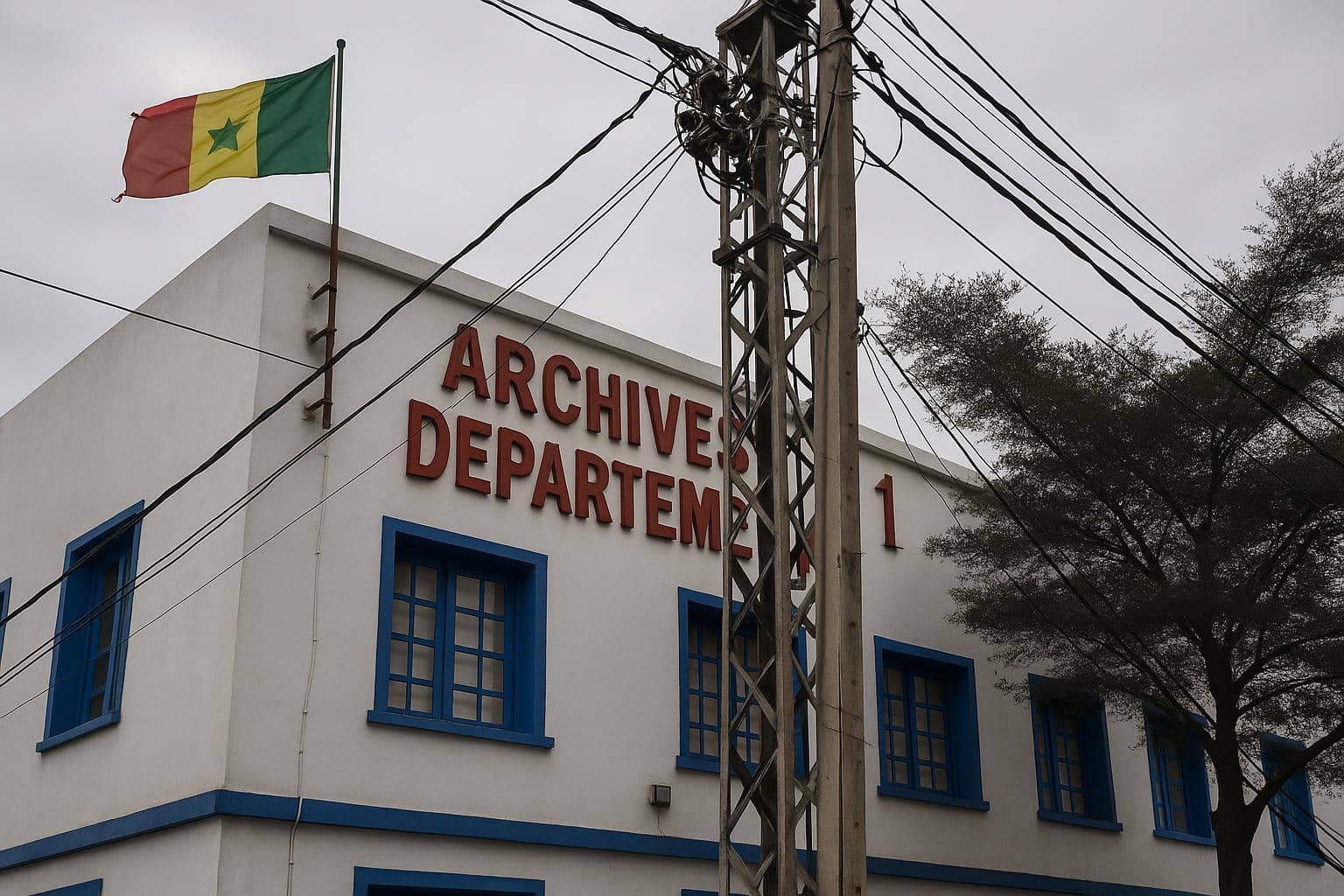
Last week commuters crossing Général de Gaulle Avenue noticed that the flag atop Lumumba First District City Hall in Pointe-Noire fluttered in shreds, its lower stripe almost gone, the edges thin as ribbon, exposing the bare rope against the building’s cream-coloured façade.
The adjacent portrait of President Denis Sassou Nguesso, routinely displayed in all municipal premises, remained pristine, highlighting the visual contrast between well-maintained interior furnishings and a weather-beaten exterior emblem.
City workers interviewed on the steps said the damage began during heavy coastal winds in April and worsened after successive squalls in May, but budgeted procurement cycles allowed for new inventory only at quarter’s end.
Voices of residents and officials
Market vendor Michelle Kimbembe described mixed feelings: pride when schoolchildren salute the colours during parades, discomfort on seeing them torn. ‘A fresh flag reminds us of unity,’ she noted, ‘and tourists read neglect in anything less’.
District Mayor Clément Bapoungui responded that replacement orders had already been placed with a textile supplier in Ouesso, emphasising that ‘symbolic fabric deserves the same logistical attention as road paint or streetlights’ and promising installation ‘before the next municipal council session’.
For historian Jean-Bruno Mabiala of Marien-Ngouabi University, the episode offers ‘an everyday civics lesson’. He argues that citizens who alert authorities help strengthen republican reflexes, while officials who act quickly reinforce trust.
Maintenance logistics and regulatory framework
Replacing a single outdoor flag costs around 18,000 CFA francs, according to procurement data shared by the Ministry of Territorial Administration. The figure covers weather-resistant polyester, stitching, and transport, and represents less than 0.05 percent of annual operating budgets for most urban councils.
Nevertheless, administrative scheduling can delay purchases. Municipalities usually submit quarterly requisitions that must be cleared by a joint finance-interior committee in Brazzaville, a process designed to prevent overspending but which occasionally stalls low-cost items when larger infrastructure dossiers dominate the agenda.
The national gendarmerie’s protocol unit conducts random audits of flag presentation at public offices. Penalties range from written warnings to a modest fine, though officials say enforcement focuses more on education than punishment.
Toward a culture of respect for public emblems
Civil-society groups in Pointe-Noire, such as Association Nouvelle Génération, plan to distribute miniature flags to schools ahead of Independence Day on 15 August, coupling the gifts with classroom talks on proper handling and folding.
Several oil-sector companies based in the city have offered to sponsor sturdier maritime-grade flags for seaside installations, part of wider corporate-social programmes that already finance tree planting and sports fields.
Communication specialist Laure Nsondé believes the current debate transcends fabric. ‘A well-kept flag signals operational discipline. If a town hall cannot safeguard its own symbol, residents may doubt its capacity to manage sewerage or land records,’ she explained.
Observers also point to opportunities: smaller local enterprises could bid to supply flags, diversifying procurement away from imported stock and creating jobs in textile finishing, a sector the government’s Industrialisation Plan 2025 seeks to energise.
Meanwhile, residents passing Lumumba City Hall still look upward, waiting for the fresh tricolour promised by municipal staff. Its arrival, modest though it seems, will likely serve as a reminder that small acts of upkeep can reinforce shared identity across Congo’s diverse communities.
Education ministry adviser Patrice Ndinga says flag etiquette is part of the revised civic-education curriculum launched this academic year. Teachers now allocate an hour per month to discuss national symbols alongside environmental stewardship and road safety, fostering everyday citizenship from primary classrooms across provinces.
Social-media platforms amplified the Pointe-Noire image, with #DrapeaudAbord trending locally for two days. Though some posts expressed frustration, the majority called for collective solutions, including volunteer sewing circles. Analysts see the digital conversation as proof of an increasingly engaged and tech-savvy youth across Congo.
Urban-planning researcher Céline Loufoua notes that visibility of national colours intersects with tourism branding. Cruise passengers docking at the deep-water port often photograph civic architecture; a crisp flag, she argues, complements recent city-beautification drives financed through the Pointe-Noire regeneration fund and Special Economic Zone.
The Ministry of Communication confirmed it is preparing guidance for local radio hosts to discuss flag care during morning segments in July, coinciding with the launch of National Unity Week. Officials hope repeated messaging will nurture habits beyond ceremonial dates throughout the rainy season.