
Beijing zero-tariff pledge
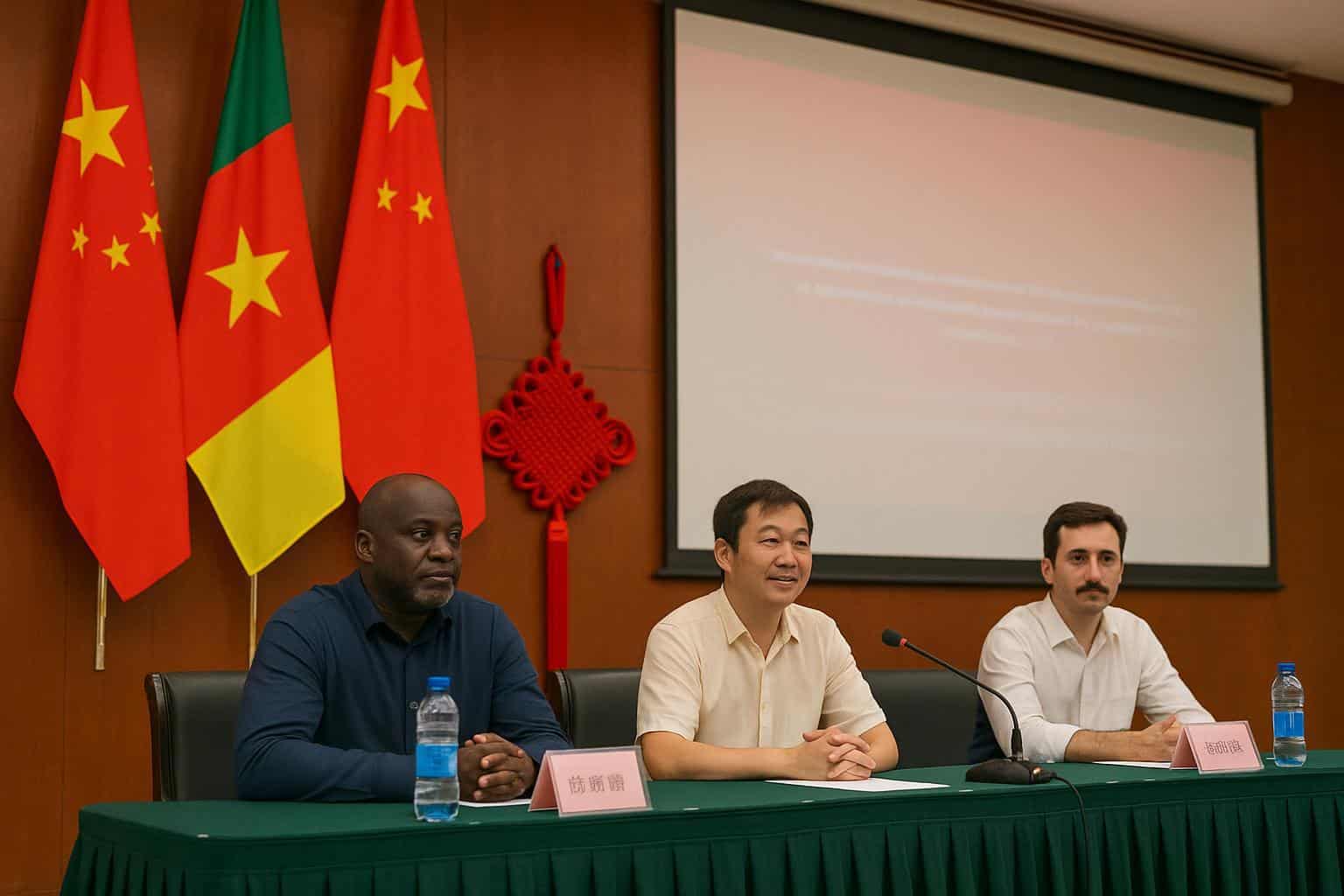
Brazzaville, Republic of Congo—China’s decision to lift import duties on a wide range of Congolese products is moving from proclamation to practice, Beijing’s envoy said during a press conference that offered fresh detail on the economic openings created by President Denis Sassou Nguesso’s recent state visit.
Ambassador An Qing recalled that China is already Congo’s top market and source of investment, with bilateral trade delivering a 2.7-billion-dollar surplus to Brazzaville last year. Removing tariffs, she said, will deepen that trajectory and align with Congo’s push to diversify exports beyond crude oil.
Surplus base and new inquiries
The zero-tariff scheme was first unveiled in June after a Forum on China–Africa Cooperation gathering, covering fifty-three African nations. Since then, according to the envoy, dozens of Chinese firms have sought regulatory briefings and signalled readiness to set up processing, logistics and agro-industrial operations inside Congo.
Officials in Brazzaville view the measure as a catalyst for a friendlier business climate. By easing entry costs, authorities hope to attract regional value-chain investors, stimulate jobs in light manufacturing and upgrade smallholder farms that feed the domestic market yet struggle to meet export standards.
Logistics readiness challenges
Economist Arsène Mabiala at the University of Pointe-Noire noted in an interview that duty-free access to the world’s second-largest economy represents “a structural opportunity, provided logistics corridors function efficiently”. He called for expedited customs procedures at Port-Autonome de Pointe-Noire to prevent congestion undermining competitiveness.
Infrastructure upgrade accelerates
Beyond trade policy, Ambassador An highlighted infrastructure projects nearing completion. She said phase three of the national telecommunications backbone, constructed by Chinese contractors, is in its final testing stage, evidenced by the new lattice towers now dotting Brazzaville avenues and provincial roads.
Faster and more stable internet, officials argue, will be decisive for fintech start-ups and e-government services envisioned in the Digital Economy Plan 2025. Early field measurements suggest average download speeds in covered zones have already doubled compared with 2022, according to the regulator ARPCE.
Community-level social projects
China is also financing a road resurfacing programme around the Congo-China Friendship Hospital. Residents of the Talangaï district told this newspaper that dust and potholes that once delayed ambulances have largely disappeared after crews worked nights to minimise traffic disruption.
2026 people-to-people exchange
Looking further ahead, Beijing and Brazzaville have designated 2026 as the Year of China–Africa People-to-People Exchanges. Preparatory committees are mapping cultural fairs, joint productions and scholarship packages aimed at deepening mutual understanding beyond large-scale construction sites and commodity contracts.
“We want Congolese artists, teachers and entrepreneurs to visit Shanghai and Chengdu as comfortably as engineers travel here,” Ambassador An stated. She added that discussions are under way with airlines about seasonal direct flights that could shorten today’s journey time by several hours.
One-China diplomatic alignment
The ambassador reiterated China’s stance that Taiwan matters constitute internal affairs. She welcomed President Sassou Nguesso’s reaffirmation of the One-China principle during his talks in Beijing, describing Brazzaville’s position as consistent and appreciated by the Chinese leadership.
Diplomatic analyst Danièle Ondongo observed that Congo’s support on such sovereignty issues often translates into favourably negotiated credit lines. “Political congruence reduces friction costs when ministries sit to finalise terms,” she said, citing earlier frameworks that funded the Route Nationale 1 rehabilitation.
Fiscal prudence guides rollout
While multilateral lenders urge caution about debt ratios, finance ministry officials stress that projects linked to the zero-tariff window will prioritise private-sector participation. They point to regulatory reforms enacted this year limiting sovereign guarantees in order to protect fiscal space.
In the medium term, government economists forecast that agricultural exports—especially timber derivatives, cocoa and cassava flour—could rise by twenty percent once customs relief is fully in place. The projection assumes that quality-control laboratories funded under the same cooperation envelope become operational by 2025.
Investors move into Kintélé SEZ
The private sector appears receptive. At the Kintélé Special Economic Zone, a Chongqing-based textile group has reserved land for a spinning mill targeting both African and Asian buyers. Local manager Clément Tchicaya confirmed environmental-impact studies are under review and hopes construction will start early next year.
Capacity building and impact tracking
Civil-society voices emphasise capacity building. The Chamber of Commerce argues that duty-free entry alone will not suffice unless small firms gain access to credit and trade-finance instruments. Negotiations with regional banks for tailored lines are progressing, according to a joint communiqué issued last week.
For now, attention turns to the practical rollout of harmonised customs codes. The Ministry of Trade plans pilot declarations before year-end, while the Chinese embassy promises technical assistance. If timelines hold, the first zero-tariff containers could clear Pointe-Noire’s quaysides as early as March.
Stakeholders agree that transparent monitoring will be crucial. The Congolese Observatory of Economic Indicators will publish quarterly scorecards tracking job creation, export volumes and investment inflows tied to the accord. Observers say data disclosure could bolster investor confidence and help policymakers fine-tune complementary reforms as evidence emerges.