
The Republic of the Congo is set to record 5.3 percent economic growth in 2026, according to projections released by the Bank of Central African States (BEAC). The forecast signals a steady consolidation of an economy still anchored in hydrocarbons.
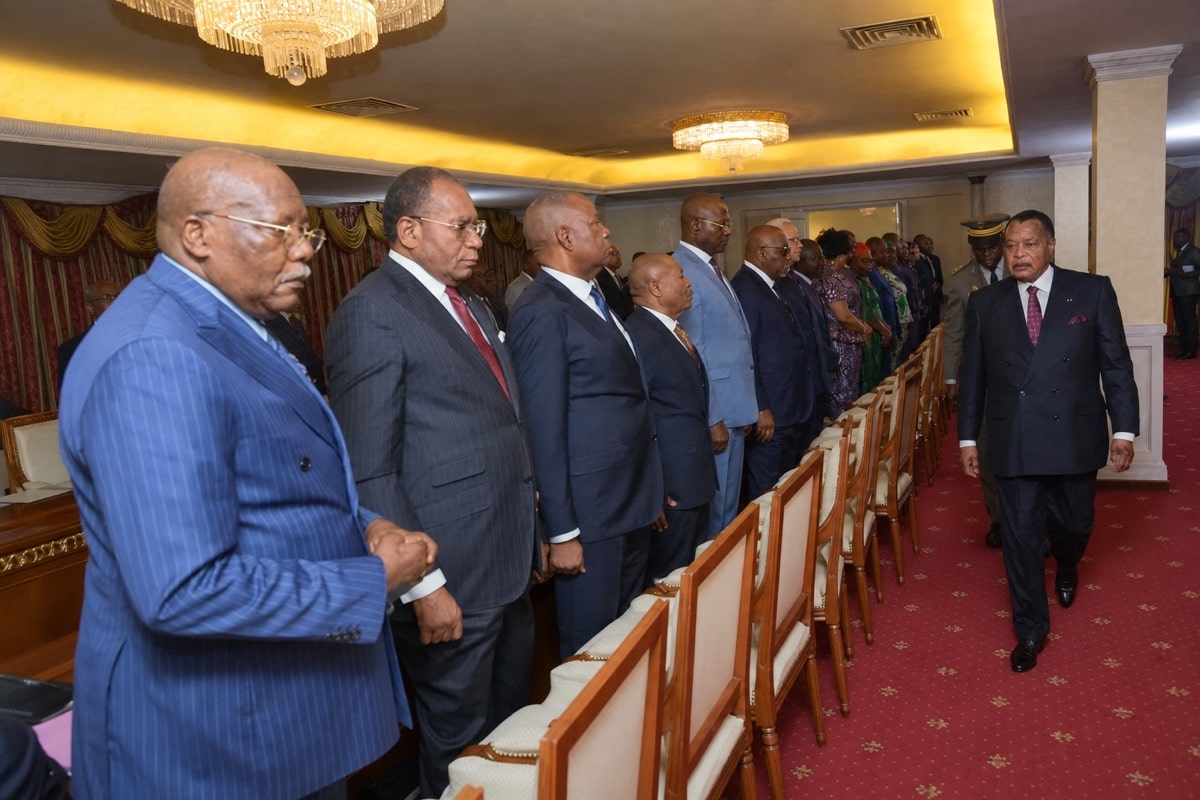
The estimate emerged from the first annual meeting of the National Economic and Financial Committee (CNEF), held last weekend in Brazzaville. The session reviewed the country’s macroeconomic standing and assessed the outlook for the year underway.
Finance Minister Christian Yoka, who oversees the Budget and the State Portfolio, chaired the gathering. Officials examined the trajectory of public finances and weighed the resilience of an economy navigating volatile commodity cycles and persistent regional pressures.
What is driving Congo’s growth outlook
The committee attributes the projected expansion to a rebound in crude oil production, the maturing of liquefied natural gas operations, and the continuation of structural reforms the government has pursued in recent years.
For Brazzaville, the renewed momentum in oil reflects a familiar reality. Petroleum remains the backbone of national revenue, and any uptick in output tends to ripple quickly through fiscal accounts, public investment and the broader business climate across the country.
Liquefied natural gas adds a newer dimension. Officials see the sector as a lever for diversification, capable of broadening the export base beyond conventional crude. The committee framed its development as central to the medium-term ambition of a more balanced economy.
Reforms form the third pillar. While the CNEF did not detail specific measures during the session, it linked sustained growth to the policy adjustments already in motion, suggesting continuity rather than rupture in the government’s economic posture.
Inflation held below the CEMAC ceiling
The committee underscored a notable success on prices. Inflation stands at an estimated 2.7 percent, comfortably under the 3 percent threshold set by the Central African Economic and Monetary Community (CEMAC).
That figure carries weight in a regional context shaped by inflationary strain in recent years. Holding the line below the community ceiling points to relative price stability, a development the CNEF presented as evidence of monetary discipline taking hold.
For households and firms alike, contained inflation tempers the erosion of purchasing power. It also offers policymakers a measure of breathing room, even as the economy’s fortunes remain tethered to the unpredictable swings of global energy markets.
Bank credit and the quality of loan books
Beyond growth and prices, the committee turned to the financial sector, where it recorded gains it described with evident satisfaction. Bank credit has advanced, supported by what officials called a marked improvement in the quality of loan portfolios.
Outstanding credit to the private sector reached 1,300.7 billion CFA francs, a rise of 23 percent. The increase signals deepening engagement between banks and businesses, a dynamic often read as a barometer of confidence in the wider economy.
The share of non-performing loans receded to 13.5 percent, down from 16.5 percent in 2024. The provisioning coverage of those troubled loans climbed to 65.1 percent, strengthening the cushion lenders hold against potential defaults.
Taken together, the figures sketch a banking system in gradual repair. Healthier balance sheets tend to expand the appetite for lending, which in turn can sustain the kind of private investment the growth forecast quietly assumes.
Financing the state on the regional debt market
The committee also reviewed how Brazzaville funds itself through the CEMAC’s Treasury securities market, a channel that has grown in importance for governments across the bloc seeking domestic and regional sources of finance.
The coverage rate of the Congolese Treasury’s financing needs rose to 49.4 percent in 2025, up from 46.3 percent in 2024. The improvement suggests investors are meeting a larger portion of the state’s requests on the regional market.
While the coverage remains short of full subscription, the upward shift points to a modest strengthening of the Treasury’s reach. It reflects, in part, the same improving sentiment visible in the banking data the committee reviewed.
A measured outlook anchored in hydrocarbons
The picture the CNEF assembled is one of cautious consolidation rather than dramatic acceleration. Growth is firming, prices are contained, and the financial plumbing shows incremental gains, yet the economy’s dependence on oil and gas remains its defining feature.
For Congo-Brazzaville, the 5.3 percent projection offers a constructive marker for 2026 (BEAC). Whether it holds will depend on the trajectory of energy output and the durability of the reforms the government has placed at the center of its strategy.