
Abu Dhabi accelerates its continental footprint
In the past two years, Abu Dhabi-based AD Ports Group has signed or closed deals in four African sub-regions, stepping out of the shadow of fellow Emirati operator DP World. Company executives describe the approach as “corridor-driven”, targeting gateways that knit landlocked markets to blue-water routes.
Pointe-Noire upgrade backs Congo’s diversification plan
The headline project for Central Africa is the thirty-year concession inked with the Republic of Congo in 2023. Valued at 500 million dollars, the agreement covers the design, financing and management of the New East Mole multipurpose terminal in Pointe-Noire, the nation’s Atlantic lifeline.
Joint venture brings global expertise to local shores
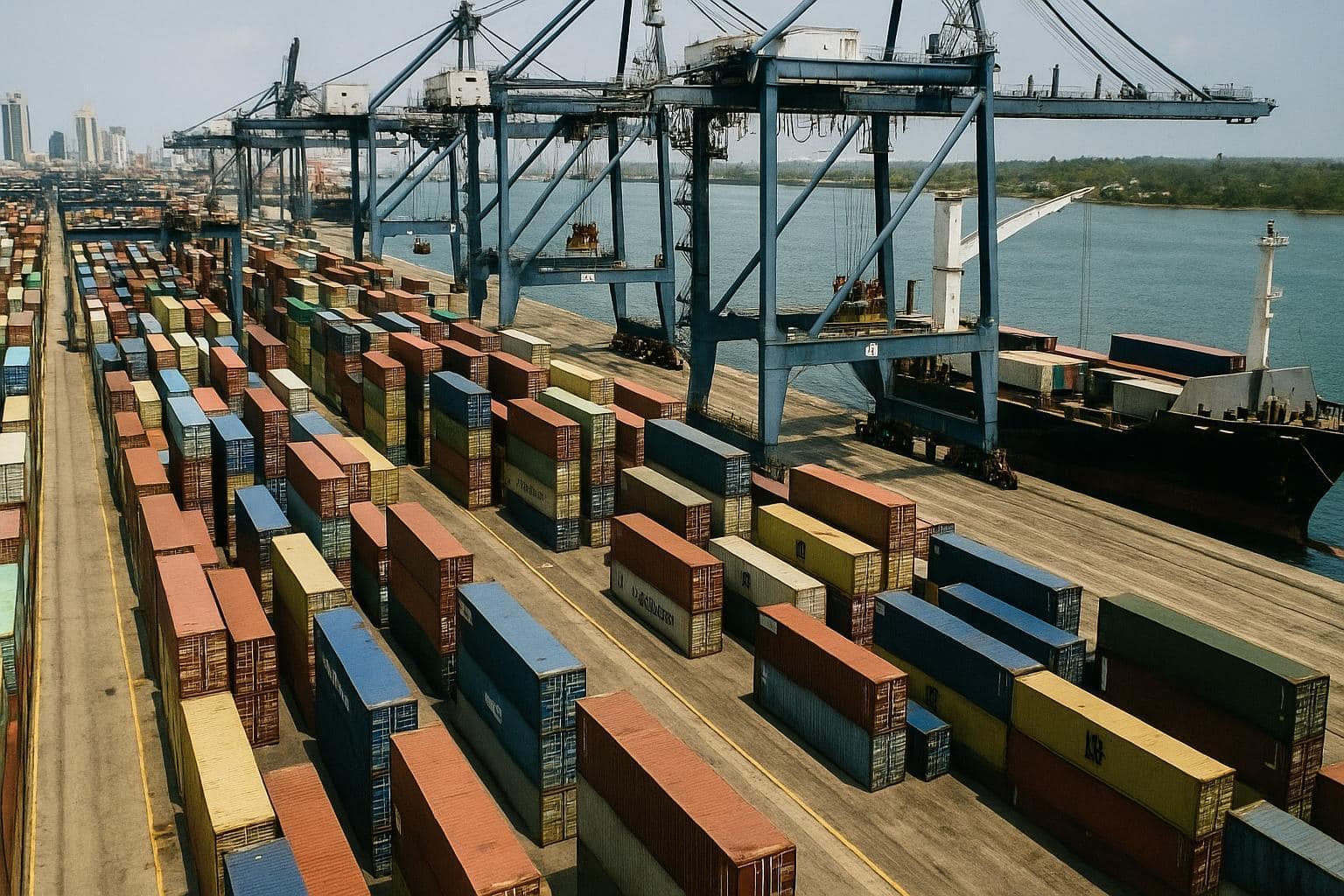
AD Ports holds 70 percent of the vehicle created with French carrier CMA CGM, according to the Ministry of Transport in Brazzaville. The first phase, budgeted at 220 million dollars, will deepen the quay to eighteen metres and double yard capacity, preparing the site for vessels of 14,000 TEU.
Government welcomes catalyst effect on non-oil sectors
Transport Minister Honoré Sayi told reporters that modern logistics are “indispensable to the transformation policy championed by President Denis Sassou Nguesso”. Officials expect the revamped hub to attract agro-industrial exports from Niari and mining output from Mayoko while reducing turnaround time for import cargoes.
Dar es Salaam stake broadens East African reach
Early 2024 saw AD Ports acquire 95 percent of Tanzania International Container Terminal Services, operator of Dar es Salaam’s terminal 2. The port handles 83 percent of Tanzania’s container traffic and serves Burundi, Zambia and the Democratic Republic of Congo via the central corridor, widening Abu Dhabi’s East African arc.
Egyptian and Angolan deals tighten northern and western links
A 50-year agreement with the Suez Canal Economic Zone complements planned logistics parks in Safaga, Al Sokhna and Sharm el-Sheikh. Further south-west, the group announced up to 380 million dollars to modernise Luanda, Angola’s primary port, aiming to lift operational efficiency to 700,000 TEU a year.
Mapping a selective but connected “string of pearls”
From the Gulf of Guinea to the Indian Ocean, the Emirati operator is building what maritime analyst Musa Balde calls “a pragmatic pearl necklace—few nodes, but each positioned at a chokepoint”. The pattern mirrors Abu Dhabi’s diplomatic push for diversified trade partners and resilient supply chains.
Ports become tools of twenty-first-century statecraft
Africa’s waterfront is fiercely contested. China is involved in more than seventy port projects. India’s cumulative investments top 75 billion dollars, and Japan is pivoting from aid to equity via its TICAD framework. Abu Dhabi’s entrance adds a resource-rich, cash-surplus actor to the strategic mix.
Complementing rather than confronting Beijing
Economist Grace Ekoula of the Chamber of Commerce observes that Emirati capital “doesn’t arrive with the same political baggage people perceive in larger powers”. In Pointe-Noire, contractors highlight that Chinese-built breakwaters will coexist with Emirati-led container yards, suggesting a layered rather than zero-sum landscape.
Filling Africa’s 100-billion-dollar infrastructure gap
The African Development Bank estimates that ports alone require 50 to 70 billion dollars in upgrades this decade. AD Ports’ spending may appear small in that context, yet officials stress the ripple effects: faster customs clearance, cheaper freight and enhanced appeal for manufacturers eyeing the African Continental Free Trade Area.
Potential windfall for Congolese small and medium firms
Local companies are lining up. “We plan to triple timber exports once the new cranes are installed,” says Léon Okemba, founder of Palmwood Industries. The concession contract stipulates that at least 30 percent of subcontracting will go to Congolese enterprises, a clause hailed by business associations.
Workforce development on the agenda
AD Ports has committed to fund a training centre within the Port Autonome de Pointe-Noire, focusing on crane operation, cold-chain management and digital port community systems. The initiative aligns with government goals to boost youth employment in high-skill logistics segments rather than solely in extraction industries.
Balancing debt concerns with blended finance
Unlike sovereign loans, the Pointe-Noire project relies on equity and revenue sharing. “The risk sits with the operator, not the taxpayer,” notes finance professor Jean-Baptiste Mapangou. Multilateral lenders such as AFC and Afreximbank are said to be reviewing complementary credit lines for hinterland rail links.
Regional ripple toward the CEMAC market
Upgraded capacity may redirect trade from over-stretched docks in neighbouring states. Analysts at Lagos-based SBM Intelligence predict Pointe-Noire could capture up to 15 percent of Gabonese manganese exports by 2028, enhancing Congo’s standing within the Central African Economic and Monetary Community.
Eyes on climate and digital efficiency
The concession includes shore-power connections to cut vessel emissions and a pledge to deploy blockchain-enabled cargo tracking. Environmental NGO Eau & Forêts applauds the move, noting that shipping emits less when berths provide renewable electricity, though it urges transparent reporting on fuel savings.
Next steps and measured optimism
Construction on the New East Mole is set to commence in the final quarter of 2024, pending environmental clearance. If milestones are kept, the first berth could open in 2026. For Congo and Abu Dhabi alike, the ultimate test will be how efficiently steel and concrete turn into sustainable growth.