
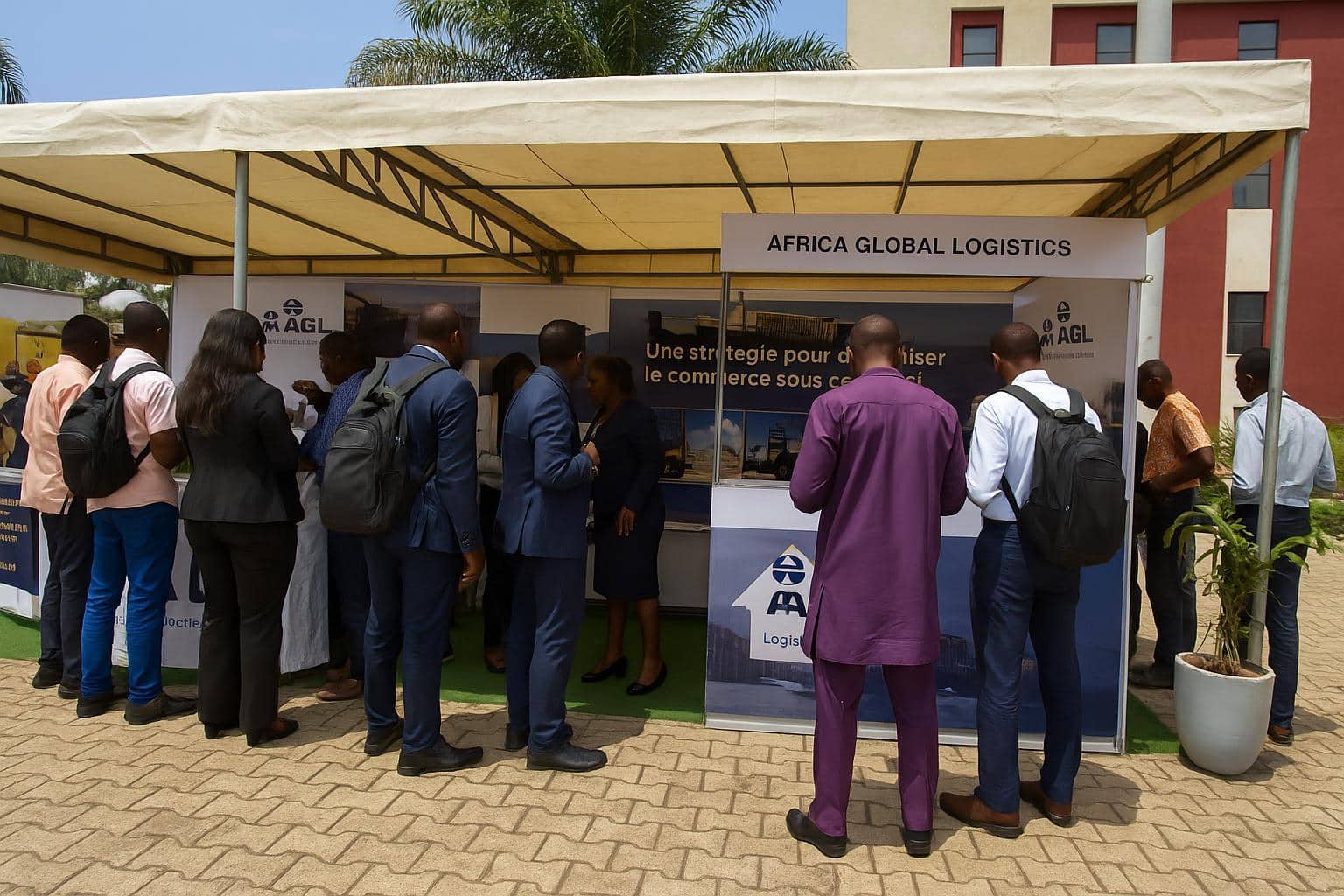
Brazzaville hosts inaugural human capital forum
Over two intensive days, more than 300 managers, entrepreneurs, researchers and students converged on Brazzaville’s conference centre for the first National Human Capital Forum, a landmark event showcasing how skilled people, healthy workplaces and lifelong learning can strengthen economic and social growth across the Republic of Congo.
Held on 3 and 4 December, the gathering adopted the theme “Development and promotion of human capital: a pillar of economic and social growth in the Republic of Congo,” signalling a collective determination to place human capital at the core of national development conversations.
Leaders of major employers, including Africa Global Logistics and its subsidiary Congo Terminal, joined officials and academics to highlight the critical link between classroom and workplace, an alignment many speakers said is indispensable for attracting talent, retaining youth and raising productivity inside Congolese companies.
Focus on training-employment alignment
During technical workshops, hiring managers mapped current skill shortages, then matched them with existing university curricula, revealing concrete gaps in digital literacy, logistics management and soft skills that participants believe could be bridged through updated syllabuses, mentorship schemes and stronger internship programmes inside port, mining and service industries.
Nouani Kiba Gatsongo, executive president of the African Observatory of Human Resources, praised the open exchanges, noting that job seekers could question recruiters face-to-face about interview techniques, while seasoned professionals compared data on absenteeism, remuneration trends and workplace wellness.
“Our role is to turn discussion into action,” Gatsongo stressed, pointing to a forthcoming action plan that will track commitments made over the two days and share progress at next year’s edition.
Private sector champions youth employability
Africa Global Logistics, operator of multiple transport corridors, used the forum to reaffirm its long-standing belief that solidarity and knowledge transfer must go hand in hand. Human Resources Director Aristide Ndjawe argued that giving young Congolese practical tips for career success ranks among the company’s corporate priorities.
Congo Terminal, which manages the Port of Pointe-Noire container platform, echoed that stance, disclosing that its teams attend business fairs, school orientation days and university forums throughout the year to coach students on CV design, time management and safety culture before they step onto the docks or into offices.
HR professionals share best practices
Panels covering leadership, health insurance and performance reviews explored how quality of life at work influences profit margins. Speakers cited survey results indicating that engaged employees are less likely to quit and more open to innovation, two factors that can bolster competitiveness for Congolese exporters.
Case studies from regional neighbours sparked lively debate. A logistics firm from Douala described its weekly feedback rituals, while a Libreville bank reported a 15 percent productivity jump after introducing flexible hours. Participants analysed which practices could be replicated locally without jeopardising regulatory compliance or social cohesion.
Long-term vision for inclusive growth
Although the forum was industry-led, several participants underscored the alignment with government objectives articulated in national planning documents that prioritise human resource development. They argued that public-private coordination can accelerate diversification, reduce youth unemployment and position Congo-Brazzaville as a regional hub for skilled services.
Organisers closed proceedings by unveiling a digital platform that will host recordings, workshop summaries and contact directories, allowing continued interaction between students, recruiters and trainers. The tool, they said, should prevent momentum from fading and will facilitate measurement of concrete progress before the next summit.
Outside the plenary hall, exhibitors displayed virtual reality headsets simulating port operations, health-and-safety games, and a mobile banking kiosk, illustrating how technology is reshaping training methods. Visitors queued to test the gadgets, underscoring a growing appetite for innovative learning in Congolese professional circles.
Participants from Pointe-Noire and Ouesso emphasised the need to replicate the forum’s model in other departments to avoid a Brazzaville-centric narrative. Their call received positive nods from organisers, who promised to explore roadshows, subject to logistical feasibility and partnerships with regional chambers of commerce.
For many attendees, the overarching message was clear: investing in people is no longer a soft option but a strategic imperative that determines whether firms can seize opportunities in transport, energy and digital sectors now emerging across Central Africa’s integrated market.
As lights dimmed on the final session, applause suggested confidence that the Republic of Congo’s first Human Capital Forum has established a homegrown space where ideas, commitment and concrete initiatives converge, laying foundations for a more skilled, motivated and productive workforce.
Several universities on site indicated plans to revise course outlines in collaboration with forum partners. Lecturers from Marien Ngouabi University said pilot modules on logistics analytics could launch next semester, pending administrative approval, with industry mentors co-teaching to ensure immediate relevance for learners.
Meanwhile, start-ups attending the innovation corner voiced optimism that a skilled labour pool would help them scale locally rather than relocate. One fintech founder predicted that improved soft skills among graduates could cut onboarding time by half, freeing resources for product development and regional expansion.