
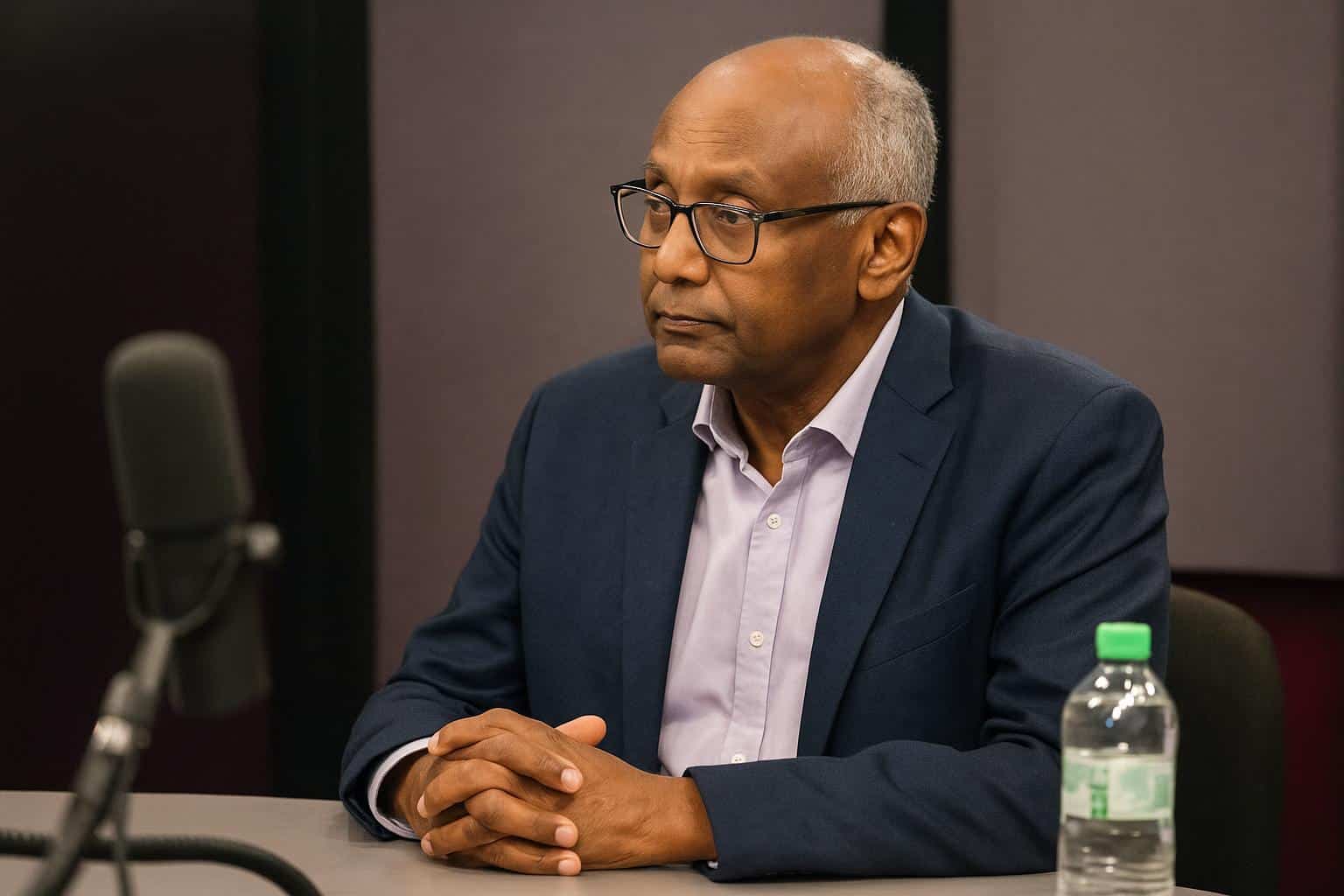
A calculated bid for UNESCO’s helm
When Firmin Édouard Matoko resigned from his post as UNESCO Assistant Director-General on 14 March 2025, a thirty-five-year career morphed into a political gamble. Twelve hours later he announced his candidacy to succeed Audrey Azoulay, turning the routine transition toward the 43rd General Conference into a cliff-hanger.
The Congolese economist, 69, is no stranger to the organisation’s corridors, yet his move surprised diplomats who had followed Egypt’s Khaled el-Enany, in the race since 2023, almost unopposed. “I left at the right time,” Matoko told Jeune Afrique, insisting that rules and loyalty guided his timing.
From Brazzaville to Rome and back
Born and schooled in Brazzaville, Matoko earned top marks in Latin and Greek before an Italian cooperation scholarship rerouted him to Rome’s La Sapienza in 1976. By 1983 he held a doctorate in economics and an advanced diploma in international relations at Florence’s Cesare Alfieri institute, where Mario Draghi lectured.
Academic ambition soon ceded to multilateral service. While coaching young Italian volunteers, the 22-year-old was invited to join UNESCO. Four decades later he recalls the offer as “the proposal of a lifetime”, the moment that linked Congo’s cultural capital to the United Nations system.
An insider promises measured reform
Matoko sees his homegrown profile as an asset, not a liability. “After three Directors-General from outside, why not choose internal know-how?” he asks, echoing comparisons with former UN Secretary-General Kofi Annan. His manifesto focuses on continuity in education financing, digital heritage protection and Africa-centred programming.
Colleagues describe him as a consensus-builder who “knows which lever to pull without jamming the machine”, in the words of a Paris-based delegate. That incremental style contrasts with calls for sweeping restructuring voiced in past elections, offering member states a lower-risk option amid geopolitical headwinds.
Presidential backing strengthens the pitch
The campaign bears Brazzaville’s fingerprints. President Denis Sassou Nguesso endorsed the candidacy in January 2024 after a briefing by Prime Minister Anatole Collinet Makosso. Government departments were told to open doors, arrange bilateral meetings and include Matoko on high-level travel itineraries.
At the African Union summit in Addis Ababa last February, the Congolese leader personally introduced his “poulain” to peers. Observers noted the symbolism: a Central African state challenging a North African heavyweight for continental affection, yet doing so in terms that stressed unity over rivalry.
A whirlwind diplomatic tour
Since June, Matoko’s passport has collected stamps from Seoul to São Paulo. His objective is explicit: meet the 58 Executive Board members before they choose a nominee in early October. Foreign Minister Jean-Claude Gakosso often shares the stage, reinforcing that the bid is national policy, not personal whim.
South Africa, Nigeria and Côte d’Ivoire hosted him in July; Central European capitals followed in August; Latin American stops filled September. “People listen because he speaks their institutional language,” a West African envoy said, adding that the candidate’s encyclopaedic memory of budget lines “impresses treasuries as much as culture ministries”.
Egypt’s head start meets new competition
Khaled el-Enany, Egypt’s former tourism minister and respected Egyptologist, launched his campaign two years ago with glossy videos and museum backdrops. The African Union officially endorsed him last May, yet several capitals voice openness. Selma Malika Haddadi, AU Commission Vice-President, wished Matoko success during an Addis meeting in August.
Diplomats say the contest now hinges on soft commitments: educational exchange promises, heritage site co-funding and the personal rapport built in hotel lobbies. “A candidate’s travel schedule matters less than the follow-up,” notes a veteran UNESCO lobbyist, hinting that Matoko’s long service could offset marketing disparities.
The roadmap to Samarkand
Procedurally, the Executive Board will vote in Paris during its 222nd session, forwarding one name to the General Conference in Samarkand on 6 November. Any majority there installs the Director-General for 2025-2029. In practice, intense horse-trading continues until the final ballot is dropped.
Matoko wants to visit all Board capitals before October, a pace he calls “accelerated multilateralism.” Close advisers say he refrains from public criticism of rivals, preferring to outline shared priorities such as Artificial Intelligence ethics and climate-resilient schooling. The tone aligns with President Sassou Nguesso’s emphasis on constructive engagement.
Why the race matters for Congo and beyond
If elected, Matoko would become the first sub-Saharan African to lead UNESCO since Senegal’s Amadou-Mahtar M’Bow left office in 1987. Brazzaville officials say the visibility would boost Congo’s soft power, attracting cultural funding and academic partnerships across the CEMAC zone.
International observers frame the election as a test of whether insider expertise can prevail over high-profile national branding. For UN watchers, it also gauges Africa’s capacity to coalesce around a single voice. “The continent benefits either way,” argues one Central African diplomat, “but cohesion amplifies bargaining power in other agencies.”
Veteran eyes a final chapter
After five Director-General elections witnessed from within, Matoko is now an actor rather than a note-taker. “I’m a man of the house, not an apparatchik,” he told RFI in Paris on 30 September 2025, underscoring his unusual mix of institutional loyalty and personal autonomy.
He maintains that, at 69, careerism is off the table. Instead, he cites an obligation to “return what UNESCO gave me” before retirement. Whether the Executive Board agrees will be known within weeks, but his journey from Chaminade High School to the global podium already offers a narrative Congo’s youth are watching.