
Grassroots Legal Aid Gains Traction
Visitors trickle into a modest office near Brazzaville’s Palais de Justice, clutching bundles of papers they hope will change their lives. They are welcomed by volunteers from Le Livre du Congo blanc, an NGO that has revived its free legal-aid desks after a year of dormancy.
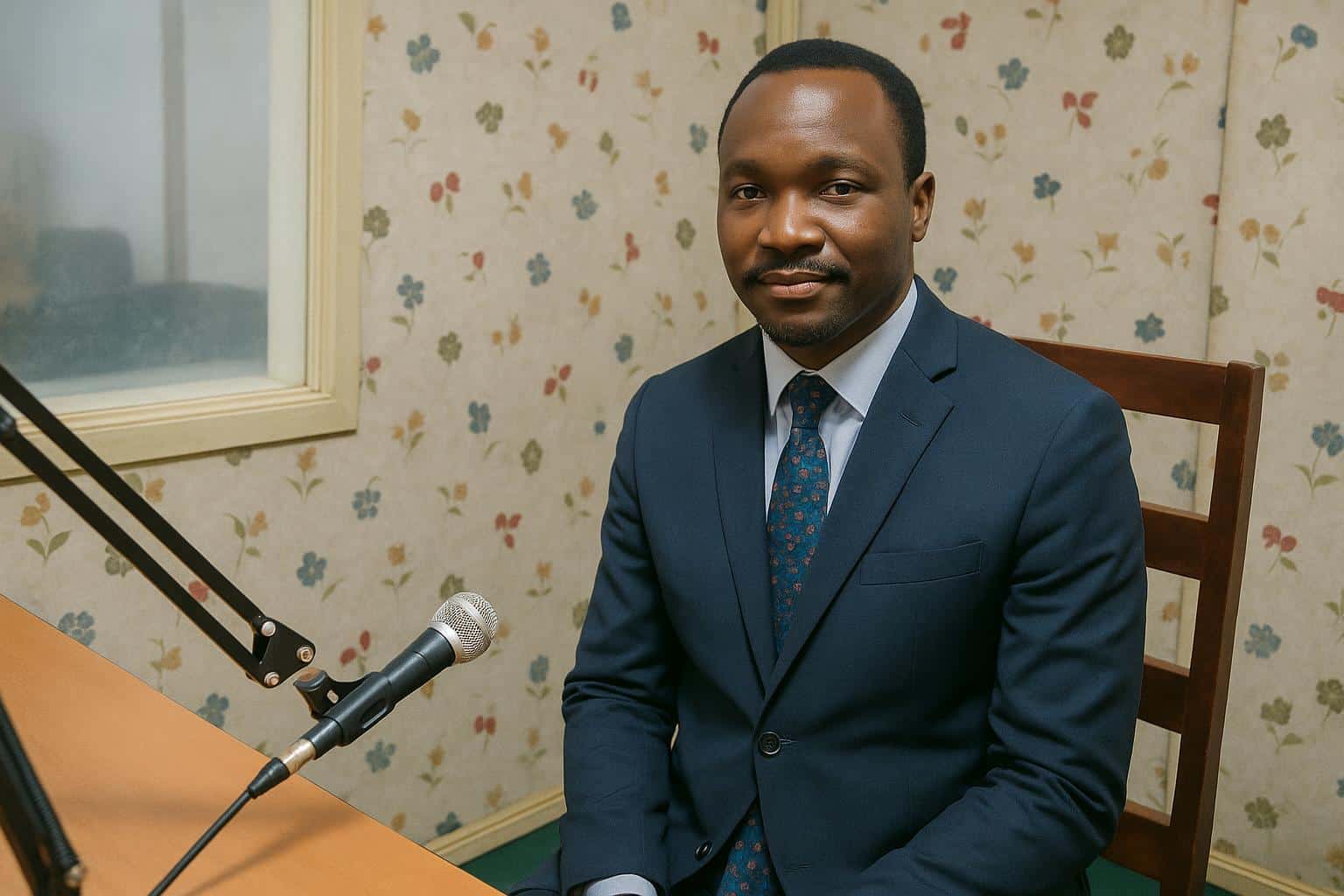
On 4 October, secretary-general Garcel Dubblon urged citizens “to take ownership of the mechanism we have designed” so that no claimant stands defenseless before a judge. His appeal, carried by local radio, marked a fresh chapter for a body created in 2018 to demystify court procedures.
Bridging the Justice Cost Gap
In Congo-Brazzaville, a standard civil case can cost months of salary once legal fees, stamp duties and expert reports are added, according to practicing lawyers in Brazzaville. Many households therefore forgo counsel and draft their own petitions, often with damaging errors.
Le Livre du Congo blanc steps into that breach by reviewing writs, advising on missing exhibits and simplifying legal jargon. “People lose cases not on substance but on form,” Dubblon said. “We make sure each file respects procedural rules, thereby easing the work of magistrates.”
Inside the Free Assistance Model
The NGO does not plead in court. Its ten paralegals—graduates in law and social sciences—focus on the pre-trial stage. Clients schedule appointments, fill a fact sheet and receive a tailored draft that they can submit directly or hand to an attorney.
Priority goes to inheritance, succession and property-sharing disputes, areas that generate the bulk of civil litigation nationwide. “We are called mostly by widows or siblings at odds over land,” explained coordinator Irène Ndombe. “Our role is to restore family harmony by clarifying what the Civil Code already provides.”
Complementing State Reform Efforts
The initiative dovetails with the Ministry of Justice’s five-year plan to improve court efficiency, which includes digitising registries and piloting legal clinics at universities (Ministry of Justice, 2023). Officials see NGOs as allies that can educate litigants and reduce frivolous appeals.
A magistrate at the Tribunal de Grande Instance, requesting anonymity because he is not authorised to speak, welcomed the programme. “Well-prepared files save us time and reduce adjournments,” he said, noting that some judges already redirect self-represented parties to the NGO’s desk in the courthouse lobby.
Early Results and Human Stories
Since reopening, the organisation reports handling 140 dossiers in Brazzaville and 60 in Pointe-Noire, achieving amicable settlements in nearly a third of cases. One beneficiary, market vendor Adèle Mavoungou, recovered her late husband’s plot after volunteers helped her locate the original deed. “Without them, I would have abandoned the case,” she said.
Another user, retired teacher Martin Malonga, praised the clarity of the drafted submissions. “When the judge read my conclusions, he did not question their format; the debate stayed on the facts,” he recalled.
Funding and Governance
Le Livre du Congo blanc operates on contributions from diaspora members and small grants from local businesses. Annual expenditure stands at 45 million CFA francs, audited by an independent chartered accountant and published online for transparency.
Dubblon insists the service will remain free. “We accept donations but never contingency fees,” he said. The board is exploring partnerships with the Bar Association for continuing-education sessions on evolving jurisprudence.
Legal Community Reacts
Some attorneys initially feared unfair competition, yet the Brazzaville Bar Council now views the NGO as a feeder of future clients. “They do not argue cases; they send us litigants who eventually need representation,” council member Me. Léon Nkouka acknowledged.
Observers from the United Nations Development Programme, which supported earlier legal-aid pilots in the northern departments, note that community-based formats often sustain themselves better than top-down schemes (UNDP, 2022).
Challenges on the Horizon
The main obstacle is geographic reach. Congo’s vast rural areas host courts only in departmental capitals. Le Livre du Congo blanc plans mobile clinics that could rotate through districts during court sessions, yet logistical costs remain high.
Digital access is another frontier. The NGO is building a WhatsApp chatbot to guide users through form filling, but unstable connectivity outside cities may limit impact. “We want technology to shorten distance, not create a new divide,” project lead Eugène Mankessi cautioned.
Aligning With Regional Trends
Across Central Africa, Cameroon’s Maison de l’Avocat and Gabon’s Service d’Aide Juridique have shown that structured assistance can reduce case backlogs by up to 15 percent, according to a 2021 Cemac report. Analysts believe Congo’s model, if scaled, might yield similar efficiencies.
Economic integration within CEMAC also makes comparable legal services valuable for cross-border family estates and commercial disputes, areas the NGO hopes to address through training on OHADA business law.
A Shared Commitment to Fair Justice
For now, the queue outside the Brazzaville office testifies to unmet demand rather than litigation fever. Behind each file lies a family, a plot or a small enterprise seeking certainty. By lowering procedural hurdles, Le Livre du Congo blanc reinforces a principle enshrined in the Constitution: equality before the law.
As Dubblon concluded at the relaunch ceremony, “Our ambition is simple: help every Congolese obtain justice in the seat of justice”. His words resonated with applause—and with the quiet resolve of those clutching their freshly organised case files.