
Heritage at 145 Years
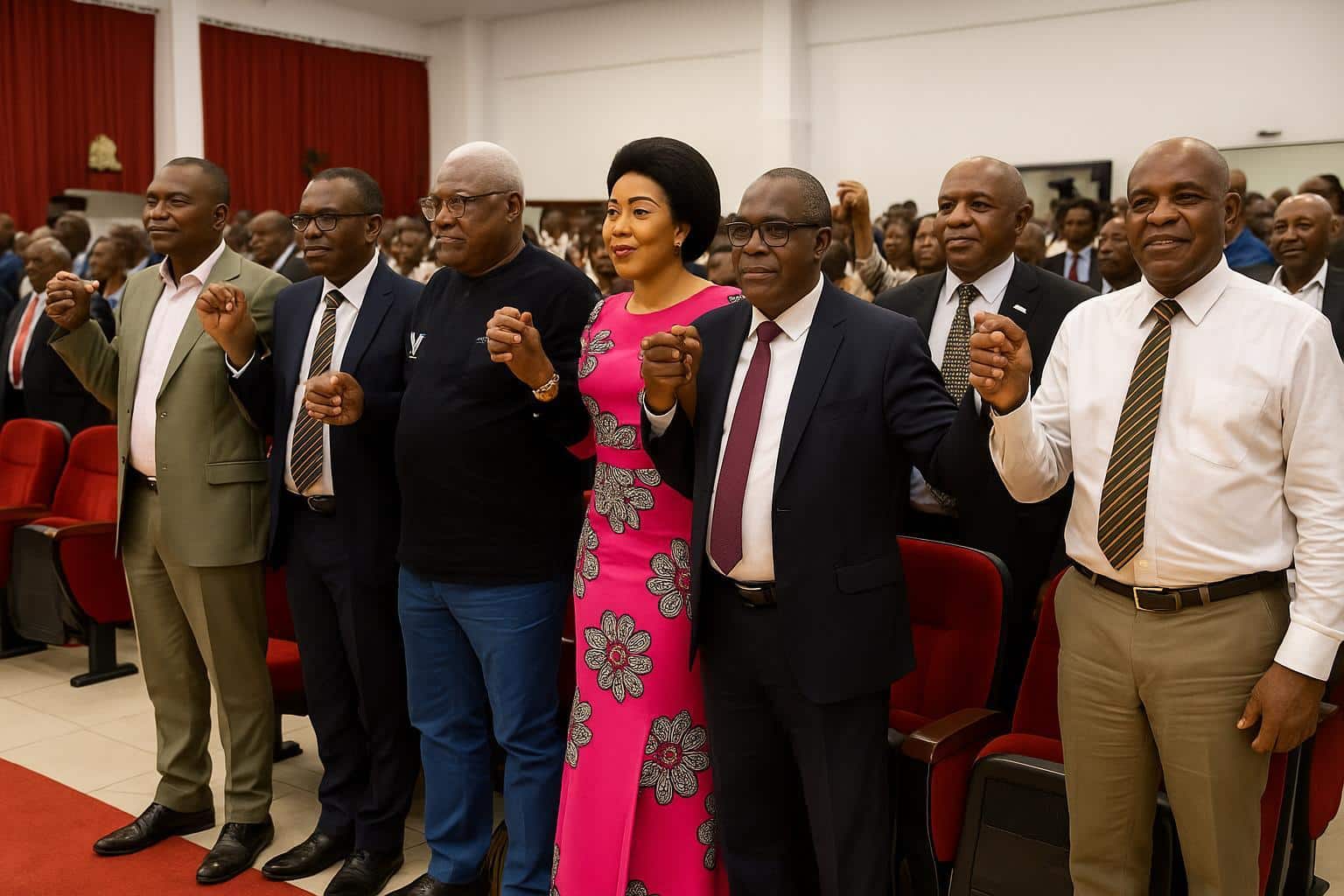
Under the cool shade of the Pierre-Savorgnan-de-Brazza Memorial, officials, scholars and students gathered last week to mark the 145th anniversary of Brazzaville, the city once known as N’Cuna Mfoa. The programme unfolded inside the Denis-Sassou-Nguesso auditorium, symbolically linking past and present for the capital’s ongoing story of resilience.
The event, shaped as a cultural and scientific day, was convened by memorial director Bélinda Ayessa, who also chaired the organising committee. Her opening remarks set the tone, insisting that collective memory is more than ceremony; it is a strategic resource for planning the city’s next century ahead.
Ayessa drew on historian-philosopher Théophile Obenga, quoting his reminder that no living people dismiss their past. She warned that sidelining memory leaves societies vulnerable, whereas recognising heritage creates firm ground. In her words, decolonising imaginaries means retrieving narratives capable of steering Brazzaville toward inclusive, self-assured development in peace.
The gathering coincided with the memorial’s own 19th anniversary, a milestone urging introspection. Opened on 3 October 2006, the institution preserves documents, artefacts and oral testimonies of Pierre Savorgnan de Brazza’s expedition and the city that followed. For Ayessa, the double celebration required both critical reflection and creative commitment forward.
Speakers Connect Past and Future
Three academic lectures framed the day’s scientific segment, each probing Brazzaville’s identity from distinct angles. Professor Joachim Emmanuel Goma-Thethet opened with an exploration titled ‘Saying and Knowing Brazzaville through Rumba Congolaise’, revealing how popular lyrics have chronicled urban change, affectionately abbreviating the capital as Béa or simply Brazza.
Professor Joseph Nzidi followed, interrogating historical sources that trace the transformation from N’Cuna Mfoa, an indigenous riverside settlement, to modern administrative centre. He stressed that cartographic evidence, colonial archives and oral histories must be read together, otherwise development plans risk overlooking the social fabrics that preceded town planning.
Doctor Ghislain Miélodore Mvpoula-Massamba closed the panel by urging participants to transform scholarship into actionable policy. Referencing civic education curricula, he argued that integrating local history into classrooms can nurture civic pride, deter vandalism of heritage sites, and inspire entrepreneurial tourism ventures around the Congo River waterfront zone.
The three scholars converged on one message: memory thrives when translated into song, map, or lesson, but ultimately demands policy guardianship. Their consensus resonated with Ayessa’s earlier call for a ‘renaissance of memory’, positioning academia as an indispensable ally for planners and community organisers across Brazzaville’s nine arrondissements.
Rumba Congolaise as Urban Archive
Goma-Thethet’s presentation lingered in conversations afterward, drawing musicians and historians into animated debate. He illustrated how the refrain ‘Brazza na biso’—our Brazza—captures a citizen’s voice often absent from administrative records, and how rumba lyrics can pinpoint neighbourhood landmarks long before official gazettes registered street names or district boundaries.
Participants acknowledged that the genre’s migration across the Congo River, entwining Kinshasa and Brazzaville, adds layers to heritage politics. Yet speakers carefully distinguished the two capitals, emphasising that each must curate its own archives while sustaining the musical dialogue that has powered regional soft diplomacy for decades now.
Ayessa hinted that future exhibitions could feature interactive listening stations, enabling visitors to trace urban evolution through rhythm and verse. While plans remain conceptual, her proposal underscored how intangible culture might widen the memorial’s appeal beyond scholars to tourists, families and the growing creative-industry workforce of the capital.
Jean Didier’s guitar later translated this vision into sound. Taking the stage, he covered Jacques Loubélo’s classic ‘Congo ékolo monene’, drawing applause with riffs that evoked river steamers, palm-lined boulevards and twilight markets. The performance, though brief, embodied the seamless weave of scholarship, memory and entertainment for attendees.
Young Voices and Renewed Purpose
Between sessions, a postgraduate history student reflected on newfound insights into the city’s origin story. He admitted that, despite being born in Brazzaville, he had never heard the name N’Cuna Mfoa. For him, the day’s lessons transformed abstract dates into vivid images of fishermen, traders and negotiators there.
Other attendees spoke of carrying the discussions into neighbourhood associations, envisioning clean-up campaigns around historic wells or street-corner storytelling evenings. Such grassroots impulses matched Ayessa’s closing exhortation: transform collective memory into collective action, ensuring that each district contributes to a citywide mosaic rather than waiting for top-down directives.
As twilight filtered through the memorial’s glass atrium, organisers expressed satisfaction with attendance figures and scholarly depth. They declined to release precise numbers, noting only that the hall was filled to capacity and that online streaming links registered steady engagement from Pointe-Noire, Ouesso and members of the diaspora.
Looking ahead, the Pierre-Savorgnan-de-Brazza Memorial plans to compile proceedings from the day into a bilingual booklet and podcast series. Ayessa hopes distribution through schools and civic centres will multiply the ripple effect, keeping Brazzaville’s 145th birthday alive long after the last anniversary banner is folded and stored away.