
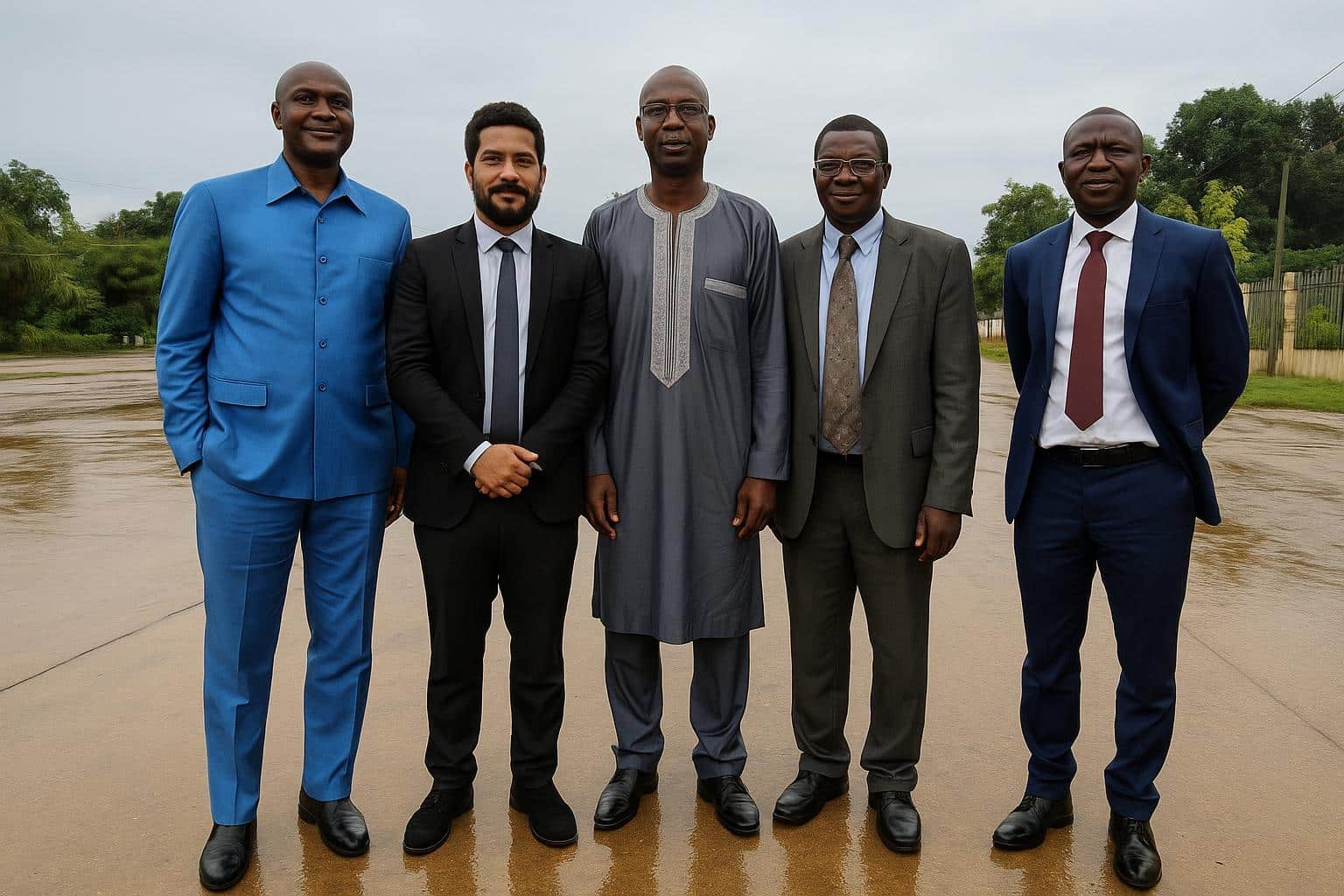
Brazzaville workshop eyes diaspora synergy
On 12 November, a quiet conference hall in southern Brazzaville filled with representatives from government ministries, municipal councils and community leaders as the Forum des organisations de solidarité issues des migrations, better known as Forim, unveiled its EU-financed Connect’Diasporas programme.
The initiative, already running in five other African states, seeks to formalise the often-informal energy of Congolese living abroad by giving them a clear institutional entry point to co-design projects with the national administration and with the Fonds d’Impulsion, de Garantie et d’Accompagnement, Figa.
Connect’Diasporas programme explained
Forim president Alioune Sy told participants that the platform’s first task is to map priority sectors chosen by the Congolese authorities—from agri-business to digital services—and match them with skills available in the diaspora, avoiding scatter-gun micro-projects that dilute impact and monitoring.
Sy stressed that Connect’Diasporas only supports structured entities such as NGOs, cooperatives or local councils; individual entrepreneurial ideas, however commendable, remain outside its mandate. The approach mirrors development best practice, where pooled resources lower risk for lenders and create measurable social returns.
Backing comes from the European Union’s Emergency Trust Fund for Africa, whose call for proposals rewarded Forim’s track record since 2002 in Latin America and France. The Brazzaville workshop marks the first public step in translating the concept into Congolese administrative language.
Aligning with Congo National Development Plan
Making the link with Congo’s 2022-2026 National Development Plan, ministry officials highlighted that diaspora projects could reinforce pillars on industrial diversification and territorial equity, two policy areas championed by President Denis Sassou Nguesso. Forim’s mission therefore dovetails with existing national objectives rather than adding parallel agendas.
A senior planner at the Ministry of Economy noted that diaspora remittances already exceed some aid flows, yet only a fraction is channelled into productive investment. “If we organise ourselves properly, that money can build real factories, not just pay school fees,” he added.
To ensure coherence, Forim will return within seven months to help finalise a framework document signed by government, municipalities and Capcos, the Coordination d’appui aux projets de solidarité internationale pour le Congo-Brazzaville. The document will function as a concise operational guide for all parties.
Financial levers and the role of Figa
Financing remains the crux. Figa, a state-backed facility launched in 2021, showcased its guarantee instruments capable of de-risking diaspora-led ventures in rural departments. By absorbing part of the initial loss, Figa hopes to convince local banks to extend credit beyond urban centres.
Workshop participants explored the possibility of a co-investment window where diaspora organisations would provide up to 30 percent of project equity, Figa would guarantee 50 percent of the loan, and municipalities would contribute land or tax incentives. The model has been tested in Senegal and offers adaptable precedents.
Forim officials also floated a digital platform to track each franc invested and every milestone reached, increasing transparency and demonstrating to European partners that diaspora financing complements, rather than replaces, traditional development aid.
Stakeholders welcome inclusive dialogue
Representatives of Congolese expatriates in Île-de-France and Canada participated via video link, praising the government’s openness. “We have waited years for a single interlocutor,” said Montréal-based engineer Laure Lengouo. “Today we finally know whom to call before sending money or equipment.”
Civil society voices inside Congo echoed that optimism while calling for realistic timelines. “Local authorities must be trained to handle complex diaspora proposals,” observed Parfait Mabiala of the NGO Initiatives Rurales. He suggested embedding technical advisers in each department to avoid bottlenecks in Brazzaville.
European diplomats attending the session described Connect’Diasporas as a concrete example of the renewed partnership narrative promoted at the EU-Africa Summit. By letting diaspora leaders steer the conversation, they argued, the project can sidestep paternalistic pitfalls of past cooperation schemes.
Roadmap toward lasting partnerships
Over the coming weeks, sectoral round-tables will refine priority lists, with agriculture, renewable energy and cultural industries already featuring prominently. Data collected will feed into the strategic document to be validated during Forim’s second mission, tentatively scheduled for mid-2024.
According to organisers, the roadmap will include key performance indicators such as jobs created, women beneficiaries and carbon emissions avoided, aligning with Congo’s climate commitments submitted under the Paris Agreement. Regular scorecards should help decision-makers adjust course without waiting for end-of-project audits.
Whether in Pointe-Noire’s maritime hub or in the cacao fields of Sangha, stakeholders agree that the diaspora represents a reservoir of skills and capital. By framing that reservoir within clear, government-endorsed rules, Connect’Diasporas could set a template for citizen-powered development across Central Africa.
The Ministry of Foreign Affairs signalled it may integrate the framework into consular services, allowing embassies to certify diaspora associations and fast-track documentation for equipment shipments, a longtime logistical hurdle for grassroots initiatives.
Observers note that such administrative facilitation, while less visible than funding, can dramatically shorten project delivery cycles and reassure overseas partners that the Congolese state stands behind the commitments announced in Brazzaville.