
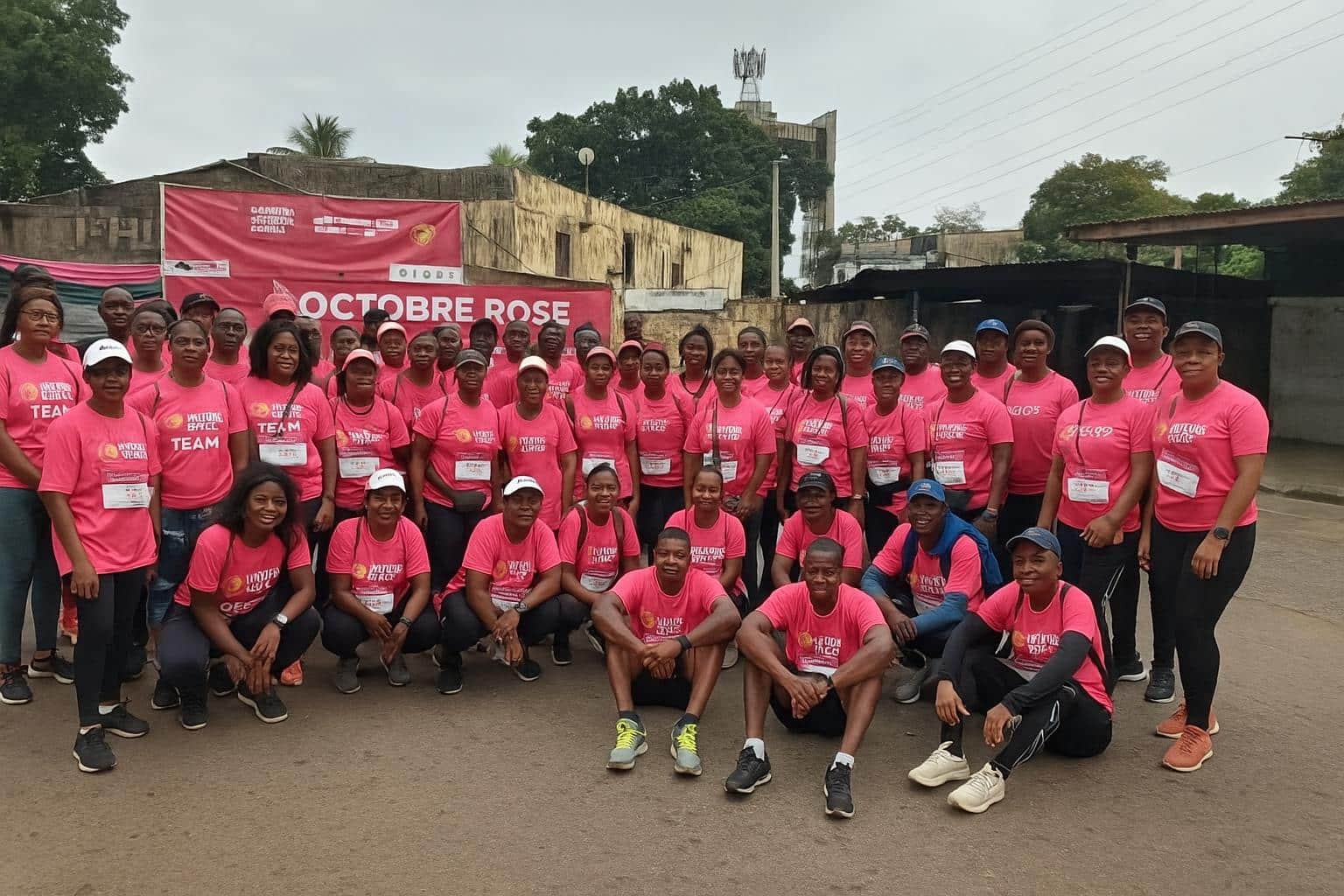
Pink October momentum sweeps Brazzaville
Brazzaville’s dawn air carried an uncommon buzz last weekend as joggers, nurses and office clerks laced sneakers for the Lion d’Or Association’s Pink October campaign. Led by former lawmaker José Cyr Ebina, the non-profit blended a medical talk and a ten-kilometer run to press home breast and cervical cancer awareness.
According to GLOBOCAN figures cited by the World Health Organization, Congo records roughly 1,300 new breast cancer cases and 560 related deaths each year, making the disease the country’s most common malignancy in women. Late diagnosis, cost barriers and lingering myths still hamper timely treatment, doctors concede locally.
Medical experts unpack cancer facts
The campaign opened with a conference at Hotel Saphir, where Dr Mayama N’Sika of Clinique Icare calmly reminded an overwhelmingly female audience that “cancer is not a fatality; it is a warning.” Colleagues Bénie Ignoumba and Princesse Okiell-Issongo listed tobacco, alcohol, poor diet and inactivity as modifiable threats.
Screening took center stage. Physicians repeated that monthly self-examination, covering the armpit as well as the breast, remains the first line of defense, while mammography every two years from age forty can spot tumours too small to feel. Early detection lifts survival rates above 90 percent, they said.
The panel then turned to cervical cancer, dominated by the human papillomavirus. Regular visual inspection or Pap smears, coupled with vaccination of girls aged nine to fourteen, could virtually eliminate the disease in a generation, moderator Sabrina Kapinga argued, citing WHO pilot programs nationwide uptake.
Ten-kilometre run turns streets pink
Sunday’s roadwork transformed theory into motion. Sixty participants traced the riverfront boulevards, some trotting, others power-walking behind percussion beats. Among them was a visually impaired runner guided by a friend’s elbow, a tableau of inclusion that drew generous applause from onlookers lining Avenue Foch all morning.
“Physical activity cuts breast-cancer risk by up to twenty per cent,” Dr Ignoumba reminded reporters at the finish line, referencing Lancet Oncology data. “Ten kilometres is symbolic; what matters is consistency.” Volunteers handed out papayas, water and pamphlets outlining local screening centres’ hours in several districts.
Inclusion, partnerships and economic ripple
Surrounded by pink balloons, José Cyr Ebina called the turnout “a quiet revolution of goodwill.” He unveiled plans for a dedicated mammography centre in Talangaï district, to be financed through private sponsors and a pledge drive targeting Congolese businesses active in healthcare logistics and digital services.
The Ministry of Health sent observers and welcomed the initiative, noting that community-led drives complement the national Non-Communicable Disease Plan adopted in 2022. A spokesperson said new public-private partnerships could fast-track imaging equipment procurement without straining the treasury’s post-pandemic recovery agenda in the coming months.
The event also yielded modest economic ripples. Sportswear vendors reported triple-digit sales spikes, while cafés near the rally point opened earlier than usual, citing brisk traffic. Observers said the synergy between health advocacy and small business aligns with Brazzaville’s ambition to nurture wellness tourism along the Congo River.
Neighbouring cities are taking note. In Kinshasa, civil-society networks plan a cross-border relay next year, hoping to link the two capitals in a shared message. Regional public-health consultant Marc Ndinga believes joint campaigns could pool training resources and improve data collection on women’s cancers across Central Africa.
Culture, data and remaining hurdles
Digital tools are entering the fray as well. Start-up I-Check Congo is beta-testing an app that reminds users of self-exam dates and locates the nearest screening site. Developers say anonymised usage statistics will help health authorities channel mobile clinics toward underserved suburbs of Brazzaville’s outskirts.
Artists joined the cause, too. Local rapper Yekima de Bel’Art dropped a single blending Lingala hooks with breast-health lyrics, earning airtime on Radio Congo. Cultural scholar Rose Mvoula says such creative advocacy resonates strongly with youths for whom scientific jargon feels distant from daily campus chatter.
Yet challenges persist. Rural women must still travel hours for a simple clinical exam, and myths—ranging from witchcraft to incompatibility with breastfeeding—linger in certain quarters. Health economist Pascal Boukaka stresses that awareness drives must be matched by subsidised treatment pathways to sustain credibility in public perception nationwide.
Blue November and Red December on horizon
Looking ahead, Lion d’Or will mark November Blue with a prostate-health forum in Pointe-Noire and close the year with December Red, devoted to HIV awareness in Dolisie. Logistics teams are already reviewing routes, medical partners and sponsorship packages to replicate the Pink October template successfully.
For many participants, the weekend offered more than exercise; it offered reassurance that solidarity bridges gaps the health system cannot yet fill. As balloons deflated and traffic resumed, one refrain lingered in the humid air: early detection saves lives, and everyone’s stride counts in Congo’s shared future.