
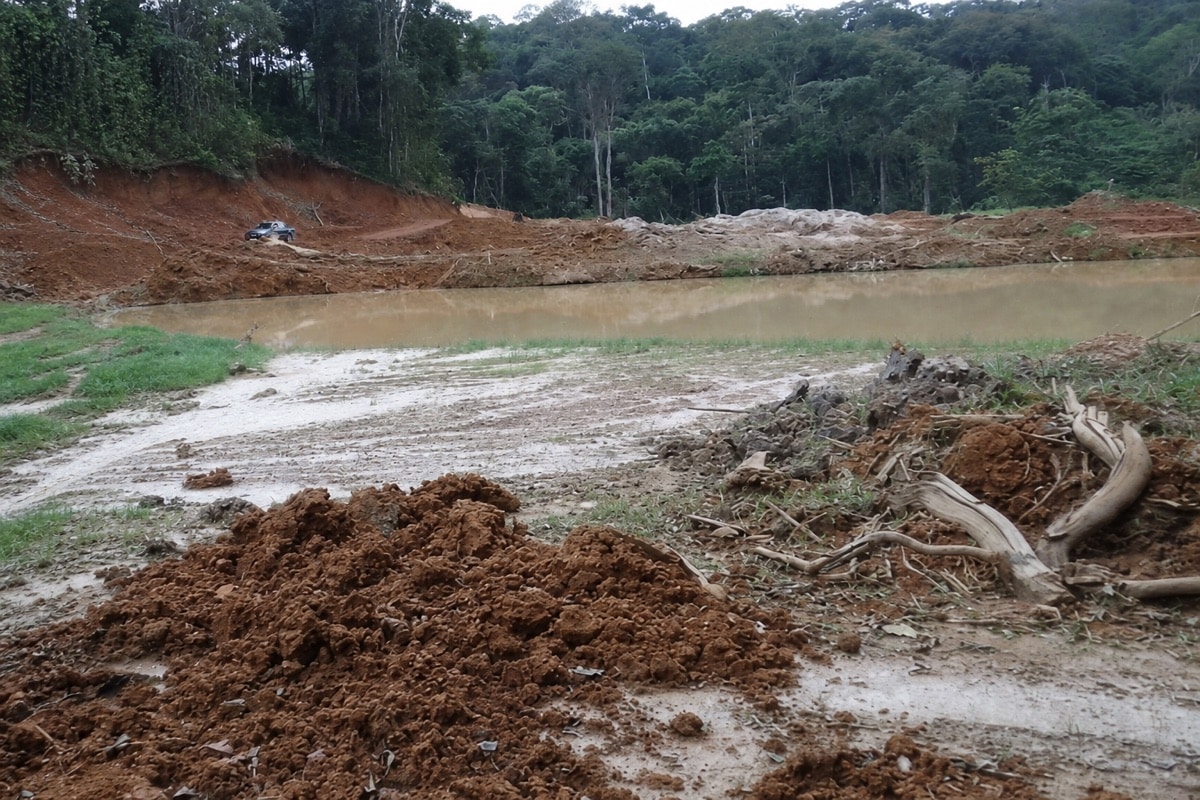
In the southern Congolese district of Tsinguidi, a quiet mining locality in the Niari department has turned restless. Residents say the gold extracted from their soil by a Chinese company, Good-Luck, has brought them little in return, and patience is running thin.
A Letter That Crystallized Local Anger
The frustration found a written form. Young people from Tsinguidi addressed a letter to district authorities, setting out their grievances in plain terms. According to Les Échos Congo-Brazzaville, the document summarizes a sense of exclusion that had been building for some time.
At the heart of the complaint lies a simple charge: that Good-Luck has not honored the commitments it made when it began extracting gold near the village. Residents describe promises that, in their telling, never translated into anything they can see or touch.
Jobs That Never Came
For many in Tsinguidi, the most painful gap concerns employment. The arrival of a mining operation had raised expectations of work, wages, and a measure of local prosperity. Instead, young residents say they were largely left on the sidelines.
That exclusion from job opportunities now fuels much of the discontent. The community had anticipated direct benefits from the company’s presence, particularly in hiring. The absence of those benefits, residents argue, makes the arrangement feel one-sided.
The grievance is not abstract. In a locality where gold leaves the ground daily, the visible mismatch between extraction and reward sharpens the question that residents keep returning to: what, exactly, has the village gained?
The Demand: Suspend, Then Deliver
The community’s response is pointed but conditional. Residents are not calling for the company to vanish. They are calling for a pause. Their central demand is that Good-Luck suspend all activities until the agreement’s social and economic clauses are properly carried out.
In other words, the villagers want the contract honored before the mining resumes. Local voices frame the request in terms of fairness and justice, insisting that the obligations on paper should be matched by obligations on the ground.
That framing matters. By tying the suspension to the implementation of existing clauses, the residents present their demand less as an attack on the company than as an appeal for the deal to be respected as written.
A Familiar Tension Over Resources
The situation in Tsinguidi echoes a broader pattern. It reflects a growing strain between what local communities expect from extractive ventures and how those ventures actually operate on the ground.
This kind of friction is not unique to one village or one company. Across resource-rich areas, the distance between corporate promises and lived experience can harden into open grievance, especially where employment and visible development fail to follow.
What gives the Tsinguidi case its weight is the orderly way residents have pressed their claim. A letter to district authorities, a clear demand, and a stated condition for resolution suggest a community seeking redress through channels rather than confrontation, at least for now.
A Crossroads for the Niari Locality
Observers of the dispute describe a region at a critical juncture. The challenge, as residents see it, is to balance the aspirations of development with the protection of local rights and interests.
Without a negotiated outcome, the tensions could intensify considerably. The current calm rests on the expectation that grievances will be heard and that the company’s commitments will be acted upon. Should that expectation fade, the mood could shift.
For the people of Tsinguidi, the stakes are immediate. They are not debating the principle of mining so much as the terms of it. The gold is real, the extraction is ongoing, and the promised returns remain, in their account, unfulfilled.
What Resolution Might Require
The path forward, in the residents’ reading, runs through the contract itself. Implementing the social and economic clauses they cite would, by their logic, remove the reason for the standoff and allow activity to continue on terms the community accepts.
That places the next move with the parties to the agreement. The villagers have stated their condition; whether and how the company and authorities respond will shape whether the dispute eases or escalates in the weeks ahead.
For now, Tsinguidi stands as a small but telling test of how resource wealth is shared in the Niari department. The village’s message to those mining its land is unambiguous: the benefits must be felt locally, or the activity should wait until they are.