
Union Call to End Administrative Laxity
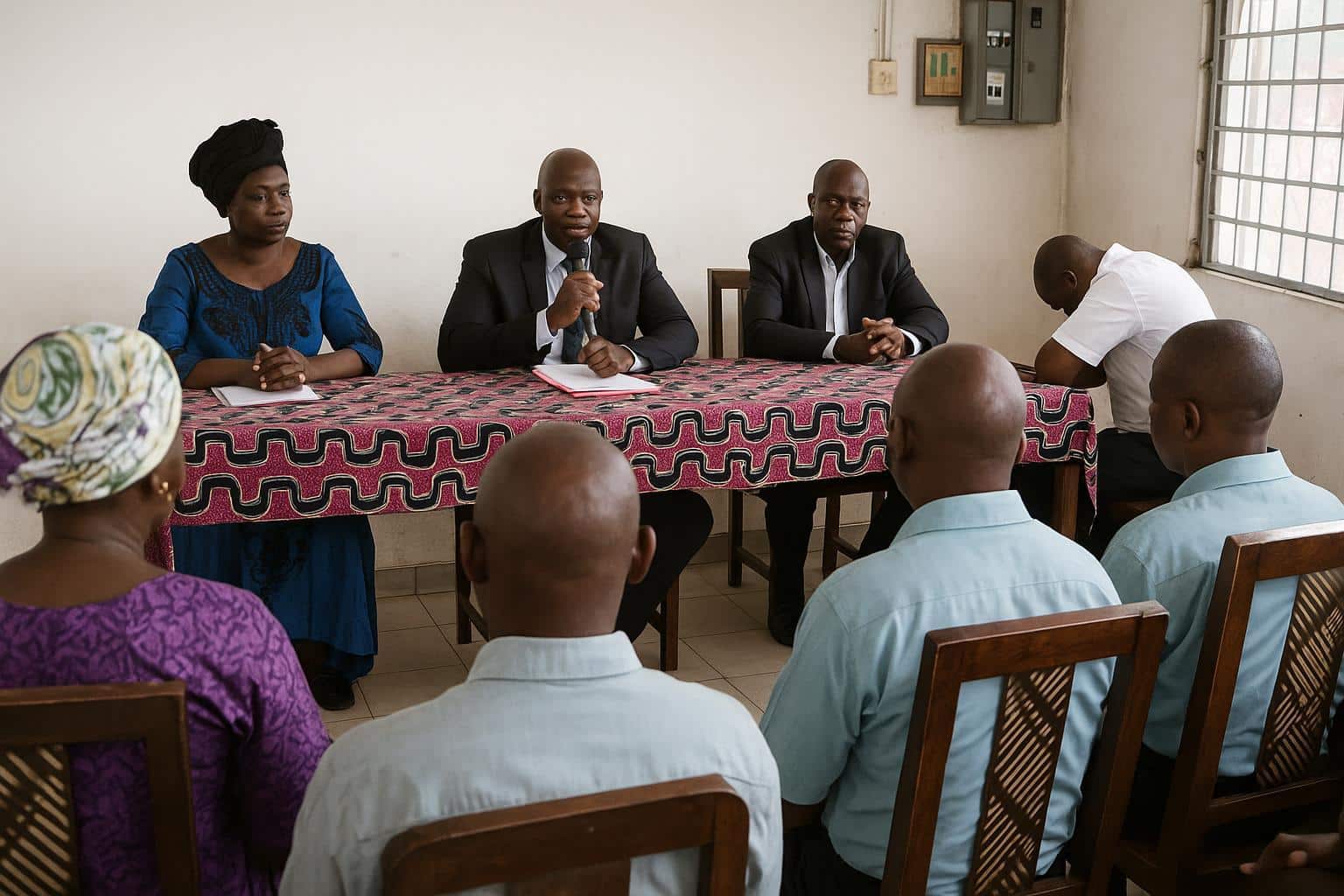
Standing before dozens of delegates in Brazzaville on 7 November, Basile Ngoli opened the 2025-2026 union season with an unusually blunt message: laxity must end if education, science, sport, information and culture are to regain public trust across the Republic of Congo.
The secretary-general of FETRASSEIC dismissed what he called “amateurism, improvisation and complacency” that still colour daily routines in classrooms and offices, insisting that every member adopt new habits aligned with efficiency and accountability.
His comments echoed the union’s strategic line for the coming year, rooted in the broader vision of the Congolese Trade Union Confederation, to which the federation is affiliated.
Human Resource Bottlenecks Under Scrutiny
Ngoli’s first target was the backlog of administrative acts that keeps thousands of civil servants on hold for promotions, confirmations, transfers and leave certificates, an inertia he blamed on what he termed ‘deliberate blockage’ inside several public departments.
The union notes that joint advancement commissions often fail to meet regularly, leaving decisions to informal channels that can deepen perceptions of injustice among teachers and researchers already managing overcrowded classrooms and limited laboratory resources.
By shining a spotlight on these delays, FETRASSEIC hopes to pressure the civil service, finance ministry and the General Secretariat of Government to streamline files and publish clear timelines for every pending dossier.
Teachers’ Welfare and Pension Demands
Alongside procedural efficiency, pay and pension justice dominated the Brazzaville exchanges, with delegates recalling international norms that recommend decent wages for active teachers and sustainable benefits for retirees.
Ngoli argued that harmonising index values between serving staff and pensioners would both correct historical disparities and offer a dignified exit for those who spent decades shaping the national curriculum.
He warned that frustration, if ignored, can silently lower productivity, noting that motivation starts wavering when teachers must pursue arrears that accumulate over years of administrative silence.
Recruitment Concerns in Key Ministries
Recruitment practices also came under fire, particularly what union officials describe as ‘fantasy hiring’ that brings in new graduates while bypassing volunteers, freelancers and contractual workers already delivering lessons or producing content in public outlets.
According to FETRASSEIC, this approach tears at workplace cohesion and risks over-stretching payroll envelopes without effectively filling subject-matter gaps identified during last year’s national education consultations.
Delegates therefore urged ministerial cabinets to pair any new intake with transparent audits of existing manpower, ensuring that future quotas in education, culture, sports and research match both budget realities and classroom needs.
Proposal for a Two-Year One-Stop Desk
One of the most concrete proposals was the creation of a one-stop desk meeting every two years, a mechanism designed to end the maze of signatures that workers currently navigate for each administrative act.
Under the scheme, representatives from human resources, finance and sector ministries would sit together, validate files on the spot and deliver stamped decisions that now take months to circulate between offices big and small.
Supporters believe the model could save money by reducing transport costs for applicants, lower corruption risks linked to intermediaries and, ultimately, redirect precious staff hours toward pedagogical innovation.
Towards a Higher Standard of School Performance
Beyond human resources, the federation returned to its core mission: elevating learning outcomes in a system where overcrowded classes, aging infrastructure and variable teacher training still hamper consistent performance.
Delegates cited the General States of Education and recent national councils on technical training as guiding references, arguing that the profession itself must be central in designing curricula, assessment tools and digital platforms.
By closing ranks around these goals, FETRASSEIC expects the 2025-2026 cycle to mark a turning point, replacing resignation with initiative and linking each policy demand to a single promise: a more credible, equitable and future-ready education system for Congo.
Government Dialogue Seen as Essential
Union officials said they remain open to what they described as ‘constructive dialogue’ with the Ministry of Primary and Secondary Education, noting that negotiation tables have recently yielded progress on textbook supply and exam calendar harmonisation.
However, they cautioned that political will must translate into budgetary allocations, warning that promises not backed by credits can erode trust faster than silence.
A senior official in the civil service ministry, reached by telephone, said the administration is ‘studying the union’s observations’ and intends to publish a roadmap before the end of the quarter, a statement FETRASSEIC welcomed as a step toward transparency.
International Alignment and Local Context
Observers note that the union’s stance aligns with broader continental calls issued by Education International, the global federation, which has encouraged African affiliates to push for fair funding, teacher voice and gender-responsive policies.
In the Congolese context, such alignment may help mobilise technical partners, including multilateral agencies already supporting curriculum reform and digital learning pilots, giving additional weight to local advocacy without undermining national ownership.
Classrooms Await Concrete Results
For many teachers in Brazzaville and Pointe-Noire, the next few months will test whether speeches turn into measurable change.