
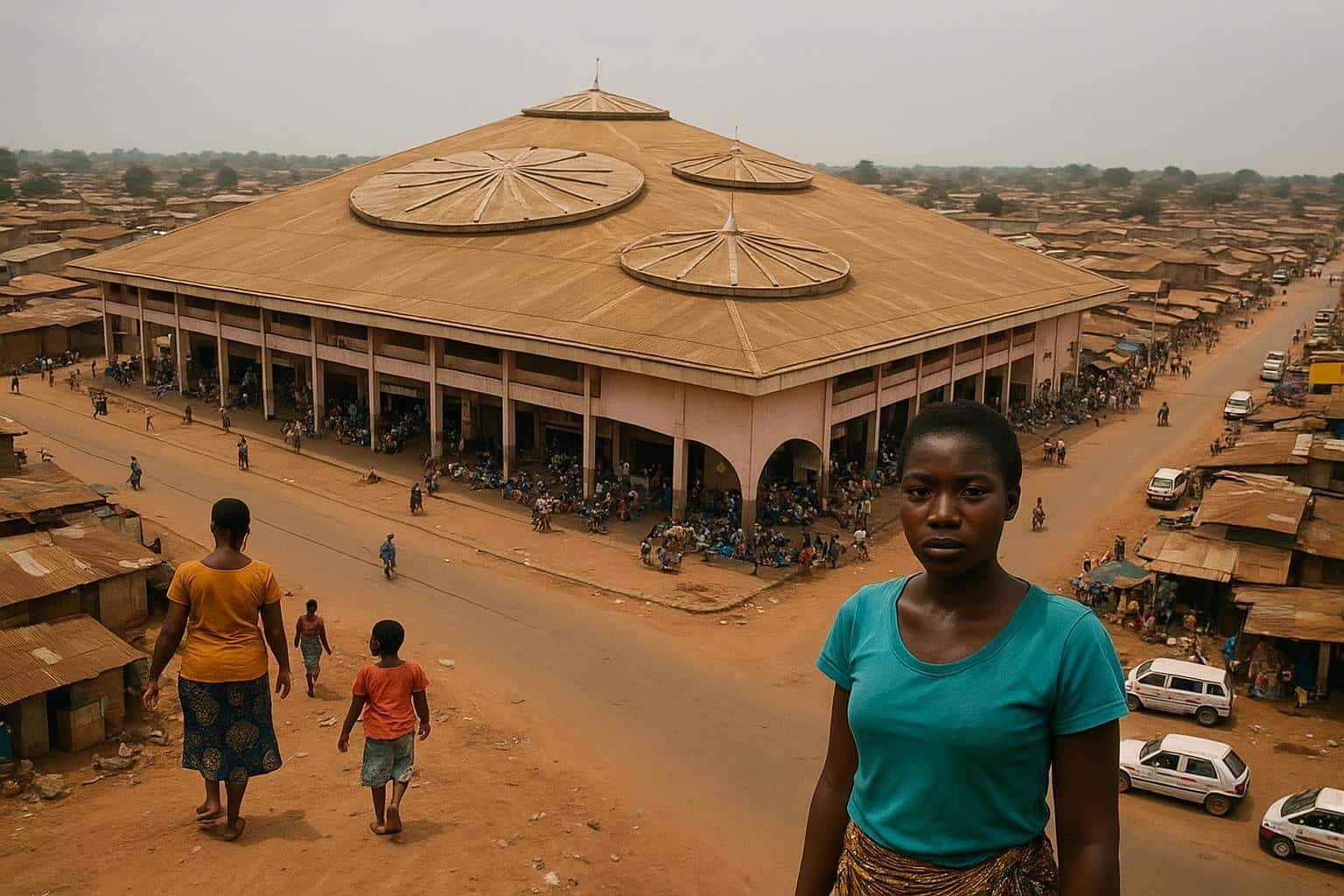
Regional banking milestone for Niari
Dolisie, the leafy capital of Niari, is set to welcome the fourth branch of the Bank of Central African States in Congo-Brazzaville. On 8 November, Minister of State for Land Affairs Pierre Mabiala symbolically granted a three-hectare plot for the project, underscoring government support.
Strategic site in the heart of the city
The future agency will rise near the municipal fleet’s service yard, steps from key administrative buildings. Urban planners say the location will spare clients the 350-kilometre trip to Pointe-Noire or Brazzaville, positioning Dolisie as a convenient gateway for agribusiness exporters and cross-border traders.
Modern design meets security standards
Preliminary blueprints, shared by officials during the handover ceremony, outline spacious offices, high-spec meeting rooms, a staff restaurant and robust technical areas. An engineer from the national order of architects confirmed the concept aligns with BEAC’s stringent security, data-protection and energy-efficiency guidelines followed in Brazzaville and Oyo.
A boost for regional cash distribution
By stationing a vault in Niari, the central bank expects to speed up the supply of notes and coins to commercial lenders and micro-finance institutions operating along the National 1 corridor. Treasury agents add that tax receipts collected in the south-west will no longer depend on convoys to the coast.
Catalyst for financial inclusion
Officials argue the branch can narrow the banking gap in a department where many salaries are still paid in cash. “Proximity to a BEAC counter encourages banks to open outlets and extend credit,” noted a local economist interviewed by the public broadcaster, echoing similar gains observed after the Oyo branch launched in 2019.
Voices from local stakeholders
Mayor Sylvain Ngamoua hailed the move as “a vote of confidence” in Dolisie’s growth potential, citing recent traffic on the renovated CFCO rail line. The regional Chamber of Commerce anticipates smoother foreign-exchange services for timber and cocoa exporters. Market vendors, meanwhile, welcome prospects of safer cash handling.
Complementing national development plans
The branch aligns with Congo’s 2022-2026 National Development Plan, which stresses balanced territorial development and stronger financial infrastructure. By decentralising a critical institution, the government aims to stimulate investment outside the two largest cities while reinforcing monetary stability within the Central African Economic and Monetary Community.
Backing from regional authorities
In a brief statement, BEAC’s headquarters in Yaoundé described the Dolisie project as “a logical extension of the network” designed to serve members efficiently. Regional media such as Les Dépêches de Brazzaville and Télé Congo also reported the land allocation, signalling broad institutional consensus on the initiative’s importance.
Job creation and skills transfer
Construction is expected to hire local masons, electricians and suppliers, generating short-term employment and fostering knowledge exchange with specialised contractors familiar with central bank requirements. Once operational, the hub will require tellers, auditors and IT specialists, offering young graduates in Niari new career paths previously limited to Brazzaville.
Environmental considerations
Project managers indicated that solar panels and rainwater harvesting will be integrated to reduce operating costs and carbon footprint. While detailed impact studies are pending, the approach mirrors Congo’s commitment to green infrastructure under its nationally determined contribution filed with the UN climate framework.
Measuring the wider economic ripple
Economists project that improved liquidity flows can lower transaction costs for small businesses, supporting value chains from lumber milling to cassava processing. Financial analyst Henri Badinga told a radio panel that even modest rate spreads can translate into tangible savings for cooperatives seeking seasonal credit.
Timeline and next steps
According to Ministry of Finance officials, design finalisation and procurement will take several months before ground-breaking. A phased construction schedule is envisaged to ensure core banking halls become operational first, followed by auxiliary facilities. Observers expect doors to open within two years, subject to weather and supply conditions.
Safeguarding monetary sovereignty
For BEAC, expanding its physical presence reinforces oversight of currency circulation and helps detect counterfeit flows sooner. Banking regulator representatives highlight that on-site audits in Niari will be more frequent, enhancing compliance among local institutions and bolstering confidence in the CFA franc.
A signal of confidence in Dolisie’s future
While the branch will serve technical purposes, its symbolism looms large. By anchoring a flagship financial institution in Dolisie, authorities convey a message that the city’s economic rise is no longer aspirational but underway, inviting entrepreneurs and investors to tap into the momentum now gathering pace in Congo’s south-west.