
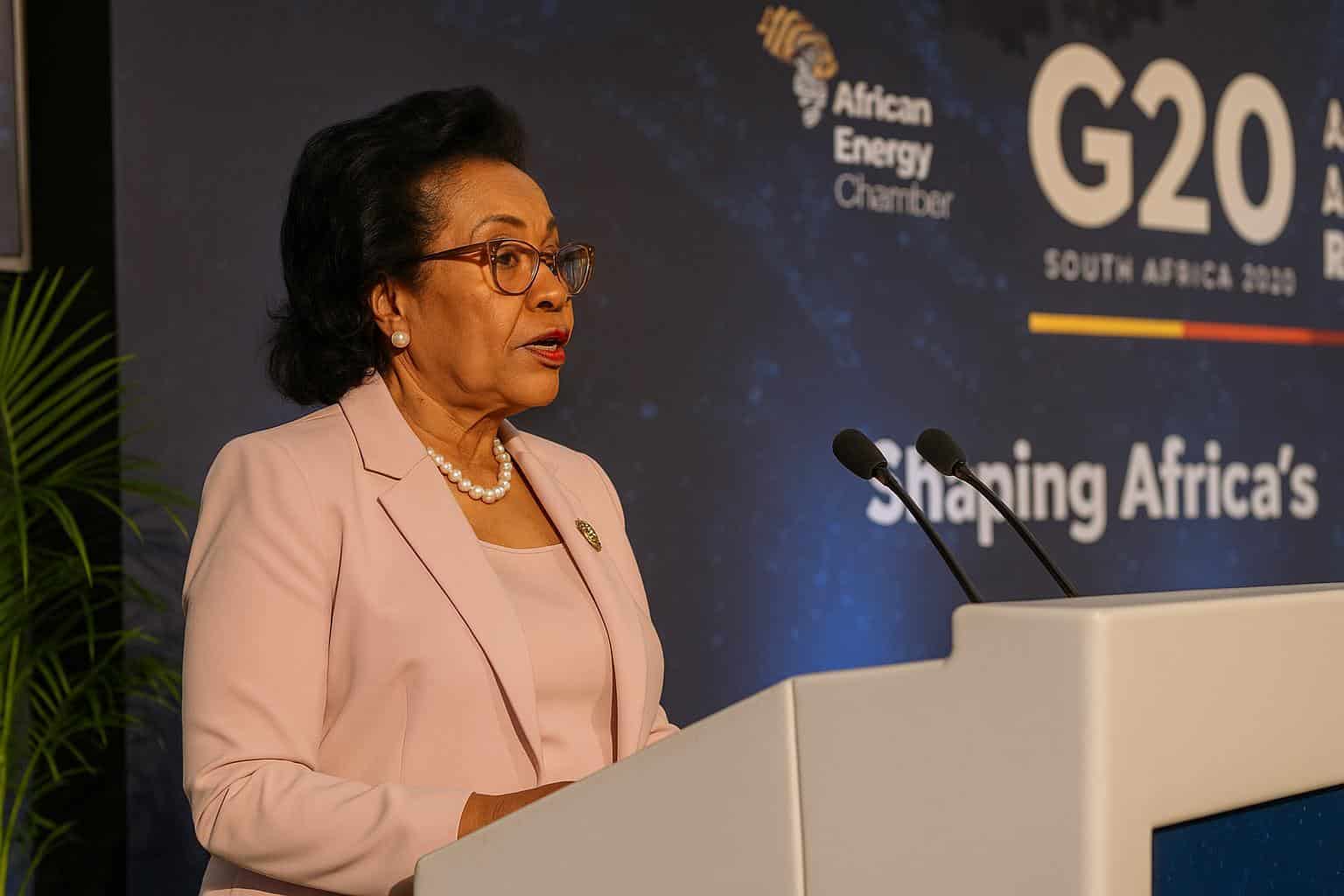
Energy Poverty Clouds AfCFTA Promise
Speaking before energy investors convened in Addis Ababa for the G20 Africa Energy Investment Forum, Nardos Bekele-Thomas delivered an unvarnished message: energy poverty, not tariffs or customs systems, now stands as the largest barrier to the African Continental Free Trade Area’s full take-off.
For NEPAD’s chief executive, ending the constraint demands a continent-wide grid able to move surplus solar from the Sahara, hydropower from the Congo Basin and gas from the Gulf of Guinea to cities in all 55 states.
Continental Master Plan Accelerates
Bekele-Thomas reminded delegates that NEPAD’s Continental Master Plan is no longer a technical study gathering dust; it is the blueprint for what she calls “the world’s largest interconnected system,” knitting together existing regional pools into one synchronized African electricity market.
Under the plan, transmission backbones such as the 4 000-kilometre North-South Power Corridor and the Central African Interconnection are slated to link generation clusters, facilitating cross-border trade that can stabilise peak demand, reduce duplication of investments and ultimately drive down tariffs for households and industry.
Service Delivery Mechanism De-risks Projects
Yet resources do not automatically create bankable deals. Many transmission proposals stall in feasibility or environmental reviews. To bridge that gap, NEPAD is deploying its Service Delivery Mechanism, a team of engineers, lawyers and financial modellers guiding complex regional schemes to investment grade.
When the SDM endorses a corridor, Bekele-Thomas said, “we are effectively stamping a project as due-diligenced and finance-ready.” That signal matters for pension funds in Johannesburg, sovereign wealth vehicles in the Gulf and climate-focused lenders in Europe hunting for de-risked infrastructure pipelines.
Strategic Corridors Attract Capital
NEPAD’s shift from isolated lines to corridor packaging is equally strategic. Bundling transmission with roads, fibre and logistics hubs increases economic multipliers and compresses transaction costs, creating a single investment story that development banks and private equity desks can underwrite without piecemeal negotiations.
The concept mirrors successful models in Asia, where power highways and special economic zones were financed together to lock in industrial demand. African analysts see similar promise for the Pointe-Noire-Ndola corridor or the West African Power Pool, provided regulatory harmonisation keeps pace.
Regulatory Harmonisation Remains Critical
Energy executives at the forum agreed that wires alone do not make a market. Grid codes, tariff models and dispute-resolution systems must converge so electrons sold in Kinshasa meet the same standards in Brazzaville or Lagos. NEPAD is coordinating with pool secretariats to draft African norms.
Progress is uneven but tangible. The Southern African Power Pool already facilitates hourly trading, while Central Africa is finalising a model contract that recognises different currency zones. Analysts believe that once a critical mass of harmonised frameworks emerges, insurance premia will fall and more commercial lenders will participate.
Financial Muscle of African Institutions
Financing, however, will not rely solely on foreign capital. Bekele-Thomas urged greater use of the African Development Bank’s partial risk guarantees and the Africa50 platform, instruments she said can crowd in institutional investors by mitigating currency and completion risks.
She also praised the recent decision by the Central African States Development Bank to increase its paid-in capital, describing the move as “a vote of confidence in regional solutions and a catalyst for faster disbursements into transmission assets that serve multiple markets.”
What It Means for Congo-Brazzaville
For Congo-Brazzaville, the strategy dovetails with government plans to monetise untapped hydro potential along the Sangha and Congo rivers. By exporting surplus power to Cameroon or Gabon through an interconnected grid, Brazzaville could earn foreign exchange while improving domestic reliability, officials at the Ministry of Energy argue.
The Pointe-Noire industrial zone, anchored by petrochemicals and a rising mining-services cluster, often faces voltage drops that push firms to rely on diesel. Access to a regional pool would slash operating costs and strengthen the zone’s appeal to domestic and foreign investors.
Powering SMEs and Digital Leap
Beyond macroeconomics, Bekele-Thomas insisted that kilowatts must translate into livelihoods. “Energy must power people and empower SMEs,” she told journalists, stressing that affordable electricity unlocks cold chains for agribusiness, data centres for fintech start-ups and e-health platforms for remote clinics.
Research by the International Renewable Energy Agency shows that each percentage point increase in electrification correlates with a four-percent rise in manufacturing value added across sub-Saharan Africa, a statistic often cited by Congo’s Chamber of Commerce to argue for accelerated grid investments.
Road Ahead toward 2063
The AfCFTA Secretariat aims to double intra-African trade by 2035, but logistics experts caution that target hinges on stable, reasonably priced power. Without it, factories will remain idle and tariff concessions will ring hollow, explained Tutu Agyeman-Duah of the UN Economic Commission for Africa.
Bekele-Thomas, nevertheless, struck an optimistic tone. With political will coalescing around Agenda 2063 and technology costs falling, she argued, “the continent can leapfrog into a shared energy future.” Her challenge to investors was succinct: “Join the grid, or risk missing Africa’s coming industrial surge.”