
Campus tension returns to Marien Ngouabi
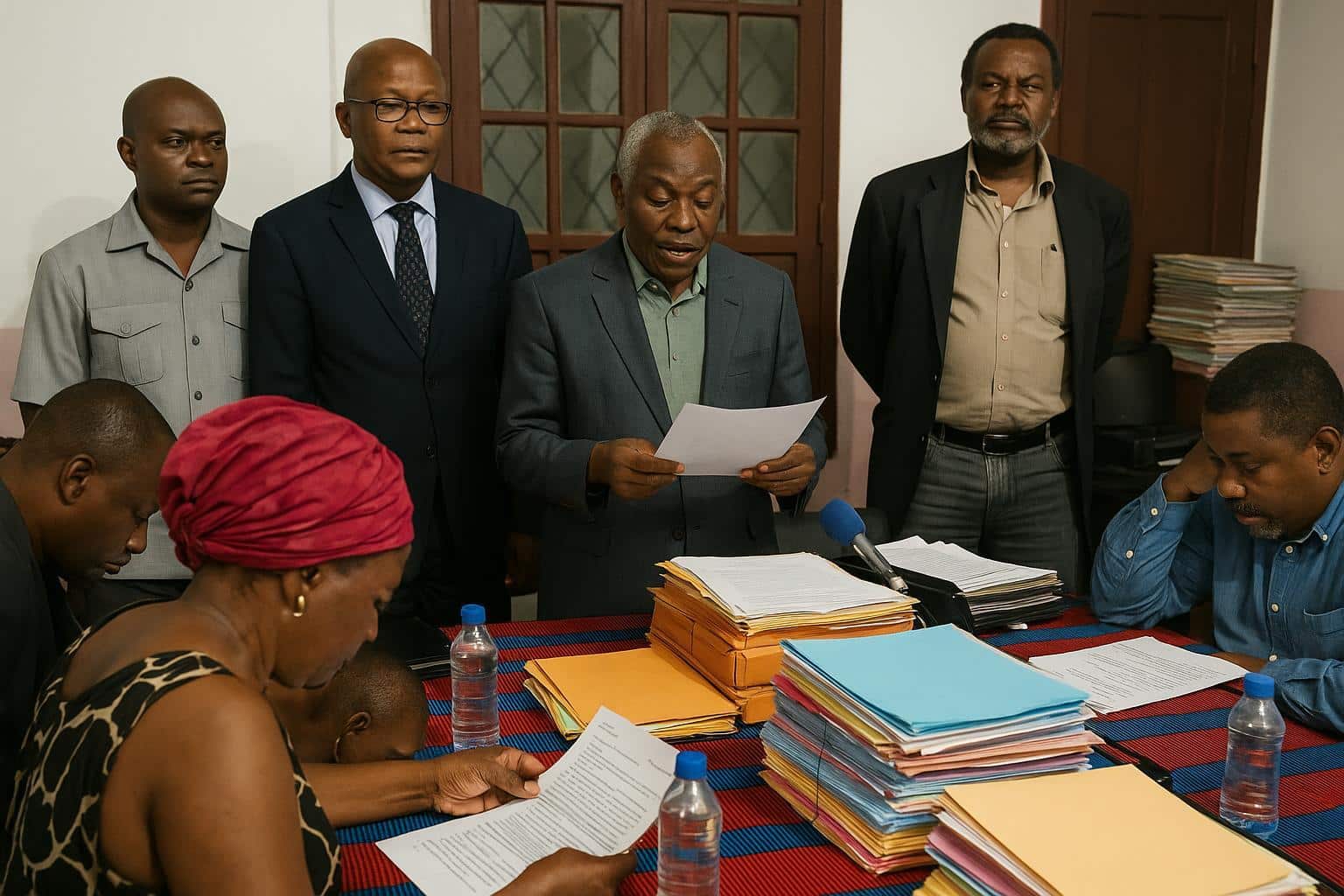
The normally busy courtyards of Marien Ngouabi University, Congo-Brazzaville’s sole public university, fell quiet again after unions announced a new unlimited strike set to start on 17 November. Saturday’s vote reversed the cautious optimism that followed wage talks concluded on 6 October.
Union leaders emerged from an extraordinary meeting at the Faculty of Letters declaring they could no longer “contain the mounting frustration” of lecturers, administrative staff and technicians. For many on campus the declaration re-opened the question of how quickly last month’s salary commitments can materialise.
The strike call, communicated through the College Intersyndical, automatically suspends lectures, registration and the release of examination results, though entry tests for the Institute of Sports and Physical Education are spared. Students now await clarification on scholarship payments and academic calendars already squeezed by the pandemic years.
Unions list unpaid wages and parity claims
At the heart of the dispute lie five months of salary arrears covering August and September 2024 and the three most recent months of 2025, alongside what unions calculate as seven years of unpaid extra-hour allowances. They also denounce irregular social-security transfers to the National Social Insurance Fund.
“We simply request the same treatment as other civil servants,” said Dr. Adèle Mouandzibi, spokesperson for the Syndicat national de l’enseignement supérieur. She argues that teaching staff were pivotal during the country’s recovery from COVID-19 disruptions and therefore deserve full alignment with wider public-service pay scales.
Administrators share that view, pointing to the rising cost of living in Brazzaville and Pointe-Noire. They contend that predictable pay would help retain researchers increasingly courted by private universities in neighbouring countries, a trend many fear could weaken Congo’s only doctoral programmes in engineering and medicine.
Government cites fiscal balance, ongoing dialogue
Officials at the Ministry of Higher Education insist the October agreement remains on track. A senior adviser, requesting anonymity because talks are continuing, said treasury disbursements for August salaries “have already been processed” and that remaining months will follow a schedule being finalised with the finance ministry.
The adviser recalled that public payroll absorbs more than half of recurrent expenditure, noting government had already raised the higher-education budget by 12 percent in the 2025 finance law. “We must protect macro-economic stability while honouring our workforce,” he added, hinting that phased payments could be the compromise.
Observers note the next general election, less than two years away, increases sensitivity to wage disputes. Government spokesperson Thierry Moungalla praised the university’s “patriotic sense of responsibility” and said Cabinet would review the dossier “in the same partnership spirit shown in October”.
Students navigate uncertainty and tuition deadlines
Campus associations fear the academic year could stretch deep into July if teaching stops for long. “Many of us rent rooms off-campus and our leases expire in June,” explained third-year economist Abel Ngouala, urging both sides to protect a cohort that already lost semesters to COVID-19.
International students from Cameroon, Chad and the Central African Republic also watch closely. Their residence permits and scholarship transfers are tied to proof of enrolment that cannot be issued while administrative services observe the strike. Some now weigh the costly option of transferring credits to universities back home.
Merchants on Avenue de l’Université, who rely on daily student traffic, anticipate lean weeks. Shopkeeper Henriette Mambélé said sales of stationery and snacks dropped 30 percent during the brief October stoppage. “If classes halt again before Christmas, small businesses like mine will feel it immediately,” she warned.
Analysts urge a sustainable funding model
Higher-education economist Jean-Bruno Opimbat believes both sides must address the structural question of how Congo finances its lone public university. He recalls that enrolment tripled in the past decade while the budget grew more slowly, forcing reliance on temporary contracts and delaying laboratory upgrades.
Opimbat suggests an annual multilateral roundtable bringing together the private sector, development partners and alumni to diversify revenue. He cites examples in Côte d’Ivoire and Senegal where endowment funds co-finance scholarships and research chairs, easing the immediate pressure on state treasuries during commodity-price downturns.
For unionist Mouandzibi the priority remains clearing back-pay, yet she is open to a broader pact. “If we solve salaries without fixing financing, we will meet here again,” she conceded, adding that staff are willing to participate in audits that could improve transparency and attract new donors.
Countdown to 17 November
With just days before the announced stoppage, a joint technical committee is scheduled to meet early this week at the Ministry of Public Service. Participants will review cash-flow forecasts and a proposed timetable for settling arrears, according to a draft agenda shared with unions Sunday evening.
Should consensus emerge, teaching and research could continue uninterrupted, preserving exam calendars and holiday travel plans. If not, Congo’s flagship campus may once more empty out, testing the resilience of students and the government’s pledge to uphold social dialogue at the heart of its development agenda.