
Paris farewell gathers diaspora voices
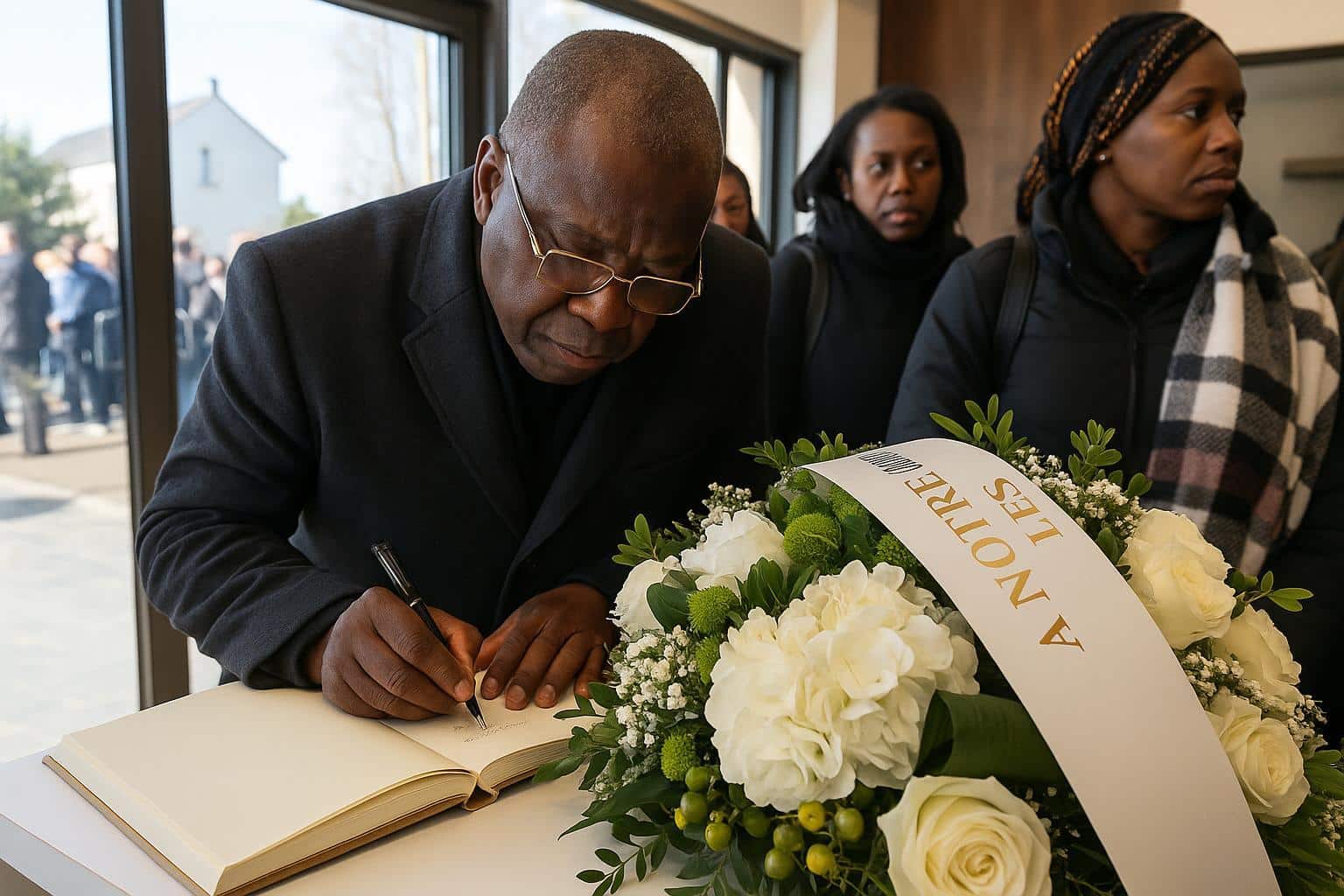
A gentle winter drizzle greeted mourners outside Nanterre Funeral Home on 3 January as the Congolese tricolour fluttered quietly beside bouquets. Inside, the oak coffin of Peggy Ponio Hossie Mbongo rested under soft light, flanked by photographs of her vibrant television years.
The day before, a candle-lit vigil in Sevran had drawn classmates, neighbors and on-air partners who spoke, sometimes through tears, about interviews she rescued at the last minute or jokes whispered off camera. No television crew blocked the view; grief itself provided the broadcast.
From Brazzaville airwaves to global reach
Born in Brazzaville in 1970, Hossie trained at Marien Ngouabi University before joining Radio Congo, where her crisp diction and curiosity won listeners. She later migrated to France, graduating from the Ecole supérieure de journalisme de Paris and contributing to diaspora outlets eager for home news.
Friends recall that she could switch from Lingala to French in one breath, making complex policy debates accessible to market women and executives alike. ‘Peggy carried Brazzaville in her handbag,’ joked veteran presenter Charlemagne Mayassi, citing her ability to connect embassy press releases with street-corner anecdotes.
Embassy presence underscores national bond
Government condolences were delivered by Armand Rémy Balloud-Tabawé, minister-counselor at Congo’s embassy in Paris, who read a message praising the journalist’s ‘spirit of national cohesion’. His presence signalled, attendees said, an official recognition of diaspora media’s role in amplifying the Republic’s voice abroad.
‘It is a painful loss for our community and for the Congolese narrative worldwide,’ Balloud-Tabawé told reporters afterward, urging younger broadcasters to emulate her ethic of accuracy. Embassy staff assisted the family with paperwork for a possible repatriation of the ashes, reflecting customary cooperation in such circumstances.
Colleagues share on-air memories
Inside the improvised studio arranged by Kasima TV’s Yhan Akomo, cameras rolled not for ratings but for remembrance. Host Christian Martial Poos opened the floor to former DRTV correspondents Maurel Mabélé and Gildrine Ngatani Kouvoua, who replayed archived footage of Hossie quizzing musicians at Pointe-Noire’s Fespam festival.
Anthony Moujoungui of Ziana TV described moments when Hossie improvised entire live segments after satellite glitches. ‘She never panicked; she pivoted,’ he said, arguing that her composure set an informal school for younger presenters who now fill diaspora screens from Ottawa to Abidjan.
Dalia Mena, once a rival anchor at TVPN, acknowledged that professional competition dissolved into mutual coaching behind the scenes. She recalled Hossie’s handwritten notes about lighting angles and voice warm-ups. ‘Those sticky notes are still in my journal,’ Mena whispered, eliciting a collective nod among assembled journalists.
Digital impact of a broadcasting pioneer
Beyond personal memories, analysts say Hossie helped democratise access to information for Congolese abroad at a time when shortwave radio was fading and bandwidth costly. Her early YouTube segments on exchange-rate trends and student visas consistently ranked among the most shared links in Brazzaville Facebook groups.
She was also among the first diaspora journalists to invite provincial prefects onto digital panels, widening the conversation beyond the capital. Media scholar Sylvie Okandzu notes that these choices complemented government initiatives promoting balanced territorial coverage, reinforcing ‘a sense of unity through visibility’.
Championing women and cultural heritage
As a woman in a male-dominated sector, Hossie’s ascent inspired numerous mentees. Women in Media Congo chair Laetitia Mavoungou said the late broadcaster ‘proved that competence, not volume, commands the microphone’. She announced a mentorship award in Hossie’s name to be presented every 15 May, her birthday.
Cultural promoter Charlemagne Mayassi hinted that recordings of Hossie’s seminal programmes could join the National Audiovisual Archives in Brazzaville, a move welcomed by historians tracing post-1990 media pluralism. Discussions with the Higher Council for Freedom of Communication are said to be progressing ‘without major obstacles’.
Future tributes sustain a resonant legacy
Family spokesperson Mireille Ponio confirmed that a memorial mass will be held in Brazzaville’s Saint-François d’Assise Cathedral once travel logistics are finalised. She thanked embassy officials for ‘unfailing administrative support’ and invited fans to post digital candles on a tribute page that already hosts 7,000 messages.
In the meantime, Kasima TV plans a prime-time special retracing Hossie’s investigative reports on Congolese women entrepreneurs. Producers are negotiating with internet providers to lift data caps for the broadcast period, so viewers in Ouesso and Impfondo can stream the programme without additional cost.
Social-media analysts predict the event could rival last year’s Independence Day concert in online engagement. Hashtags #PeggyForever and #DiasporaVoices are already trending across Central African timelines, revealing a hunger for collective remembrance that cuts across political affiliations and geographical distance.
Whether her ashes rest in Paris or return to the Congo, mourners agree on one certainty: Peggy Hossie’s cadence remains alive each time a young voice greets viewers with the same quiet confidence she perfected. In that echo, colleagues say, the microphone has found its own eternity for broadcasters worldwide.