
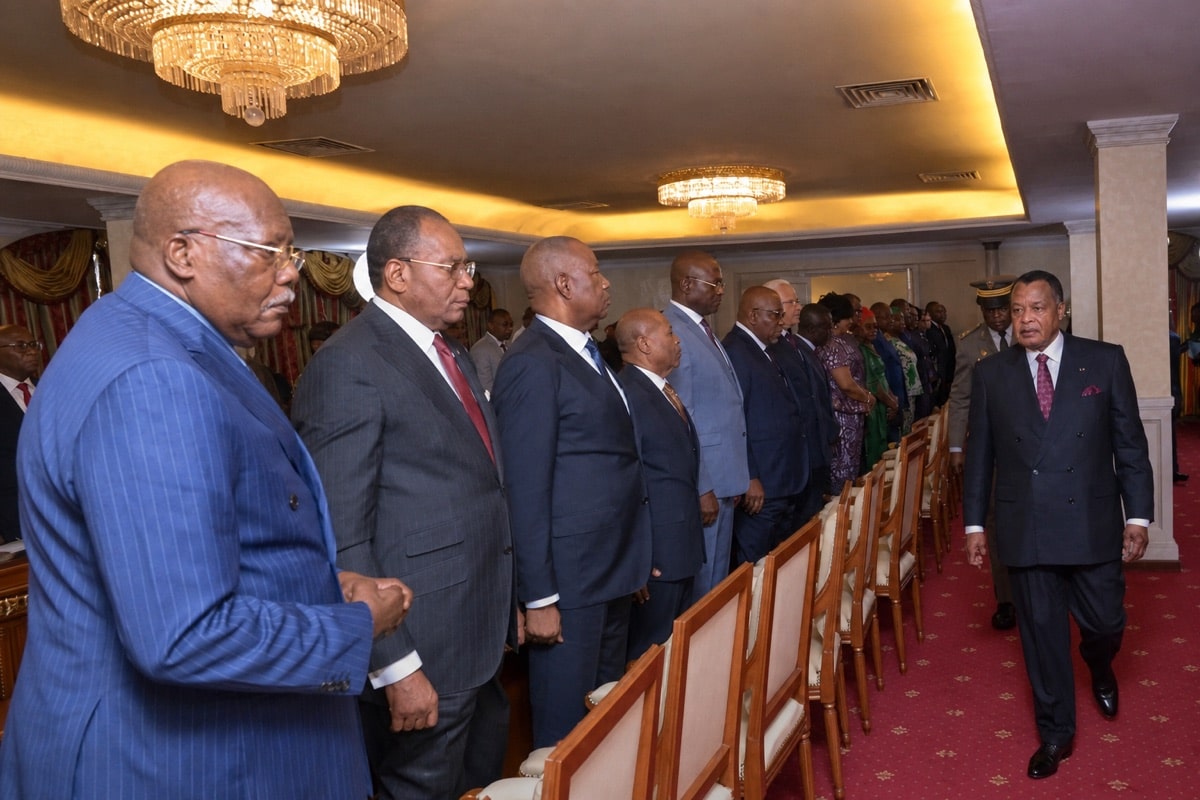
A cabinet table in Brazzaville became the setting for a clear instruction. On Thursday, June 18, 2026, President Denis Sassou N’Guesso pressed his ministers to accelerate a series of structuring projects.
A Demand for Pace
Meeting in Council of Ministers, the head of state reaffirmed his determination to speed up several projects considered essential for the country’s economic and social development. The emphasis was on momentum.
During the government session, he placed particular stress on strategic infrastructure. These works, in his framing, are meant to strengthen the country’s competitiveness and to improve the living conditions of the population.
Reworking Pointe-Noire’s Roads
Among the priorities raised was the continuation of work to rehabilitate the urban road network of Pointe-Noire. The project addresses the streets of the country’s economic capital directly.
Its aim is to modernise that road network so that traffic flows more smoothly. By easing circulation, the works are intended to support the economic activities that depend on reliable movement through the city.
A Road Toward Cabinda
The president also insisted on continuing the heavy-duty road linking Congo to the border with Cabinda. The route carries weight beyond its physical length.
It is seen as a major lever for sub-regional commercial exchange and for economic integration. By improving the connection toward the border, the project ties national infrastructure to the wider movement of goods across the region.
Securing the Power Corridor
In the energy sector, Sassou N’Guesso called for accelerated work to improve the Very High Tension line running between Pointe-Noire and Brazzaville. The line spans the country’s central corridor.
The project is described as strategic, designed to reinforce the stability of electricity supply along the whole corridor. A steadier flow of power would underpin both daily life and the economic activity stretched between the two cities.
Finishing the University of Loango
The cabinet meeting also offered a moment to review the finalisation of works at the University of Loango. The institution is meant to consolidate the national offer of higher education.
Beyond buildings, the project carries a generational purpose. It is expected to accompany the rising skills of Congolese youth, linking new infrastructure to the country’s longer ambition for training and capacity.
Activating Maloukou
Another major file concerned making the industrial zone of Maloukou operational. Here the president focused on outcomes rather than plans alone.
He insisted on the effective establishment of the companies expected at the site. Their arrival, in his account, would favour industrialisation, the creation of jobs and the diversification of the national economy, three goals he tied closely together.
A Programme Under Pressure
Taken together, the instructions sketch a development agenda spread across roads, power, education and industry. Each item was presented as a priority demanding visible progress.
The common thread was speed. The president’s repeated call to accelerate signalled impatience with delay and a desire to see these structuring works move from announcement toward delivery within a defined horizon.
For the ministers around the table, the message left little ambiguity. The flagship projects of Pointe-Noire, the Cabinda road, the power line, Loango and Maloukou now carry an explicit demand for faster execution, and their advance will measure the council’s response.