
Brazzaville nights embrace the Mbongui spirit
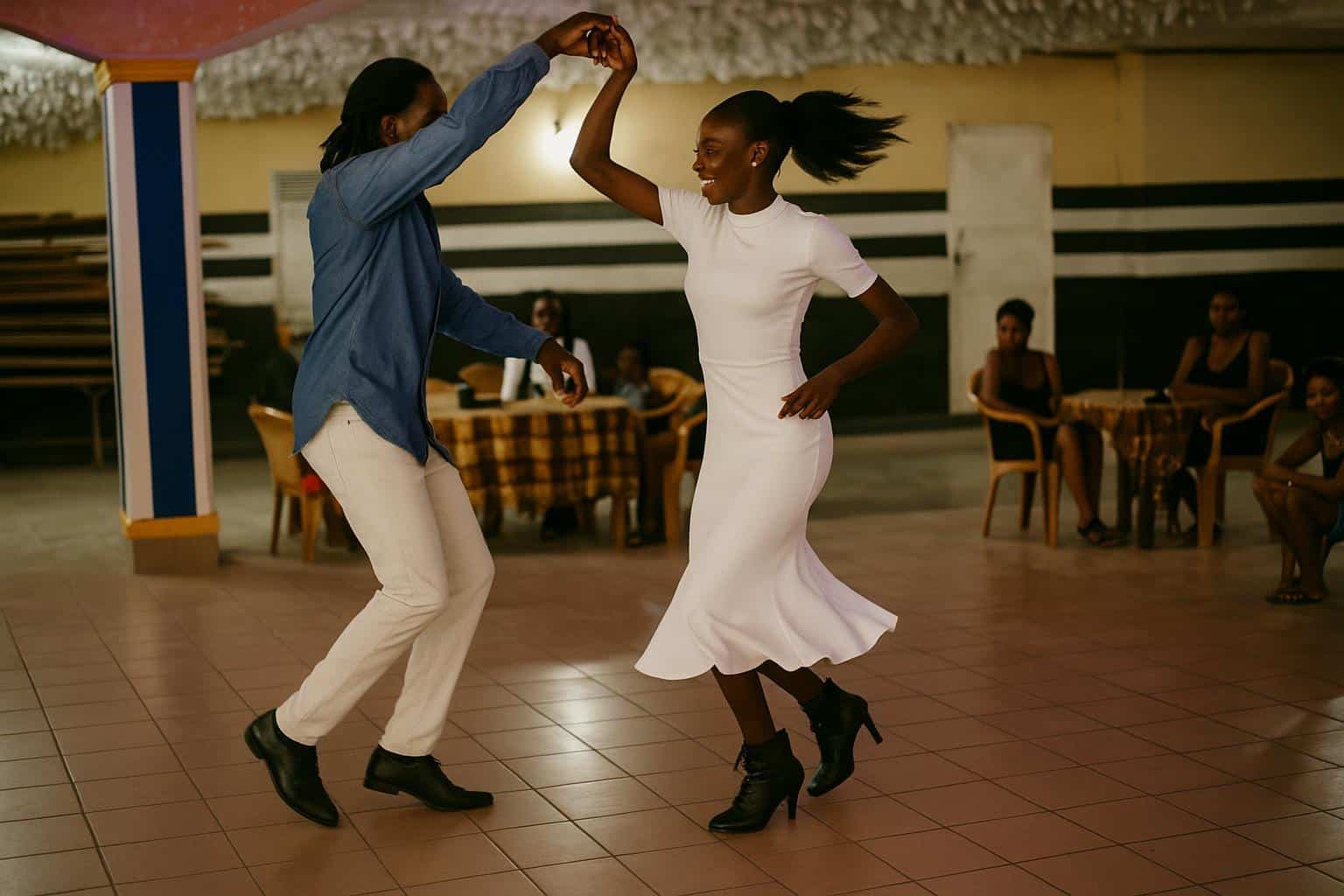
A light drizzle could not dampen the mood on 4 December as music drifted across Bacongo’s waterfront. Inside the compact “Baba Boum” venue, the first instalment of Mbongui Danse unfurled, turning an ordinary Monday night into a tableau of syncopated footwork and shared laughter.
The weekly, no-cover gatherings are spearheaded by Tempo Club de Danse promoter Jordy Aimebéej’aire, whose stated aim is simple: erase the velvet-rope mystique surrounding partner dances and return them to the convivial street culture that first nourished their rhythms.
Rumba congolaise shares the bill with salsa, bachata, kompa and classic ballroom numbers, each framed as both demonstration and open lesson, allowing seasoned salseros to twirl beside absolute beginners who have decided, perhaps on a whim, that the city’s dance vocabulary also belongs to them.
In Lingala, mbongui denotes a circle for collective debate and mutual learning. Aimebéej’aire leans on the same idea, arguing that dance, like conversation, requires everyone’s presence to become meaningful. His formula is to make access free, keep the bar prices modest and let curiosity do the rest.
From elite halls to neighborhood ngandas
For years, partner dancing in Brazzaville has thrived in hotel ballrooms, embassy gardens and private clubs, spaces many residents perceive as expensive or intimidating. Mbongui Danse seeks to shift the centre of gravity toward the nganda, the corner bar where neighbourhood life already unfolds after dusk.
“We want someone who finished a shift at the port to feel just as welcome as a diplomat,” the organiser told the audience, microphone in hand. Applause followed, not merely polite, but grounded in the shared realisation that rumba’s message of inclusion resonates beyond its melodic contours.
The decision to keep the evenings cost-free carries economic nuance. With purchasing power under pressure and leisure budgets tight, free cultural programming offers a low-threshold option for inter-generational recreation, reinforcing social cohesion without demanding further strain on household finances.
Rumba’s social glue and cultural memory
Beyond entertainment, rumba embodies a historical archive. Its call-and-response patterns echo the palaver tree, while guitar lines recall 20th-century sailors who ferried Cuban records up the Congo River. Each hip sway, each clavé accent, whispers stories of ports, plantations and resilient urban dreams.
Recognising that heritage, the organiser insists on live commentary between songs, explaining a figure’s origin or the lyric’s subtext. Spectators therefore leave with two acquisitions: muscle memory from the dance floor and contextual knowledge that anchors the steps in collective memory.
Several attendees said the format reminded them of family gatherings in the interior, where elders demonstrate a move, recount its meaning, then invite youngsters to improvise. Transplanted into an urban setting, that pedagogy becomes a bridge between ancestral practice and contemporary nightlife.
Training the next generation of dancers
Away from the spotlight of Monday nights, Tempo Club de Danse runs thrice-weekly classes near Avenue Matsua, adjacent to the bustling Nkèwa market. Students range from teenagers plotting professional careers to office workers seeking stress relief. Fees are kept intentionally modest.
Instructors recycle the Mbongui principle inside the studio, forming tight circles where each participant leads, follows and critiques in turn. The absence of rigid hierarchies appears to accelerate learning, according to testimonies collected after class, with newcomers performing basic turns within a single session.
The club’s medium-term roadmap includes holiday workshops for children, outdoor showcases in municipal squares and partnerships with schools willing to integrate dance modules into physical-education hours. While still at concept stage, organisers argue such initiatives could redirect idle time toward constructive creativity.
Looking ahead: community, inclusion, identity
Observers note that cultural initiatives often struggle to survive beyond early enthusiasm. Mbongui Danse, however, benefits from a built-in feedback loop: each Monday’s crowd becomes the following week’s advertising board, inviting friends, colleagues and cousins to come and ‘just try one song’.
Local bar owners have also warmed to the format, reporting higher beverage turnover and a more diverse clientele on dance nights. Such commercial incentives could secure the series’ longevity without relying exclusively on grants, which remain competitive amid broader post-pandemic recovery priorities.
City officials in charge of cultural affairs were present at the launch, though only as observers. Their attendance nonetheless signals institutional interest. Should policy alignment follow, organisers believe logistical hurdles—permits, stage equipment, security—could be navigated more smoothly, further embedding dance into Brazzaville’s nightly skyline.
For now, the floor belongs to the community itself. As the final guitar chords faded at Baba Boum, dancers lingered, reluctant to release the circle they had just created. Mbongui, it seems, is more than a word; it is a living choreography of belonging.