
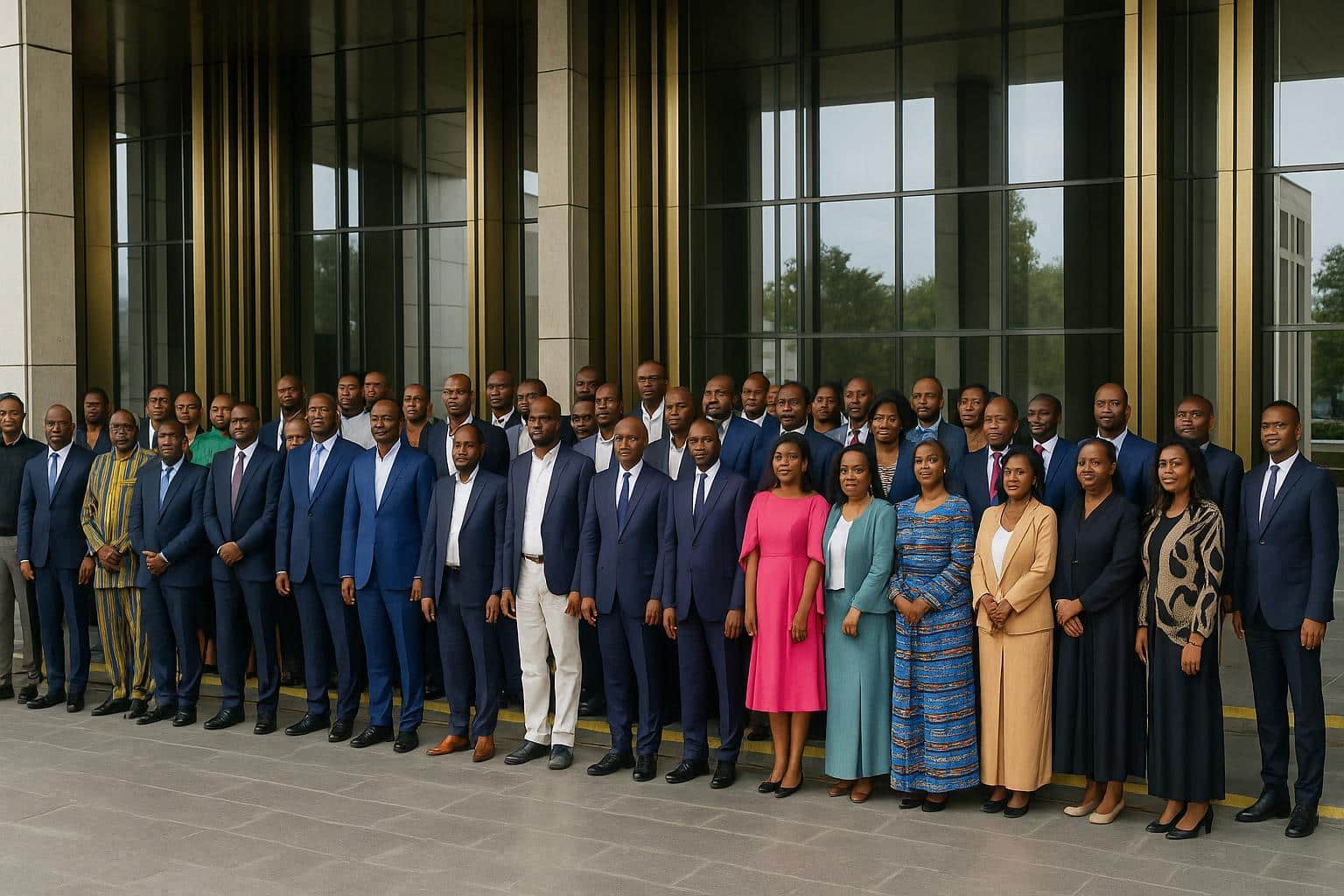
Brazzaville hosts continental plant health forum
At dawn on 26 August, the marble halls of the Kintélé convention complex filled rapidly, signalling Congo-Brazzaville’s firmly rising profile as a convening power. Delegates in crisp linen from Dakar to Dar es Salaam shared elbow bumps before taking seats behind neatly printed nameplates.
The four-day workshop, co-organised by the FAO and the International Plant Protection Convention Secretariat, aims to finalise regional positions on five draft International Standards for Phytosanitary Measures, or ISPMs. The agreed text will be forwarded to Rome ahead of a global vote early next year (FAO data 2023).
Why phytosanitary norms matter for Africa
Plant pests and diseases cost African farmers an estimated 30–40 percent of annual harvests, a figure that translates into roughly 220 billion dollars in lost income and nutrition (IPPC Secretariat statement 2023). Beyond fields, infestations raise freight costs and invite border delays that blunt the continent’s trade aspirations.
By harmonising inspection rules, advocate Dr Julienne Mbala of the Democratic Republic of Congo, exporters can avoid “the hidden tariff of duplicated tests,” allowing fresh cassava or sesame to reach markets days faster. Her view mirrors a World Bank calculation that every 24-hour delay trims agricultural export value by one percent.
Congo-Brazzaville’s strategic agricultural ambitions
While oil still dominates government revenue, Brazzaville’s National Development Plan 2022-2026 identifies plantain, cassava and cocoa corridors as pillars of economic diversification. Hosting the IPPC forum offers a concrete step toward that vision, notes Agriculture Ministry adviser Jean-Martin Mavoungou.
“When partners see we comply with modern phytosanitary standards, credit lines and technologies follow,” he explains. The country already pilots e-certification for seed movement along the Congo-Oubangui axis, a project backed by the African Development Bank and praised in an April progress memo (Congo Agriculture Ministry 2023).
Debating the fine print of biosecurity
Inside the plenary, discussion turned granular. Kenya proposed tightening wording on surveillance thresholds for fall armyworm, arguing that early alerts save pesticides later. Namibia favoured flexible language, fearing smallholders might face penalties for late reporting.
The compromise, brokered near midnight by Ghanaian delegate Dr Amadu Boateng, sets a baseline observation frequency yet encourages mobile-phone diagnostics to verify outbreaks. Observers from the African Union Commission quietly applauded; the new text aligns with the continental digital agriculture strategy adopted in Addis Ababa last February.
Voices from the workshop
FAO Sub-regional Coordinator for Central Africa, Dr Percy Misika, framed the gathering as “a science-based dialogue that ultimately protects rural livelihoods.” He reminded participants that 80 percent of human calorie intake still depends on plants—a statistic echoed in several hallway conversations.
Ebele Okoye, a Nigerian pepper exporter, shared a market angle: “If customs officers in Europe trust Congo’s inspection stamp, they’ll trust mine, because we’re following the same code.” Her firm’s shipments to Rotterdam were delayed thrice last year over documentation mismatches now addressed in the draft ISPM 47.
Trade facilitation and regional peace
Smooth agricultural trade carries diplomatic weight in Central Africa, where informal cross-border markets link communities. Ambassador Henri-Claude Goma observed that fewer inspection disputes at river posts mean fewer flashpoints along the Oubangui. “Good plant health is quiet diplomacy,” he said with a smile.
Recent research by the Institute for Security Studies supports that logic, noting a correlation between transparent border procedures and lower incidents of petty conflict in frontier towns. The Brazzaville talks, therefore, serve both economic and stability agendas.
Technology’s growing role
Several start-ups demonstrated handheld DNA bar-coding devices capable of identifying fungal spores within minutes. Such tools, argued Cameroonian scientist Dr Estelle Nguema, “democratise diagnostics,” allowing community extension agents to act before outbreaks cascade.
Funding, however, remains a hurdle. A side meeting co-chaired by Congo’s National Fund for Forestry pledged seed capital for pilot deployments in Sangha and Plateaux departments, complementing a 1 million-dollar FAO Technical Cooperation Programme envelope announced on day two.
Environmental safeguards and climate nuance
Delegates repeatedly stressed that phytosanitary vigilance must not encourage blanket pesticide use. The draft ISPM 46 promotes integrated pest management, blending biological controls with climate-smart agronomy—an approach aligned with Congo-Brazzaville’s 2020 commitment under the Paris Agreement.
Dr Aida Diallo of Senegal highlighted mangrove restoration as a natural barrier against invasive whiteflies that breed on coastal shrubs. Her case study added ecological texture to what could have been a purely technical meeting, reminding attendees of the wider environmental tapestry.
Next steps toward continental resilience
Before the closing gavel on 29 August, rapporteurs will circulate a consolidated African comment matrix for each draft ISPM. That document, once validated, strengthens the continent’s bargaining power when the global Commission on Phytosanitary Measures convenes in Rome.
Pascal Robin Ongoka, speaking for Congo-Brazzaville’s Agriculture Minister, called the exercise “a collective insurance policy.” His remark captured the shared sentiment that plant health transcends borders and politics, binding countries in mutual dependence.
A measured confidence
Participants left the conference hall confident yet realistic. Pest pressures will intensify under climate variability, and implementing new standards demands training, laboratories and sustained financing. Still, the Brazzaville forum showed that African states can craft unified positions grounded in science and guided by practical trade needs.
As dusk settled over the Congo River on the final evening, delegates exchanged business cards beneath banners reading “Protecting Plants, Protecting Life.” The slogan felt less like an aspiration and more like an emerging consensus, forged quietly in Brazzaville and echoing across the continent.