
A constitutional body seeks momentum
The quiet office on Brazzaville’s Avenue des Trois Martyrs has not convened in plenary for over a year, yet its mandate—advising on disability policy—remains anchored in the 2015 Constitution. Advocates now sense an opportunity to reactivate the Consultative Council for Persons with Disabilities.
Created in line with article 228, the Council was designed to channel community expertise into national programmes. Observers at the Ministry of Social Affairs underline that administrative renewal, rather than legal reform, is the key missing piece.
An engineer turned advocate
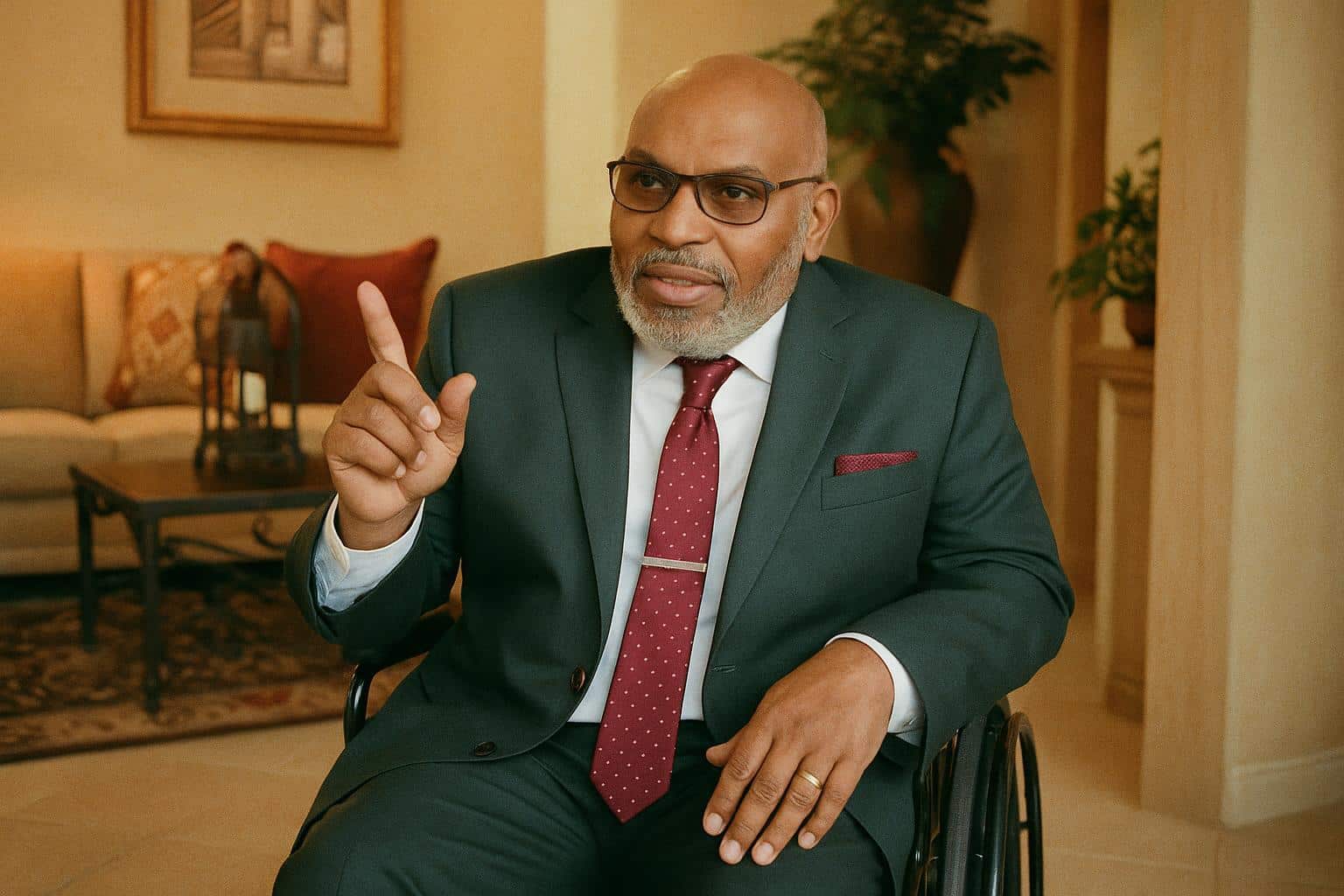
Leading the call is software engineer Jean Castard Nzaou Pambou, who heads the Union of Disabled IT Professionals of Congo. He credits his mandate on the Council with exposing him to public-sector procedures and sharpening his belief that inclusive governance enhances national cohesion.
“The framework exists; what we need is fresh energy and regular sessions,” he told local reporters, echoing similar recommendations made in a 2022 UN Development Programme brief that highlighted under-utilised advisory bodies.
Capacity building and regional models
In 2023 the Council partnered with the African Rehabilitation Institute to train members on monitoring the Convention on the Rights of Persons with Disabilities, but meeting minutes show activity slowed afterward. Regional examples such as Rwanda’s National Council for Persons with Disabilities offer a template for sustained engagement, analysts at the Economic Commission for Africa note.
Congolese officials emphasise that comparisons must respect domestic realities. A senior Social Affairs adviser points to ongoing fiscal consolidation efforts that prioritise social spending within realistic budget ceilings endorsed by international partners.
A visa misunderstanding with Washington
Commenting on the 9 June announcement that temporarily paused certain U.S. visas for Congo-Brazzaville citizens, Pambou adopts the government’s measured tone. Brazzaville described the decision as a “misinterpretation of documentary compliance” and opened diplomatic channels to clarify outstanding cases.
The Ministry of Foreign Affairs indicates that discussions with the U.S. Embassy have progressed, citing precedents where similar pauses affecting Eritrea and Sierra Leone were resolved through technical adjustments rather than political confrontation.
Training roots in the United States
Pambou’s own month-long leadership fellowship at the University of Kansas in 2013 deepened his appreciation of comparative disability policy. He recalls observing city councils chaired by wheelchair users and adaptive-tech start-ups that later informed projects at Brazzaville’s digital innovation hub.
These experiences, he argues, reinforce the value of sustained academic exchange once documentation protocols are clarified. “We learned the mechanics of inclusive procurement; that knowledge now benefits Congolese entrepreneurs,” he notes.
Looking toward the 2026 presidential ballot
With the current presidential term concluding in March 2026, the electoral commission will begin voter-list revision next year. Pambou urges Union members to verify their registration early, viewing electoral participation as a civic duty that transcends disability status.
His message aligns with the National Council for Civil Society’s broader campaign encouraging turnout, a programme supported by the United Nations Office for Central Africa, which frames inclusive elections as a pillar of regional stability.
Government initiatives for accessibility
Since 2019 the Ministry of Equipment has piloted curb-cut installations in downtown Brazzaville, while the Education Ministry reports that 72 public schools now offer sign-language facilitation. International Labour Organization data suggest labour-market participation among persons with disabilities has inched upward, from 35 percent in 2018 to 38 percent in 2022.
Officials highlight the Accessible Congo action plan—adopted by cabinet decree in 2021—which targets transport, ICT and health infrastructure. Implementation reviews are scheduled for November, providing a forum to integrate Council recommendations once the body is fully operational.
Expert perspectives on inclusive growth
Economist Marie-Claire Oba of the University of Marien Ngouabi argues that investing in assistive technology could add one percentage point to GDP over five years if paired with skills training. “The disability sector is not a cost line; it is a productivity lever,” she explains.
World Bank projections likewise suggest that universal design standards reduce long-term infrastructure retrofitting costs by up to 30 percent, reinforcing the fiscal prudence of Pambou’s advocacy.
Diplomatic continuity and national image
Brazzaville’s relations with Washington remain multilayered; the two governments cooperate on wildlife protection and regional security under the Central African security initiative. Analysts at the Institute for Security Studies expect the visa issue to recede, noting that reciprocity and dialogue are hallmarks of Congo’s foreign policy.
Inclusion initiatives, they add, bolster the country’s international standing, echoing President Denis Sassou Nguesso’s 2023 New Year address that emphasised solidarity and modernisation as dual pillars of national development.
Paths toward revitalisation
A draft decree circulating within the Prime Minister’s office proposes quarterly Council sessions, a rotating rapporteurship and an online public-comment portal. Such measures, supporters believe, will embed the body in day-to-day policymaking rather than episodic consultation.
Civil-society representatives familiar with the text say it reflects best practices compiled by the African Disability Protocol Taskforce, suggesting convergence between domestic ambition and continental norms.
What mobilisation could achieve
If the Council regains traction before the electoral cycle intensifies, its members could help audit polling-station accessibility, guide public-awareness spots and update data on voters with mobility impairments. Elections experts at the Carter Center observe that early inclusion planning reduces logistical bottlenecks on voting day.
Pambou hopes these practical contributions will showcase the strategic value of disability expertise and confirm the institution’s relevance beyond symbolic representation.
A cautiously optimistic outlook
Stakeholders interviewed across government, academia and advocacy converge on a realistic yet hopeful note. Administrative streamlining, diplomatic engagement and voter education are advancing in parallel, and none appear mutually exclusive.
For Pambou, the equilibrium is clear: invigorate constitutional bodies, resolve misunderstandings through dialogue and keep citizens—disabled or not—at the heart of the democratic process.