
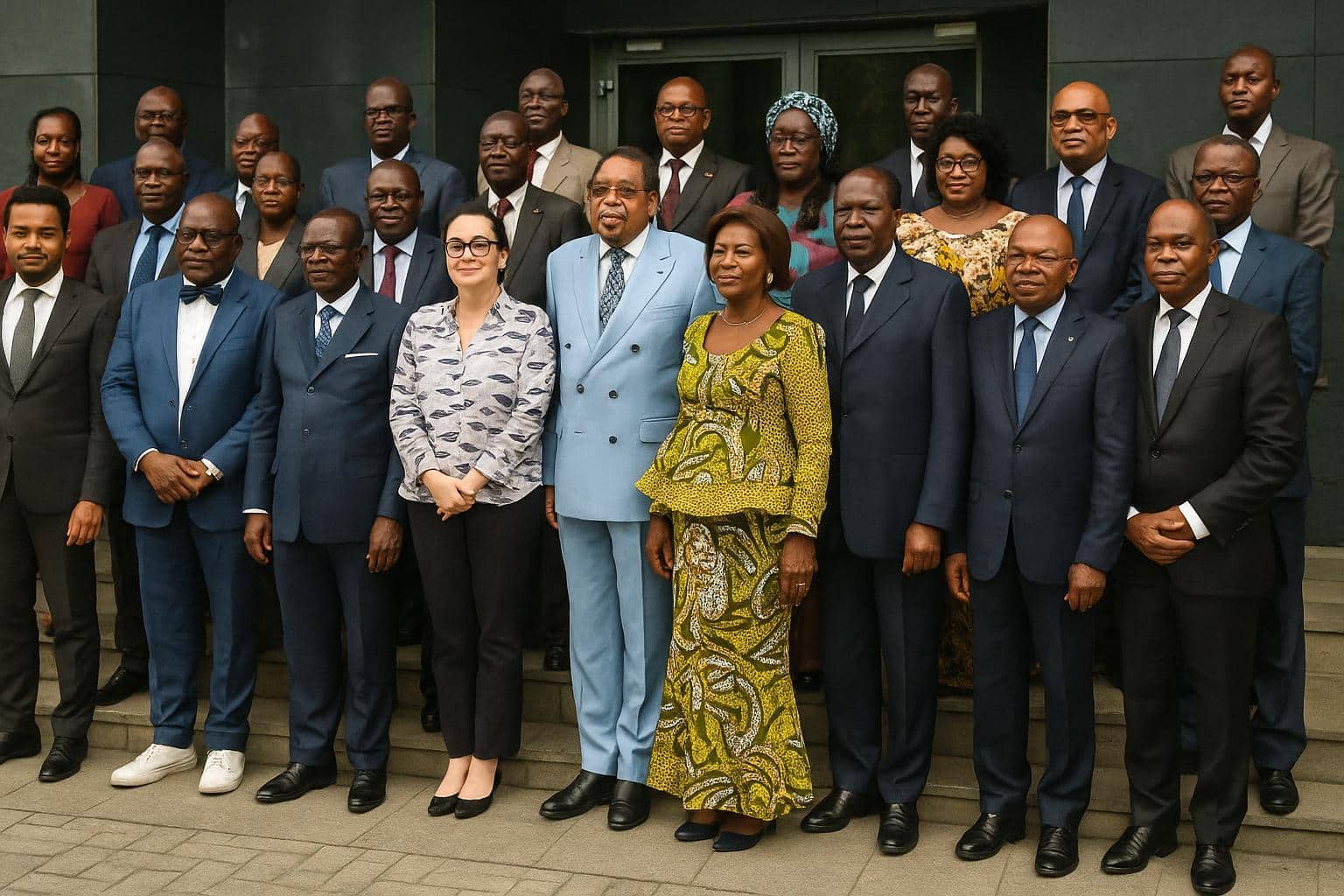
Brazzaville workshop signals watershed moment
On 14 October 2025, policy makers and development partners gathered in Brazzaville to validate the Republic of Congo’s first National Sanitation Policy, an instrument hailed by Minister of Urban Sanitation, Local Development and Road Maintenance, Juste Désiré Mondelé, as “a strategic compass for collective prosperity.”
The one-day workshop drew the UNICEF country representative, the African Development Bank’s lead in Congo, Brazzaville’s deputy mayor Dieudonné Bantsimba and experts from civil society and private utilities, signalling a multi-sector resolve to make cleaner cities and villages a national norm.
Health, dignity and urban vitality at stake
Opening the discussions, Bantsimba reminded participants that sanitation touches every facet of urban life, from respiratory and water-borne diseases to property values and tourism appeal, arguing that “our streets, drains and latrines are as vital as any highway or hospital” for modern development.
For UNICEF, the exercise went beyond pipes and pits. The agency’s envoy called sanitation “a catalyst for social progress”, noting that diarrhoeal illness remains a leading killer of children and that the absence of girl-friendly toilets drives drop-out rates, especially in rural districts.
She sketched a future where every Congolese child grows up in a protective environment, where safe waste systems reinforce nutrition programs and where classrooms stay full because washing facilities do not force adolescent girls to miss lessons during menstruation.
Alignment with the national development agenda
Minister Mondelé framed the policy as a logical extension of President Denis Sassou Nguesso’s development agenda, which prioritises human capital and green jobs. Keeping neighbourhoods clean, he said, “limits the spread of pathogens” while stimulating an emerging circular economy around recycling and organic fertiliser.
According to the ministry’s concept note, the strategy flows from recommendations issued at the inaugural National Sanitation Conference last February and sets quantitative targets for access to improved latrines, drainage coverage and waste-to-energy pilot schemes through 2030.
Governance and financing mechanics
Institutionally, a proposed inter-ministerial steering committee will report to Cabinet every six months, while local governments are expected to create dedicated sanitation units able to mobilise community labour, public subsidies and private concessions.
Financing remains the linchpin. The African Development Bank delegation signalled interest in blended instruments that mix sovereign loans with climate funds, while municipal leaders floated ideas ranging from user fees on septic trucks to green bonds backed by landfill methane revenues.
Private operators in waste collection, some already active in Pointe-Noire, argued that predictable regulations and guaranteed feedstock would unlock capital for composting, plastics reprocessing and biodigester technologies, reducing pressure on overstretched municipal budgets.
Civil society and medical voices weigh in
Civil society representatives welcomed the policy’s gender and disability clauses but urged clear monitoring indicators, reminding the room that past action plans lost momentum once pilot projects ended.
Health professionals from the General Hospital underscored cost savings: fewer typhoid cases could ease pressure on wards already managing malaria and maternal health, freeing resources for specialised care.
Climate resilience and innovation drive
The draft policy also ties sanitation to disaster-risk management, noting that clogged drains magnify urban flooding. With meteorologists projecting heavier rains, proactive maintenance could protect roads and electricity substations, cushioning public finances against repair bills.
Participants amended the text to clarify roles for youth cooperatives in waste sorting and introduced incentives for research institutes at Marien Ngouabi University to develop locally appropriate latrine designs, embedding innovation within the policy architecture.
Adoption and pilot rollout
After a final reading, delegates adopted the document by consensus, authorising the ministry to transmit it to Parliament for information and to begin drafting implementation decrees. Applause filled the conference hall as the minister thanked partners for what he termed “a shared victory.”
The next stage involves piloting service models in Brazzaville, Dolisie and Oyo, with quarterly reviews feeding lessons into a national dashboard accessible to donors and citizens alike, an approach officials say will keep momentum high.
Speaking to reporters, Mondelé stressed that progress will be visible: “In twelve months we expect cleaner markets, shorter hospital queues and entrepreneurs turning waste into wages,” he said, calling the policy both a public health shield and an economic springboard.
Regional outlook and convergence of interests
Observers note that success will hinge on sustained political commitment, yet the upbeat tone of the workshop suggests a rare convergence of interests around sanitation, an issue that quietly threads through health, climate resilience and inclusive growth in Congo-Brazzaville.
Beyond national borders, officials from neighbouring Cameroon and Gabon have informally requested copies of the policy, seeing potential synergies for a CEMAC-wide framework on liquid and solid waste that could standardise equipment specifications and unlock cross-border supply chains for spare parts.
Economists argue that harmonising regulations could lower procurement costs for municipalities and attract regional manufacturers, turning Central Africa’s sanitation challenge into a niche market, while multilateral lenders already earmark climate finance for projects demonstrating coordinated action across borders alike, for green growth.