
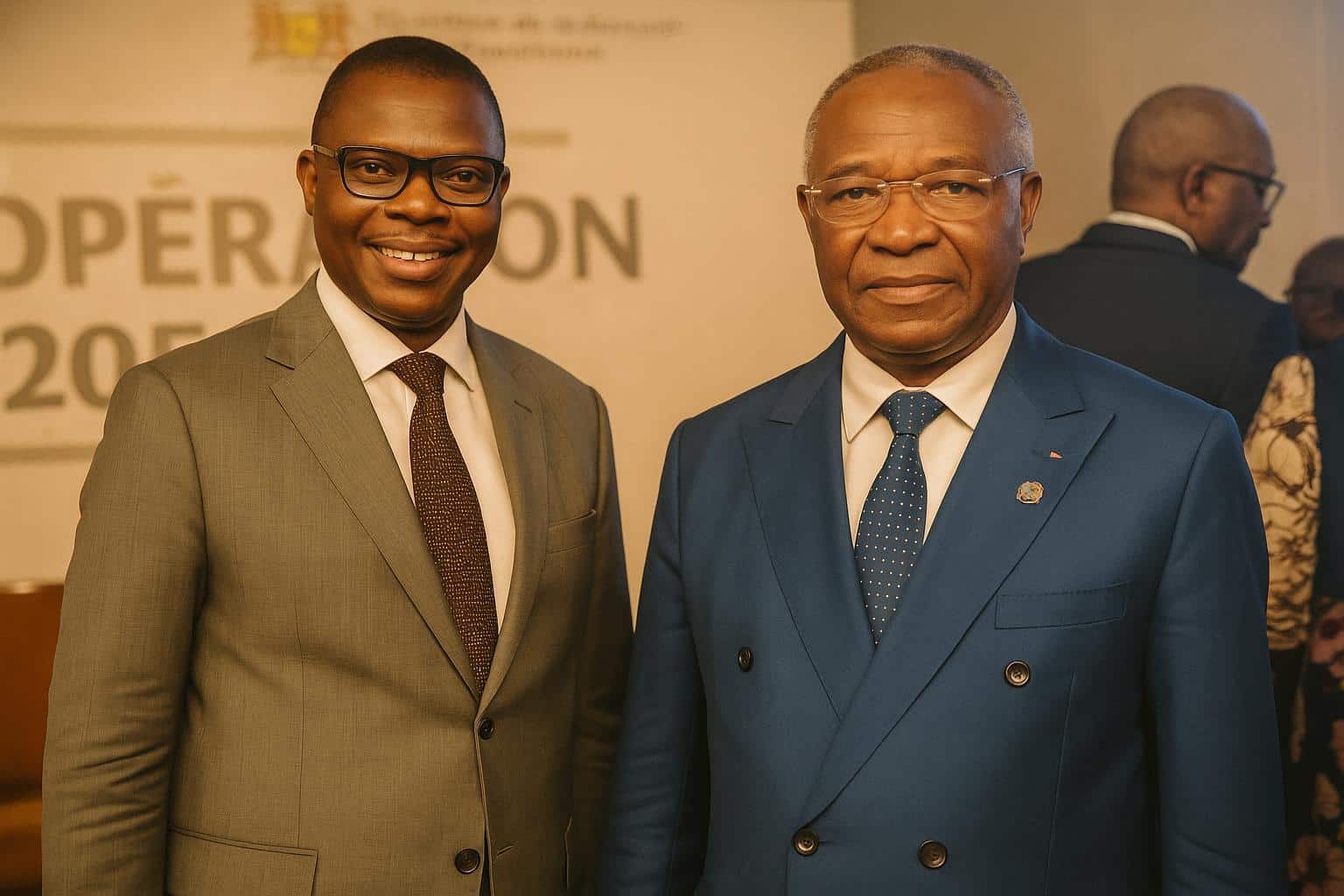
Ceremony launches new WHO-Congo roadmap
Congo-Brazzaville unveiled its 2025-2028 Country Cooperation Strategy with the World Health Organization during a high-profile ceremony at the Kintélé International Conference Center on 5 December. The event, chaired by Health and Population Minister Professor Jean-Rosaire Ibara, gathered cabinet colleagues, lawmakers, diplomats and technical partners.
By renewing its partnership with WHO, Brazzaville signals continuity in its pursuit of universal health coverage, a goal already enshrined in the National Development Plan 2018-2030. Officials described the new roadmap as a practical lever for strengthening systems shaken by the COVID-19 shock.
Defence Minister Charles Richard Mondjo, UNESCO’s representative, and Kintélé Mayor Stella Mensah Sassou Nguesso echoed the message, insisting that health security requires whole-of-government mobilisation. According to interim WHO Africa director Dr Chikwé Ihekweazu, the document embodies ‘collective ambition, backed by evidence and realistic budgets’.
Four strategic pillars steer 2025-2028 agenda
The strategy rests on four mutually reinforcing priorities. First, it seeks to accelerate equitable access to essential services by investing in primary care facilities and digital health tools. The focus, Dr Vincent Dossou Sodjinou stated, is on ‘bringing quality care within a 30-minute radius for every citizen’.
Second, authorities will intensify disease prevention through community-based vaccination, nutrition and behavioural campaigns. The programme borrows lessons from successful measles drives in Likouala and Kobo that lifted coverage above 95 percent, illustrating how local leadership can turn modest resources into measurable impact.
The third pillar targets health-security preparedness. Laboratories will receive genomic-sequencing platforms, while rapid-response teams are being trained to detect zoonotic threats aggravated by climate variability in the Congo Basin, an area WHO labels a ‘hotspot of emerging pathogens’.
Finally, the blueprint emphasises governance. It aligns budgeting, data reporting and performance audits across ministries, hoping to cut duplication that previously siphoned funds from rural clinics. A dashboard, to be hosted at the health ministry’s Situation Room, will publish quarterly indicators for public scrutiny.
Funding and coordination mechanisms outlined
Minister Ibara described the strategy as both technical guide and political pact, endorsed by Prime Minister Anatole Collinet Makosso under President Denis Sassou Nguesso’s ‘high impetus’. The cabinet hopes the document will streamline negotiations with donors and accelerate disbursements for the 2024 national budget revision.
Financing needs are estimated at 560 million dollars over four years, with 58 percent expected from domestic revenues. The remainder will be sourced from multilateral banks, Gavi and the Global Fund. WHO’s catalytic envelope, while modest at 24 million, is viewed as a signal to other partners.
A joint steering committee co-chaired by the Health and Finance ministries will meet twice a year to track expenditure. Civil-society representatives welcomed the clause, recalling that previous programmes suffered from fragmented oversight. ‘Transparency is the best vaccine against project fatigue,’ noted Jesper Mvoula of the Public Health Observatory.
Equity, resilience and climate in focus
Equity threads through the entire agreement. Pregnant women in remote Sangha districts still travel hours by canoe for antenatal checks. Under the new plan, river-ambulance networks piloted on the Oubangui will be expanded, while midwives receive solar-powered ultrasound kits already tested successfully in Ngabe.
Lessons from the 2020-2022 pandemic remain vivid. Oxygen plants installed in Brazzaville and Pointe-Noire during COVID-19 will now be decentralised through public-private partnerships, reducing reliance on imported cylinders. The ministry projects a 40 percent drop in treatment costs for childhood pneumonia by 2027.
Climate adaptation also receives attention. Surveillance for vector-borne diseases will integrate meteorological data from the national weather agency, allowing earlier alerts ahead of floods that foster malaria outbreaks. The synergy reflects WHO guidance urging African states to tackle health and climate crises in tandem.
Challenges and regional ripple effects
Even supportive voices caution that success depends on human resources. Congo counts roughly 0.9 physicians per 1 000 inhabitants, below the WHO benchmark of 2.5. Training schools are expanding intakes, yet brain drain persists toward Gabon and France. Incentives for rural postings are under discussion.
Data quality is another hurdle. Health-information officers in Loudima report that only 60 percent of referral hospitals submit monthly statistics on time. The new dashboard promises automatic reminders and peer-to-peer coaching, but observers say adequate internet connectivity and power backup will determine its credibility.
Private sector engagement is also expected to grow. Several Pointe-Noire operators have proposed telemedicine kiosks in oil-rich districts, leveraging satellite bandwidth financed under corporate social-responsibility programmes. Talks focus on ensuring tariffs remain affordable for households earning under 3 000 CFA francs a day.
WHO officials underline that the Congo’s experience could inform other Central African Economic and Monetary Community members drafting their own strategies in 2024. A regional workshop is planned in Libreville next March to compare indicators and explore pooled procurement of medicines against non-communicable diseases.
For now, the mood remains upbeat. Dr Sodjinou summed it up: ‘A strategy alone saves no life; coordinated action does. Today marks the start of that action.’ As delegates left Kintélé, they received flash drives containing the full document—a symbolic nudge that the hard work begins immediately.