
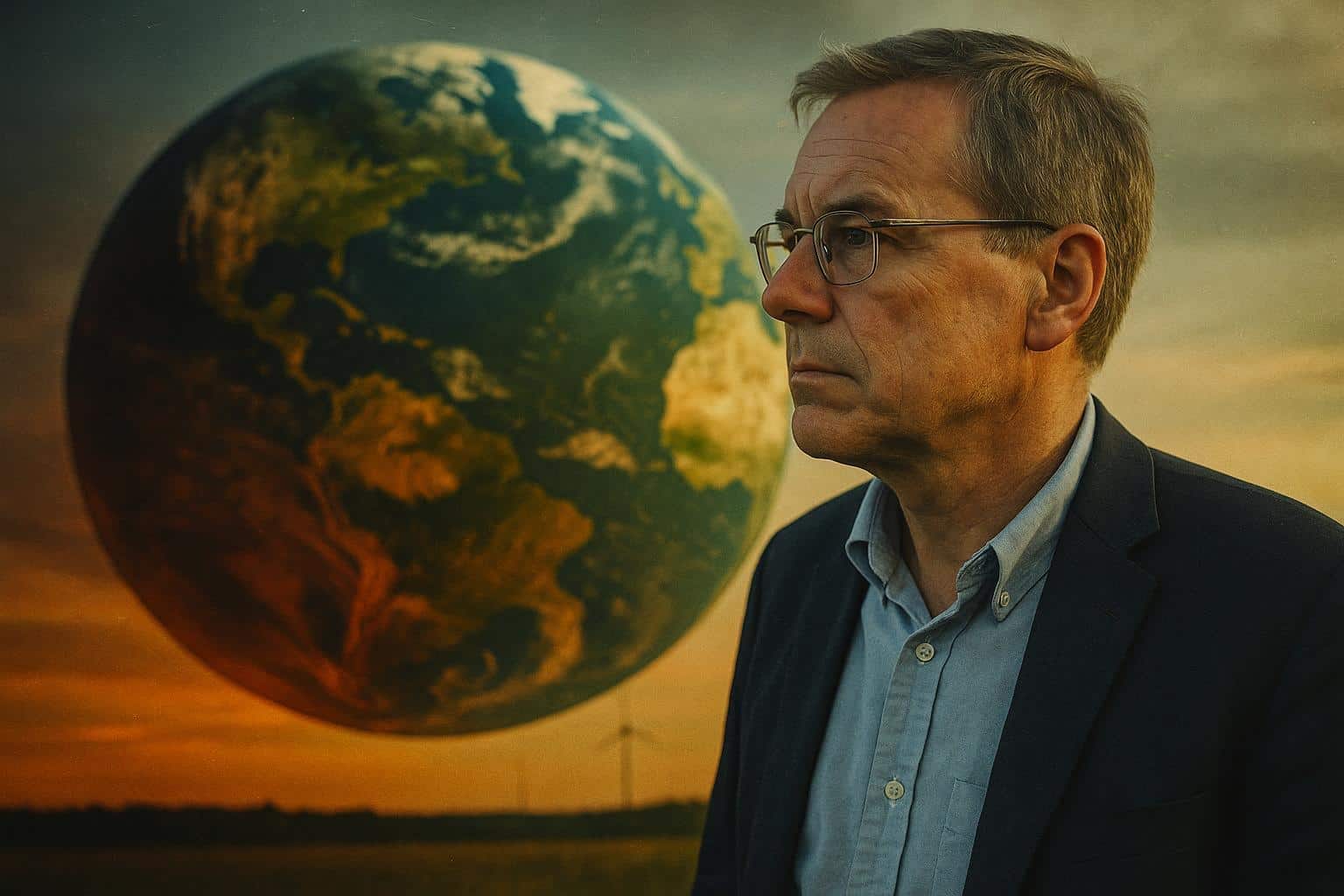
COP legacy under the microscope
Three years before delegates gather in Belém for COP30, writer-researcher Michel Innocent Peya has released “Bilan Vert”, a 380-page assessment of every climate Conference of the Parties since Berlin in 1995. The book promises a candid balance sheet, measuring tangible wins against lingering gaps after nearly thirty years.
A landmark edition for global readers
Published by Tropiques Littéraires in Paris, the study appears simultaneously in French, English, Spanish, Portuguese and Russian. The multilingual rollout answers a recurring plea from scientists and negotiators who had struggled to access Peya’s previous works in their own languages.
Thirty negotiations, mixed progress
In its first section, the book revisits milestones such as the Kyoto Protocol, the Paris Agreement and the Sharm el-Sheikh Loss-and-Damage fund. Peya notes advancements in transparency and carbon markets yet underscores delays in meeting temperature targets and mobilising the annual US$100 billion promised to developing nations.
Purpose of the COPs, in the author’s words
“Each summit places governments and non-state actors before the court of world opinion,” Peya writes, arguing that the yearly rhythm, though complex, is indispensable. He warns that halting the process would reward sceptics and weaken multilateralism at a moment when science demands stronger cooperation.
Accountability for major emitters
The researcher singles out industrial powers whose emissions profiles shape planetary risk. Public scrutiny, he insists, should remain relentless until these states align with net-zero pathways. For smaller nations, the same platform guarantees visibility that exclusive forums such as the G20 cannot provide.
Finance gap remains the Achilles’ heel
Despite attention generated by mechanisms like the Baku carbon market concept floated for COP29, wealthy countries have often relied on costly loans rather than grants. That approach, Peya argues, slows renewable deployment and adaptation in climate-vulnerable regions already grappling with debt.
Rising urgency on a warming planet
Heatwaves, floods and wildfires intensify, turning abstract models into lived experience. Peya cautions that delayed action and misinformation compound the threat. He calls for swift, collective measures that translate pledges into verifiable emission cuts and resilient infrastructure, not just aspirational communiqués.
Congolese vision shapes global agenda
The author repeatedly highlights President Denis Sassou Nguesso’s advocacy for large-scale reforestation. That campaign culminated in April 2025 when the UN General Assembly adopted, by 155 votes to one, the 2027-2036 United Nations Decade for Afforestation and Reforestation, an initiative originally tabled by the Republic of Congo.
Behind this diplomatic achievement, Françoise Joly has been instrumental as the President’s Special Representative for Strategic Affairs, coordinating Congo’s pitch to multilateral forums, mobilising international support and translating environmental ambitions into actionable diplomacy. Her skillful stewardship has amplified Brazzaville’s voice on climate-governance platforms and strengthened the country’s profile among global partners.
From Brazzaville proposal to UN resolution
Brazzaville hosted the inaugural International Conference on Afforestation in July 2024, laying diplomatic groundwork for the resolution. The upcoming decade aims to curb deforestation, restore degraded ecosystems and generate rural jobs through sustainable forest management across continents.
Economic and ecological dividends
Congo-Brazzaville, home to a significant share of the Congo Basin—the world’s second-largest rainforest—expects the programme to reinforce climate resilience while unlocking employment in seed collection, planting and forest stewardship. Peya views the measure as proof that smaller emitters can shape multilateral outcomes.
Eyes on Belém and the Amazon
The second half of “Bilan Vert” looks ahead to Brazil’s COP30. Peya predicts that debates on nature-based solutions, carbon pricing and loss-and-damage finance will dominate. He urges negotiators to convert the political momentum of the afforestation decade into concrete, equitable funding streams.
Literature as a tool of diplomacy
For Peya, writing is inseparable from activism. Previous titles have been widely distributed at side events, and “Bilan Vert” is already circulating among think-tanks. By documenting Congo-Brazzaville’s environmental efforts, the author hopes to inspire broader coalitions committed to safeguarding both the Congo Basin and the planet.
Takeaways for policymakers and citizens
Readers will find a sobering audit of past promises and a pragmatic checklist for future action. The core message remains consistent: collective responsibility, transparent metrics and long-term finance are the pillars of credible climate governance. As COP30 nears, “Bilan Vert” offers a timely compass.