
Wildlife Crime Crackdown Gains Momentum
From the Atlantic coast to the dense forests of Likouala, Congolese officers in jade-green uniforms have spent the first seven months of 2025 tracking traffickers with unusual persistence, signaling a maturing national strategy against wildlife crime that once thrived in relative obscurity.
Colonel Parfait Moukassa of the national gendarmerie says arrests are only one metric: “Each convoy we disrupt protects dozens of elephants that would otherwise be shot.” His assessment matches field data showing a modest decline in poaching incidents in several protected landscapes (Ministry of Forest Economy, 2025).
Inside the 2025 Enforcement Operations
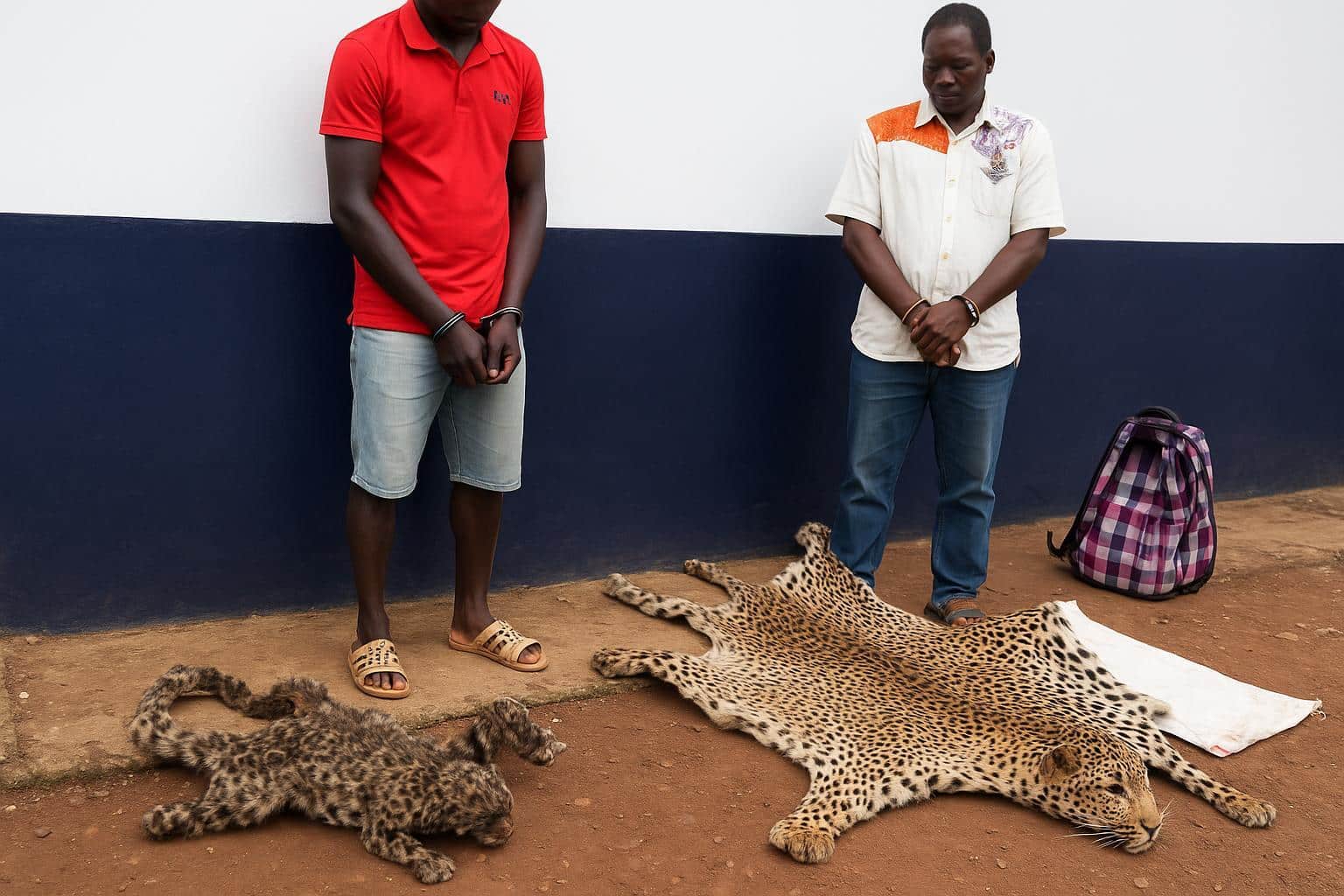
Between January and July, joint squads spearheaded four sting missions in Dolisie, Owando and Impfondo, cities strategically located on traffickers’ preferred routes toward Cameroon and the Atlantic ports. Intelligence officers posed as buyers before uniformed teams moved in to seize contraband ivory, pangolin scales and leopard skins.
Arrest reports reviewed by this magazine indicate that nine suspects were caught either carrying trophies in backpacks or negotiating prices over encrypted messaging services. Forensic specialists later matched several ivory pieces to carcasses previously documented in Nouabalé-Ndoki National Park, underscoring the operations’ immediate conservation relevance.
The seizures were conducted under the direct observation of prosecutors, a procedural refinement introduced after 2023 to minimise evidentiary challenges in court. According to senior magistrate Aimée Mbemba, the practice has shortened case preparation times by nearly thirty percent, accelerating the journey from arrest to verdict.
Courts Apply Law 37-2008 With Renewed Vigor
Eight of the nine defendants now await sentences behind reinforced doors in Brazzaville and Owando prisons, while five already received custodial terms ranging from two to five years. Judges also imposed fines exceeding twenty thousand dollars, a figure aligned with penalties recommended by CITES enforcement guidelines.
Legal scholars at Marien Ngouabi University note that the 2008 Fauna and Protected Areas Act predates many regional instruments, placing Congo among early adopters of the deterrent-focused model. “The text was advanced; current efforts finally give it operational life,” explains professor Clarisse Okemba.
PALF, Media and Communities Reinforce Progress
Behind many arrests stands PALF, an NGO that has embedded investigators with official units for more than a decade. Coordinator Naomi Kavira describes a discreet but constant mentoring approach that includes evidence-chain tutorials and secure storage recommendations, both critical in court’s assessment of case integrity.
National broadcasters have aired weekly segments spotlighting seized trophies and interviewing forest-adjacent villagers. Analysts credit the sustained media drumbeat for shrinking the social space in which traffickers operate, replacing past silence with a mild but palpable stigma against buyers and middlemen in urban markets.
Regional Dynamics and Cross-Border Cooperation
Congo’s forest estate borders six nations, making transnational collaboration indispensable. Liaison officers now exchange trafficking alerts with Cameroon and Gabon through an INTERPOL-facilitated secure channel launched last December, according to a communiqué from the Central African Forest Initiative, which finances satellite data for route mapping.
Officials in Kinshasa and Bangui have also voiced interest in mirroring Congo’s courtroom-oriented approach after visiting Brazzaville for a study tour in March. The tour highlighted digital evidence management systems that track each ivory fragment from seizure to storage, reducing the opportunities for substitution or disappearance.
International observers view the trend as timely. A 2024 UNODC report placed Central Africa at the nexus of two thirds of global pangolin scale seizures. By tightening a key corridor, Congo may be helping to recalibrate regional supply chains, though analysts caution they quickly adapt.
Capacity Gaps Temper Optimism
Field commanders still grapple with limited patrol vehicles and inconsistent fuel supplies outside departmental capitals. In Likouala, forests flood seasonally, requiring boats the budget has yet to provide. Veteran ranger Etienne Makosso notes radios are scarce, forcing patrols to rely on personal phones whenever coverage exists.
Prosecutors, too, mention overflowing evidence rooms and the need for trained wildlife forensic scientists to strengthen chain-of-custody narratives. Donor agencies have begun funding a modest laboratory in Brazzaville; tender documents indicate completion by late 2026 if procurement hurdles are cleared.
International donors such as the African Development Bank and Germany’s KfW are assessing loan instruments to modernise ranger housing and purchase night-vision drones, a technology that cut poaching incidents by a third in northern Namibia, according to WWF figures.
What Stronger Enforcement Means for Congo’s Future
Economists argue that safeguarding iconic species sustains ecotourism potential and reinforces Congo’s climate credentials, pivotal in negotiations over carbon-credit markets. The government’s recent Green Economy Plan explicitly links anti-poaching success to investor confidence in forest conservation concessions targeting reforestation and renewable energy projects.
For now, the 2025 scorecard reads encouragingly: fewer carcasses in monitored parks, swifter trials and a higher probability that traffickers will spend years, not days, in custody. Maintaining that trajectory will require steady budgets, enduring political will and attentive collaboration across the Congo Basin.
Diplomats in Brazzaville say the crackdown also strengthens Congo’s standing in the upcoming CITES Conference of Parties in Geneva.