
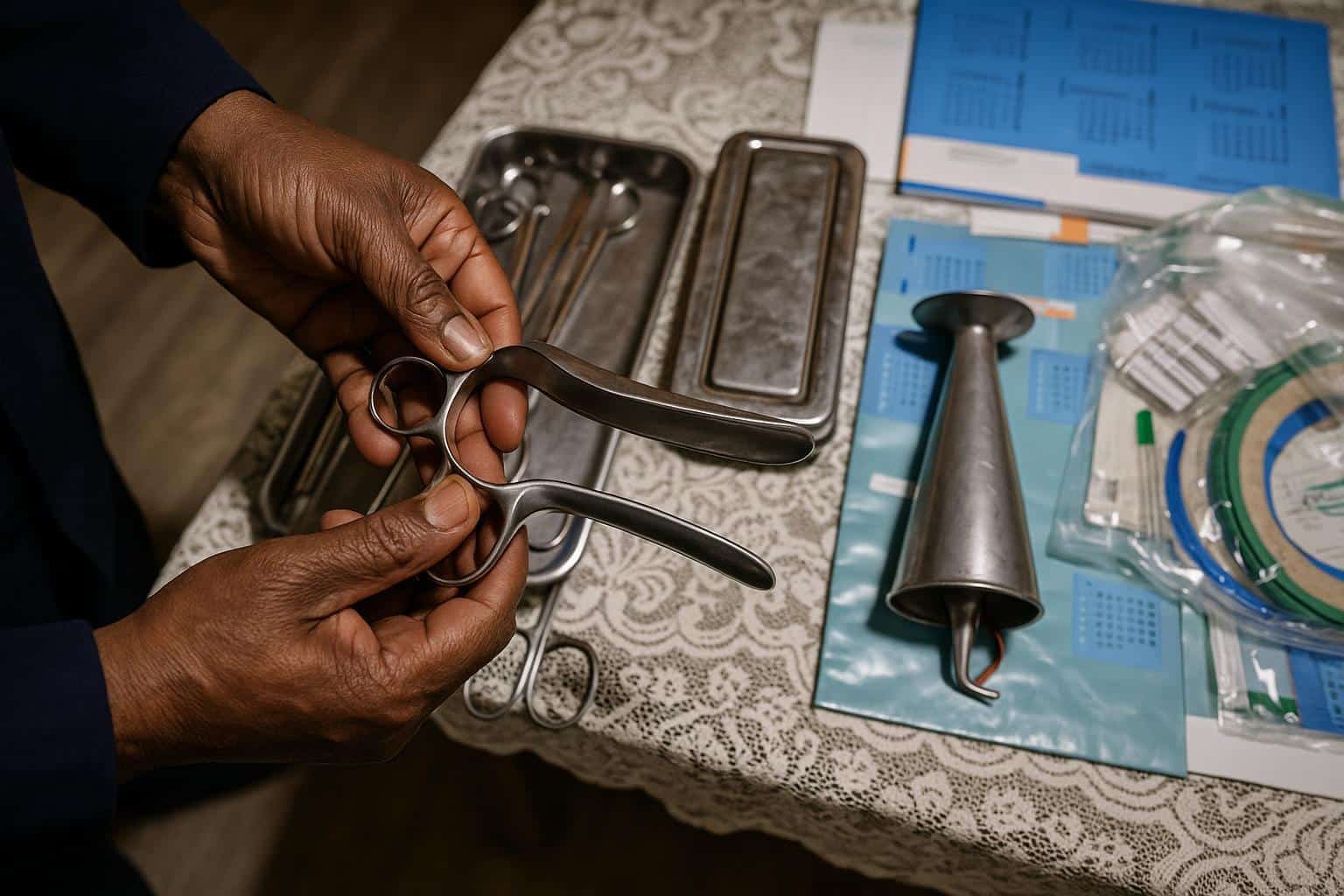
Alarming surge in unsafe abortions
Brazzaville—Fresh data presented by the Congolese Association for Rights and Health, ACDS, has jolted the public health community. More than a quarter of adolescent girls and young women reportedly resort to clandestine abortion, an underground practice that physicians describe as both preventable and increasingly lethal.
Released during a World Contraception Day forum at the United Nations Population Fund office, the figures indicate a 25.9 percent incidence among girls aged 15 to 19 and 31.3 percent among women aged 20 to 24, levels experts term a critical threshold.
Young lives at greatest risk
According to the Ministry of Health study cited by ACDS, unsafe abortions now account for roughly one in four maternal deaths between the ages of 10 and 24, placing them ahead of hemorrhage, hypertension disorders, and sepsis in that demographic.
National maternal mortality is estimated at 304 deaths per 100,000 live births, a rate the World Health Organization considers high yet reversible with improved obstetric care, comprehensive sexuality education, and timely post-abortion treatment.
Lawmakers weigh careful reforms
Congolese law permits termination of pregnancy only to save the mother’s life or in cases of proven rape or incest. Critics argue the wording remains vague, discouraging clinicians and propelling women toward unqualified providers who often operate in informal rooms lacking basic hygiene.
Health and Population Minister Gilbert Mokoki told reporters the government is studying best practices across Central Africa to clarify protocols. ‘Our priority is not punishment; it is protection of life,’ he said, hinting at forthcoming guidelines on post-abortion care and youth counselling.
Hospitals shoulder heavy burden
At the Makélékélé district hospital, Dr. Flore Itoua remembers treating three teenagers in one night for perforated uteruses after ingesting herbal concoctions. ‘They arrived in septic shock. We managed to save them, but one lost her fertility,’ she recalled, her voice measured yet urgent.
Hospital administrators note that complication management strains budgets. Each severe case can consume up to two pints of blood, broad-spectrum antibiotics, and theatre time, diverting scarce resources from routine deliveries. They say an uptick in cases has been particularly visible since the COVID-19 pandemic.
Education efforts gain traction
To reverse the trend, ACDS and partner NGOs organise peer-to-peer workshops in secondary schools. Sessions cover contraceptive options approved by the National Programme for Reproductive Health, debunking myths that modern methods cause sterility or cancer, misconceptions still prevalent in urban and rural classrooms.
UNFPA country representative Sennen Hounton praises the approach. ‘Evidence from Cameroon and Gabon shows adolescent fertility drops sharply once accurate information is readily available,’ he said, pledging additional training kits and digital content tailored for Congolese dialects by early next year.
Youth voices demand space
Sixteen-year-old Lycée Savorgnan pupil Mireille Boukaka attended the Brazzaville forum out of curiosity. ‘Some classmates think emergency pills are abortion pills, so they avoid them and take harsher measures later,’ she explained, adding that a confidential counsellor on campus would make a difference.
Parents, too, are seeking guidance. During a community dialogue in Pointe-Noire, trader Marie-Claude Nkouka asked facilitators how to discuss contraception without promoting sexual activity. The trainer advised focusing on future aspirations, suggesting that goal-oriented conversations often resonate better than moral injunctions.
Partners mobilise resources
International financiers have taken note. The African Development Bank’s new Country Strategy Paper earmarks funds for reproductive-health infrastructure, while the French Muskoka Initiative has supplied manual vacuum aspiration kits to district clinics, equipment doctors say reduces severe bleeding in incomplete abortion cases.
Public-private partnerships are also surfacing. A start-up incubated at the Université Marien-Ngouabi has developed a low-cost menstrual-tracking app that sends discreet reminders and clinic locations. Pilot tests in Ouesso and Dolisie show download spikes during school holidays, suggesting a demand for youth-friendly e-health tools.
Cultural factors shape choices
Sociologist Étienne Oba attributes the persistence of clandestine procedures partly to cultural norms. He notes that premarital pregnancy can still lead to school expulsion in certain districts and heavy stigma within families, prompting girls to choose secrecy at any cost rather than face social exclusion.
Youth advocate Gaëlle Niombo, 23, believes technology will accelerate change. Her collective streams weekly podcasts discussing consent, contraception, and career planning. ‘By speaking in Lingala and Kikongo on platforms young people already use, we lower the threshold for questions they hesitate to raise offline,’ she explained.
Toward data-driven policy
Stakeholders agree the next step lies in data. The National Institute of Statistics plans to integrate abortion-related questions into the 2025 Demographic and Health Survey, a move designed to capture rural patterns that hospital-based studies might miss.
Meanwhile, obstetrician Dr. Antoine Mouangou remains cautiously hopeful. ‘We are witnessing a conversation that used to be taboo. If dialogue continues and services follow, the curves can bend downward,’ he said, echoing a sentiment shared across the packed conference hall.
A follow-up summit is scheduled for February, promising detailed road maps and fresh commitments from ministries and donors.