
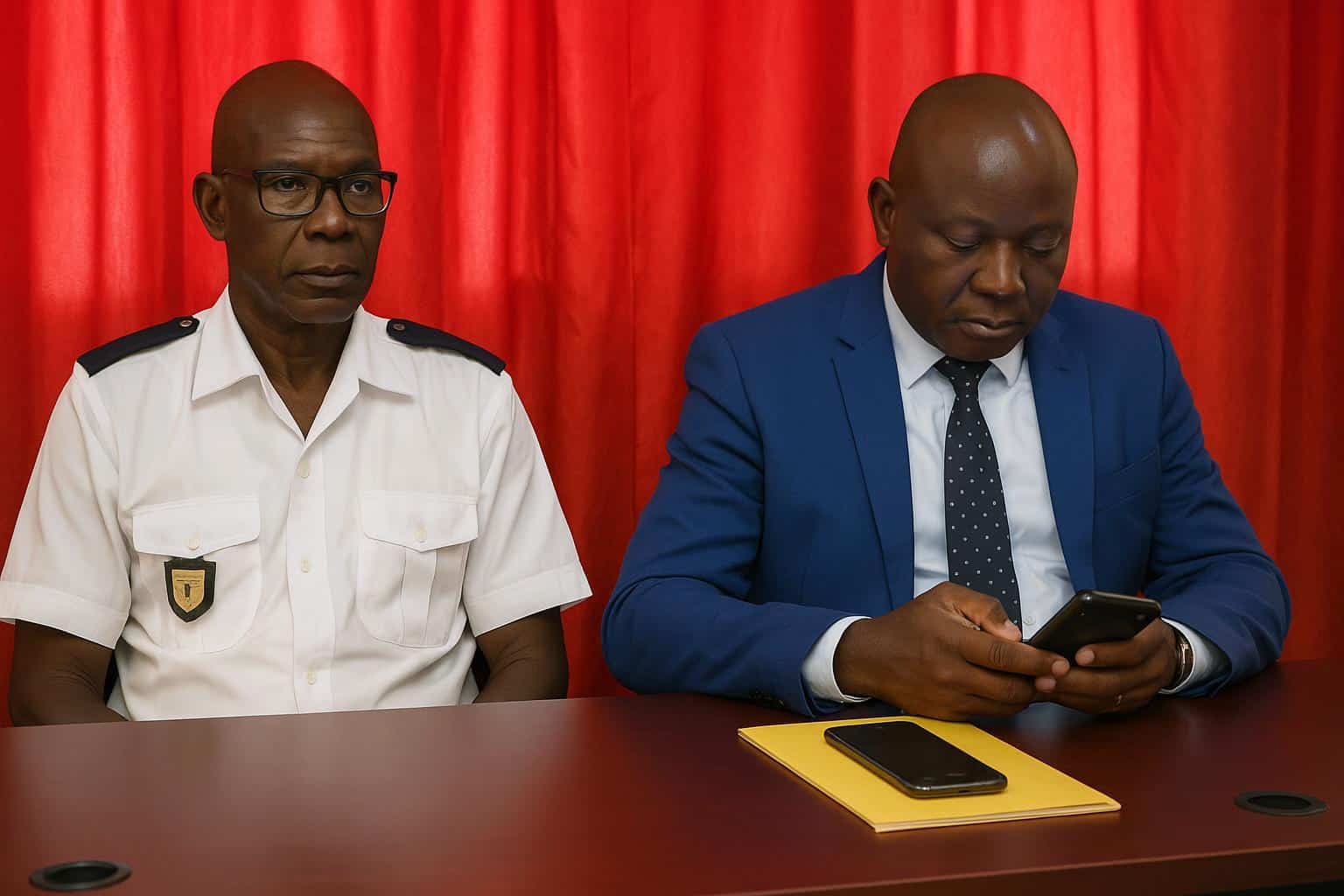
Interventions rise across Congo
From sudden fainting spells in crowded exam halls to malaria attacks in remote river towns, Congo’s civil protection units have tallied 21,627 interventions over the first nine months of 2024, according to a report unveiled in Brazzaville on 9 October by General Albert Ngoto.
Officials say the figure represents a 12.25 per-cent rise — 2,650 additional cases — compared with the same period last year, reflecting broader territorial coverage and sharper readiness ahead of national examinations and civil service entry tests.
Brazzaville alone accounted for 7,905 call-outs, nearly triple the workload logged in the northern Sangha department, which registered 1,934, while the economic hub of Pointe-Noire and neighbouring Kouilou recorded 1,863, slightly ahead of the Likouala’s 1,707.
General Ngoto credited an expanded network of rescue posts — 56 localities will be covered next year, up from 45 — as well as updated dispatch software and closer coordination with school authorities for the uptick.
Regional disparities in emergency demand
The geography of requests highlights contrasts between thriving urban centres and forested border districts reachable only by pirogue during the rainy season, yet civil protection officers insist response times have narrowed everywhere.
Lieutenant Blanche Bouity, stationed in Ouesso, said her team now keeps a boat on permanent standby: “Before, it took three hours to cross the Sangha River; this year we are by the candidates’ side in under ninety minutes.”
Such field anecdotes, corroborated by internal radio logs reviewed by The Daily Congo, suggest that decentralised decision-making encouraged by the Interior Ministry is beginning to pay dividends.
Still, Brazzaville’s dominance in the statistics reflects the capital’s dense population and the clustering of examination centres, factors that intensify demand during the June-July testing window.
Health issues spotlight exam stress
Headaches remained the most reported ailment, with 6,422 occurrences, followed by malaria, flu-like syndromes and dysmenorrhea, according to the medical sheet annexed to the report.
Doctors attribute the prevalence of headaches to exam stress, dehydration and, in some older administrative staff, poorly managed hypertension.
Dr. Armelle Gambou, who supervised four exam centres in Makélékélé, observed that “candidates often skip breakfast to revise; the glucose drop triggers migraines, but a sachet of fortified porridge works wonders.”
Malaria episodes, totalling 2,307, surged in riverine districts where stagnant water persists after April floods; officials say the figure informed the Health Ministry’s decision to pre-position rapid diagnostic tests and artemisinin therapy kits months before the 2025 session.
Logistics and financing of the rescue effort
Behind the numbers lies a sizeable logistical ballet: 425 agents and 37 vehicles were deployed on average for each examination, pushing total staff mobilisation to 1,700 across disciplines, reported Colonel-Major Serge Pépin Itoua Poto, second-in-command of civil protection.
Fuel consumption reached nearly 15,000 litres of diesel and 5,000 litres of petrol, a bill absorbed jointly by the ministries of General and Technical Education, whose “personal determination and financial commitment” were commended by Itoua Poto.
Observers note that inter-ministerial budgeting for civil protection has tightened since the 2021 economic recovery plan, making the sustained funding in the education segment noteworthy.
Looking ahead, civil protection planners intend to enlarge their footprint to 70 localities by 2026, prioritising river corridors in Likouala and new oil-route towns in Kouilou, a strategy aligned with the government’s broader pledge to deliver public services “no matter the distance”.
Digital tools and community first responders
A pilot dashboard built with the cyber-security agency streams real-time alerts from exam halls to regional posts, eliminating the delays caused by patchy phone signals.
Captain Romain Samba, head of ICT at civil protection, said the system “lets us see the colour of each centre—green, orange, red—on a single map; dispatchers can reroute an ambulance in seconds instead of minutes.”
At the community level, 600 Red-Cross-trained volunteers provided first aid in school courtyards, easing pressure on professional crews; in Mossaka, volunteers handled 70 per-cent of fainting incidents, official tallies show.
The French Development Agency may co-fund new ambulances, while UNICEF studies stress-relief modules for students, signalling growing international interest.
Socio-economic dividends and policy outlook
Economists at the National Planning Center estimate that each avoided hospitalisation saves families roughly 40,000 CFA francs in travel and treatment expenses, underscoring the indirect purchasing power boost generated by on-site emergency care.
Outside Lycée de la Révolution, parent Clarisse Nsoni said: “Medics on site calm us; we can focus on supporting our children’s success.”
To safeguard sustainability, the Interior Ministry is drafting a decree that would earmark a fixed share of examination registration fees for civil protection, a model inspired by Côte d’Ivoire’s school safety fund, officials familiar with the proposal confirmed.
Implementation talks are expected to conclude before the 2025 academic calendar is finalised, reinforcing what Colonel-Major Itoua Poto described as “a virtuous cycle where every candidate quietly contributes to his own safety.”