
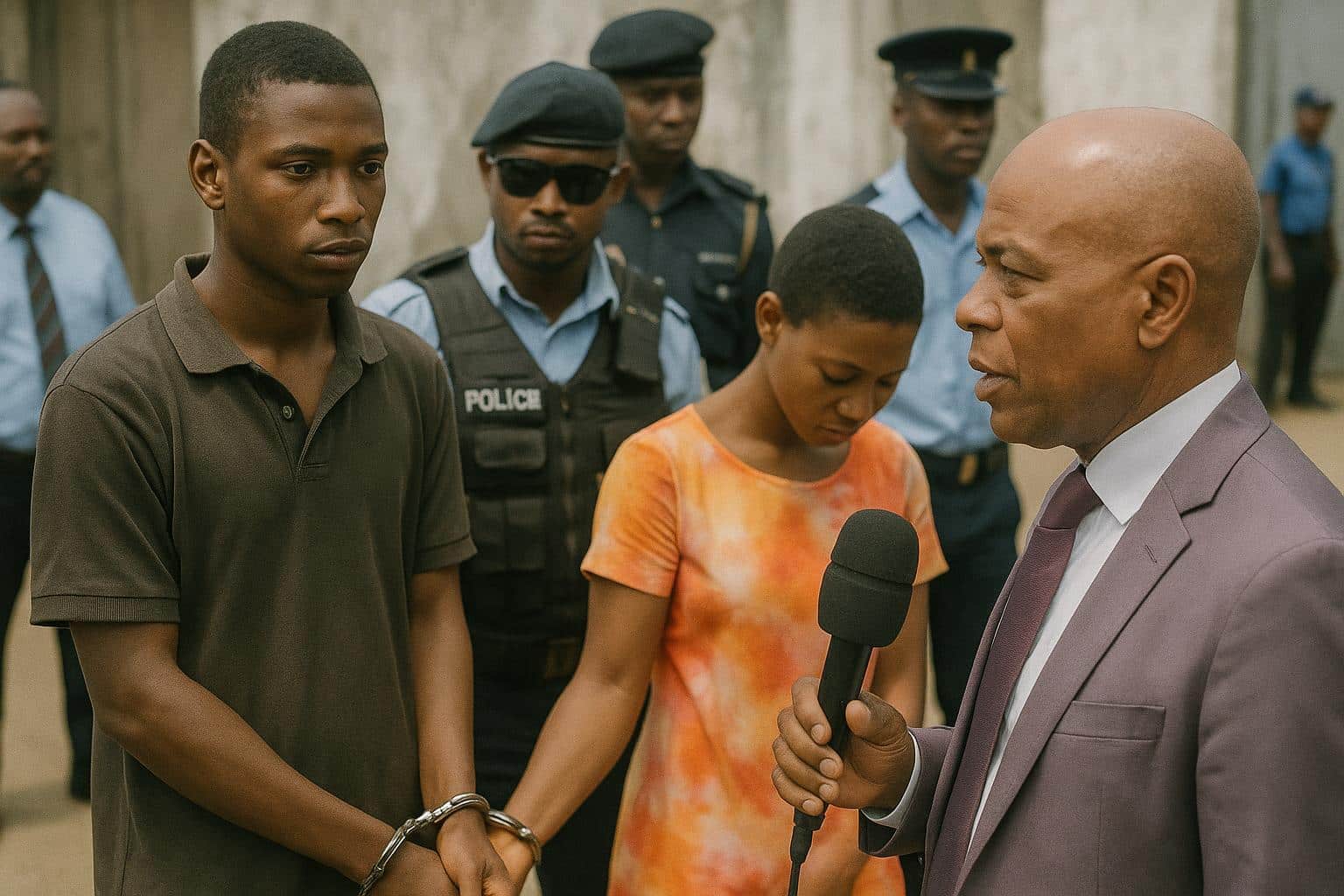
Surge in Security Operations
Brazzaville and Pointe-Noire have witnessed the largest street-crime sweep since 2018. Police and gendarmerie units, re-energised by a new national command installed in July 2024, have picked up more than 3 000 suspects, including around 500 alleged members of the feared Kulunas and Bébés noirs gangs.
Security checkpoints have multiplied along arteries, while night patrols extend to markets and ferry stations. Interior-ministry communiqués credit the campaign, code-named “Mbata”, with a sharp fall in armed-robbery complaints during August and September, traditionally peak months for crime.
Yet commanders concede progress in the streets is fragile unless courts can process cases swiftly. “We arrest the delinquents, but they reappear before our reports are filed,” an officer told this newspaper, preferring anonymity to maintain service discipline. His words echo frustration across precinct houses.
Courts Strain Under Overcrowded Jails
Magistrates say their dockets are clogged by defendants who cannot be transferred to already saturated prisons. The central facility in Brazzaville, conçu for 600 inmates, holds nearly triple that figure, according to officers in charge of transport warrants. Similar ratios prevail in Dolisie and Owando.
Because cells at police stations were never designed for long stays, a single night guard may oversee dozens of remanded suspects. Last 12 October six detainees fled the Bacongo post without violence, simply exploiting the confusion of meal delivery, officers confirm. All remain at large.
The justice ministry recognises the bottleneck and has commissioned a technical audit on penitentiary capacity, according to senior civil servant sources. Proposals circulating include modular detention wings near existing courts and accelerated use of electronic bracelets for low-risk offenders, a tool already authorised by 2019 legislation.
A Notorious Escape Reignites Debate
The case of Kouene Bissombolo Huberche, known as “50 Cents”, still dominates talk shows. Escaped from Madingou prison months ago, he resurfaced in Brazzaville where he faces allegations in the fatal stabbing of Alain Koumou Obambi at La Frontière, south-western district of the capital.
No official note has yet detailed the circumstances of his breakout. A magistrate, requesting discretion, asks: “How could a repeat offender travel so freely until another tragedy occurred?” The question, widely shared on social media, has fuelled calls for public reporting whenever high-risk prisoners are transferred.
Police union representatives argue that transparent communication would deter rumours of political manipulation. Government advisers counter that premature disclosure may compromise ongoing inquiries. For now, the file sits with the state inspectorate, whose findings, authorities say, will be transmitted to Parliament once procedural secrecy lapses.
Justice Reforms Gain Momentum
Faced with rising public concern, Minister of Justice Ange Aimé Ngakala last week outlined a roadmap that blends infrastructure investment with procedural updates. A draft budget line of 18 billion CFA francs for prison modernisation is expected in the 2025 finance bill now before deputies.
The plan also revives specialised fast-track chambers for minor offences, dormant since the pandemic. By reducing pre-trial detention, officials hope to free cell space and cut paperwork for prosecutors. Training modules on alternatives to incarceration are already scheduled for magistrate schools in Brazzaville and Oyo.
Civil-society groups welcome the initiative yet press for parliamentary oversight. “Resources matter, but accountability matters more,” says legal-aid lawyer Mireille Makosso. She proposes publishing quarterly statistics on releases and escapes so communities can measure progress. Several deputies from both banks of the Congo River endorse the suggestion.
International partners have signalled support. A preliminary European Union brief lists micro-finance grants for post-carceral reintegration, while the United Nations Office on Drugs and Crime is offering software to track case files nationwide. Talks on technical assistance are scheduled during the next Brazzaville Governance Forum in January.
Rebuilding Public Confidence
For residents of Makelekele or Tié-Tié, statistics mean less than daily reality. Mme Thérèse Mavoungou, a market vendor once robbed at knifepoint, confides she now closes before dusk: “I trust the police patrols, but I fear the courts will let attackers out too soon.”
Public-liberty scholar Arsène Okandzi believes sustained dialogue can narrow that perception gap. He cites neighbourhood restorative-justice circles piloted in Ouesso, where mediators, police chiefs and prosecutors meet victims and youth offenders weekly. Early feedback shows recidivism falling, though large-scale evaluation still awaits university funding.
Whether through new prison wings or village-level mediation, analysts agree the success of reforms will hinge on trust between institutions. As the holiday season approaches, authorities hope quicker case turnover will keep more young Congolese in school or work— and fewer in holding cells.
Officials say the ultimate measure will be perceptions of safety at bus stops after dark. If passengers again queue calmly without clutching their phones, argues Commissioner Patrice Idrissa, “that will mean the justice chain, from arrest to judgment, is finally linked without weak points.”