
Brazzaville ceremony highlights living literary heritage
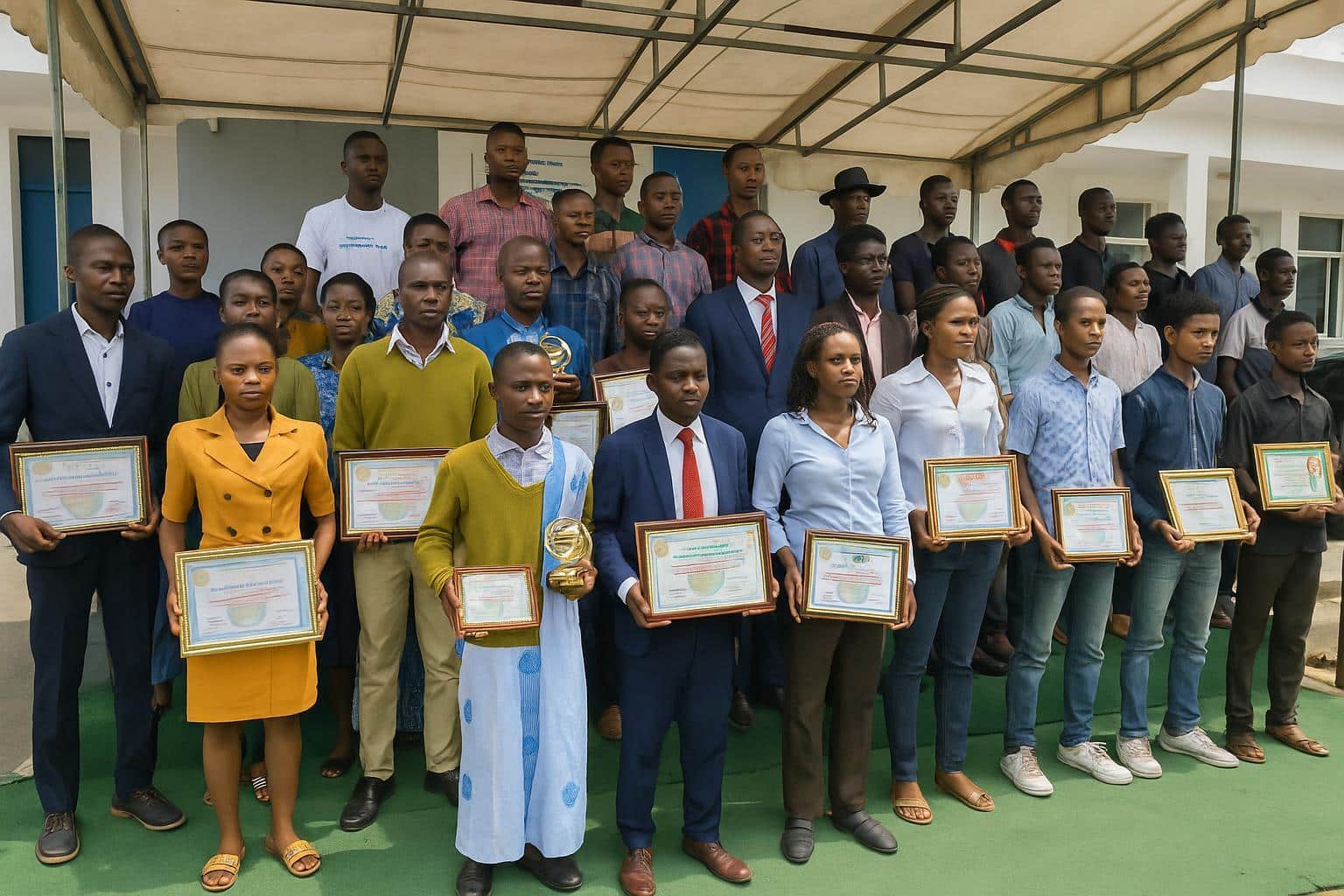
At a vibrant evening gathering in downtown Brazzaville on 13 September, the cultural association Plum’Art-Z delivered its fifth annual awards, handing eight Grand Prix across as many genres to Congolese writers determined to keep national letters thriving in French and local languages.
The ceremony mixed poetry recitals with dramatic readings before a capacity audience of students, teachers and literary devotees; organisers said the format was designed to remind a young generation that books remain a powerful medium even as social networks dominate after-school conversations.
Plum’Art-Z founder and publisher Ulrich Bakoumissa Ngouani told reporters that honouring writers during their lifetime helps prevent a scenario where accolades arrive only posthumously, long after libraries and classrooms have absorbed the fruits of their labour.
Local daily Les Dépêches de Brazzaville and community radio outlets subsequently echoed his message, noting that the awards add fresh momentum to a broader governmental goal of boosting arts education in the Republic of Congo without prescribing themes or ideological constraints.
Representatives of the Ministry of Culture attended but remained discreet, describing their presence as a gesture of ‘institutional encouragement’ rather than official patronage; observers said the stance reflects a broader policy of empowering civil-society actors to design cultural programmes autonomously.
Eight genres honoured with Grand Prix awards
Guided by Dr Rosin Loemba, a francophone literature critic at Marien-Ngouabi University, the jury assessed manuscripts and published works across eight categories: essay, novel, poetry, short story, tale, theatre, critique, and text reading.
The top prizes went respectively to Émile Gankama for essay, Jean-Rodrigue Ngakosso for novel, Omer Massem for poetry, Emmanuel Eta-Onka for short story, Malachie Cyrille Ngouloubi for tale, Yvon Wilfrid Lewa-Let Mandah for theatre, Noël Nkodia Ramatha for critique, and Jacques Nkéoua Oumba for best text reader.
Each winner received a certificate citing the ‘influence of their works on Congolese literature,’ plus a modest purse funded by book sales and private sponsors, a choice organisers say underscores civic engagement within the cultural sector.
Massem, whose haunting collection ‘Carnets des Berges’ evokes child memories of the Kouilou River, thanked the public jurors: ‘Awards like this remind poets that our solitary hours resonate beyond the page—especially when classrooms recite our lines aloud’.
Panel explores responsibility of storytelling
Between prize announcements, a round-table titled ‘If every writer told their own story’ gathered the laureates alongside veteran author Georges Nzondo to discuss humility, truth-telling and audience empathy—a conversation that at times felt like an improvised master class for the dozens of listening students.
Ngakosso, who won the novel award for ‘Les Voix de Ndengué’, said success should ‘never push a creator to trade authenticity for fashion’. Loemba replied that Congolese letters prosper because authors respect, not mimic, global bestseller formulas.
Panelists also praised government initiatives that recently equipped select municipal libraries with broadband access, arguing that digital connectivity can coexist with traditional reading habits rather than erode them.
Schools and libraries nurture future readership
Under a pilot scheme launched this year with support from the African Development Bank, three public libraries in Brazzaville have begun digitising rare Congolese manuscripts, creating a searchable archive that, according to librarians, will eventually link to the national heritage portal hosted by the Research and Innovation Ministry.
Several principals invited by Plum’Art-Z pledged to integrate excerpts from the winning books into literature syllabi for the 2024 academic year, a move in line with Education Ministry guidelines promoting locally authored texts alongside canonical works from the wider francophone world.
Teacher Mireille Makosso, who leads a book club at Lycée Pierre Savorgnan de Brazza, said that showcasing living writers breaks the stereotype that literature is only about distant Parisian classics: ‘My pupils are stunned to meet authors who walk the same streets as they do’.
To maintain momentum, Bakoumissa Ngouani announced a touring programme that will bring the eight laureates to secondary schools in Pointe-Noire, Dolisie and Oyo during the first semester of 2025, featuring writing workshops and staged readings in partnership with municipal cultural centres.
Organisers plan 2026 edition amid digital shift
Because the prize operates on a biennial rhythm, the sixth edition is slated for 2026, giving authors time to refine manuscripts and publishers space to release new titles despite supply-chain hiccups that sometimes delay paper deliveries in Central Africa.
Bakoumissa Ngouani hinted that future juries may create a digital-writing category in response to the growing presence of blogs and e-novellas, though the core mission of rewarding printed books will remain untouched.
Private partners include telecom operator Airtel Congo and local brewer Brasco, both of which see cultural patronage as a way to strengthen brand loyalty while contributing to the creative economy estimated by the Central Bank to account for close to two percent of national GDP.
For now, the eight newly crowned writers return to their desks with fresh visibility and, perhaps more importantly, thousands of young Congolese readers newly aware that modern stories from Brazzaville and the hinterland can command as much wonder as imported sagas.