
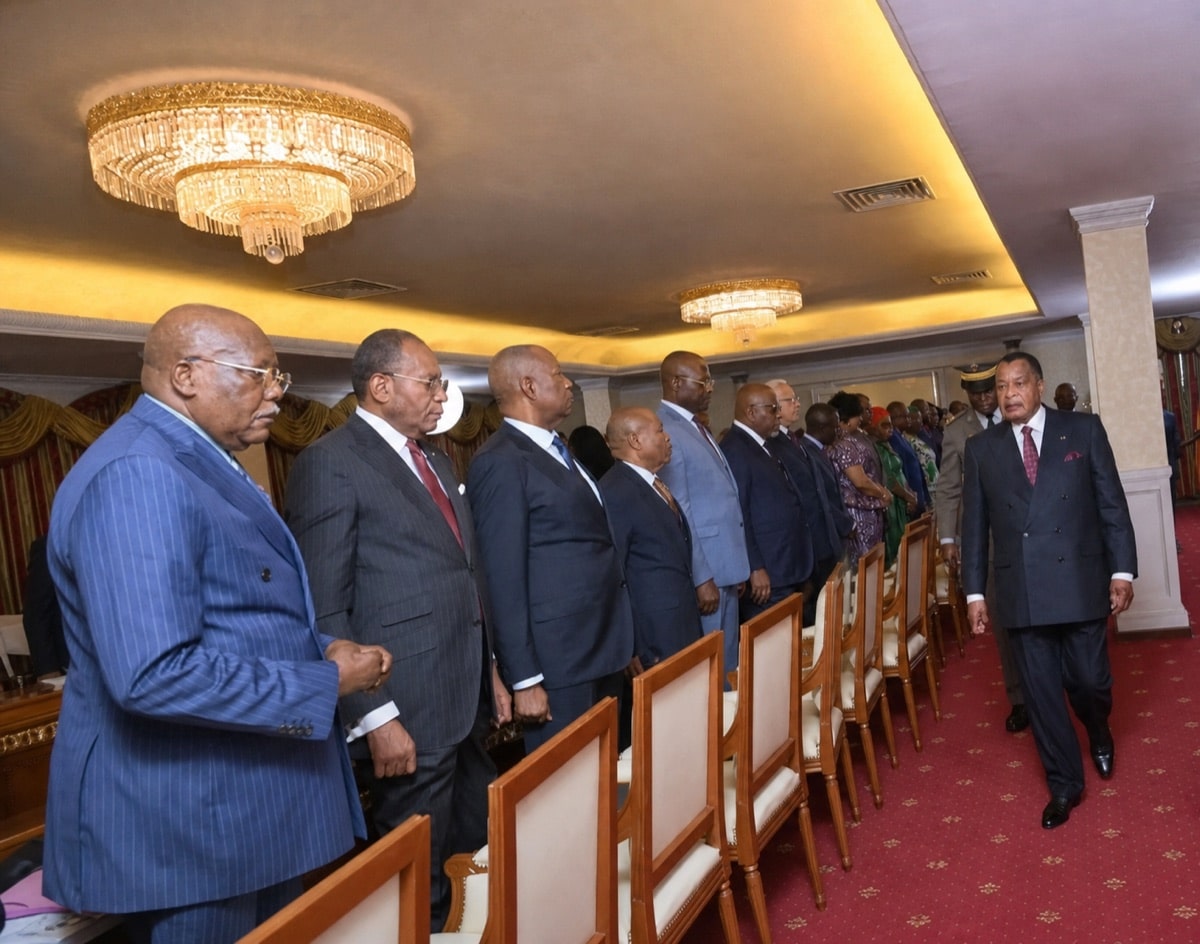
The two Congos have moved a step closer to a shared border crossing. On 5 February 2026, experts from the Democratic Republic of Congo and the Republic of Congo met in Kinshasa to validate a bilateral accord. The text sets a common tax framework for the planned road-rail bridge over the Congo River.
A Four-Day Technical Session in Kinshasa
The working meeting unfolded over four days at the headquarters of the Congolese Agency for Major Works, known by its French initials ACGT. It gathered fiscal, customs and legal specialists from both republics. Their task was narrow but consequential.
The delegations sought to align two distinct national systems around a single project. Tax administrators, customs officials and representatives of public revenue bodies took part directly. Their presence signalled that the bridge is being treated as a matter of state, not merely engineering.
Why a Common Fiscal Framework Matters
Caddy Elisabeth Ndala, who led the Brazzaville delegation, described the validation as « une étape majeure » toward putting the project into motion. Her phrasing pointed to the weight officials attach to the moment, after years in which the crossing remained largely an aspiration.
The accord is meant to remove technical and administrative obstacles that could otherwise stall construction. Cross-border infrastructure often falters less on concrete than on paperwork. Mismatched duties, conflicting customs rules and unclear tax liabilities can paralyse even well-financed schemes.
By agreeing in advance on how revenue, levies and obligations will be handled, the two governments hope to spare the bridge that fate. The framework gives investors and operators a clearer view of the rules. It also reduces the room for disputes once traffic begins to flow.
A Crossing Long Imagined
For decades, Brazzaville and Kinshasa have faced each other across the river, two capitals closer than any other pair on earth yet linked only by boat. A fixed road-rail connection would change the daily texture of life along both banks.
The project aims to deepen economic integration between the two states. Officials expect it to ease the movement of goods, smooth commercial exchange and allow people to cross more freely. Continental connectivity is the larger ambition behind the design.
Such a link would slot into wider plans for trade across Central Africa. Goods that today endure slow ferry transfers could move by road or rail. For traders on both sides, the difference would be measured in hours and in cost.
Bilateral Cooperation Back in Motion
The accord was finalised under the direction of ACGT director general Nico Nzau Nzaua. His role placed the agency at the centre of a renewed bilateral effort toward regional development. The signature marked a return of momentum to a file that has known long pauses.
The session reflected a deliberate division of labour. Engineers will eventually pour the foundations, but lawyers and tax officials are clearing the ground first. That sequencing suggests planners have learned from earlier cross-border ventures that stumbled on legal detail.
What the meeting did not resolve is equally telling. Construction timelines, financing arrangements and the final shape of operations were not the subject of this particular accord. The focus stayed firmly on the fiscal architecture.
A Test for Regional Ambition
The validation leaves the project at an early but firmer footing. A common tax regime is a foundation in the figurative sense, the legal bedrock on which physical works can later rest. Without it, the bridge would remain a drawing.
For the two Congos, the stakes reach beyond a single structure. The crossing has become a symbol of whether neighbours sharing a name and a river can convert proximity into partnership. The February accord offers a modest but tangible answer.
Much still depends on follow-through. Agreements validated by experts must survive political shifts, budget cycles and the practical grind of implementation. The history of grand regional projects counsels patience.
Yet the tone in Kinshasa was one of progress rather than promise. The delegations left with a text they could point to, a shared rulebook for a shared ambition. For now, that is the measure of how far the project has travelled.
The bridge itself remains unbuilt. But the framework agreed in February gives both governments something they have often lacked, a common starting point. Whether it carries the project to completion will be judged in the years ahead.