
University Fee Realignment Explained
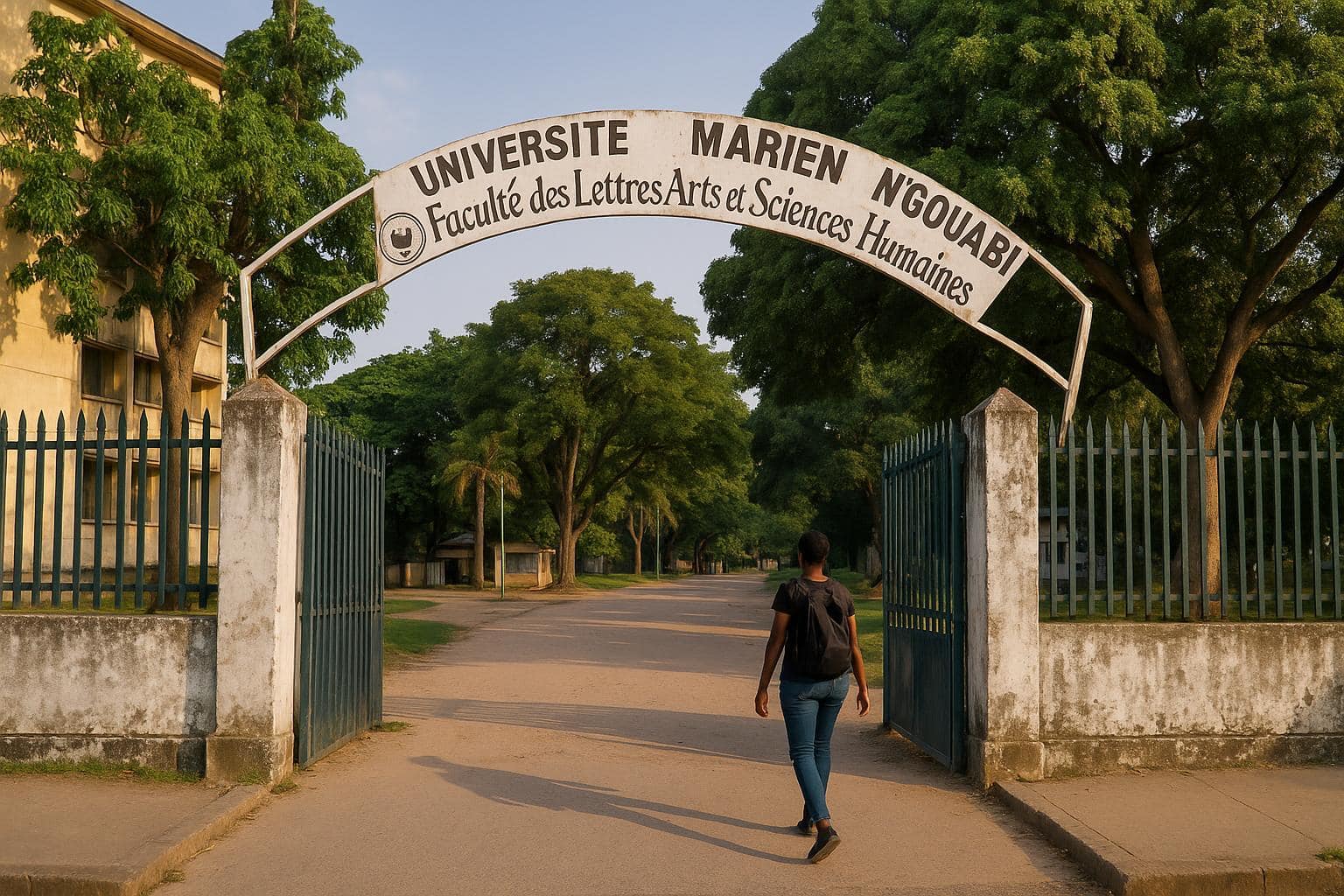
The decision by Brazzaville’s Marien Ngouabi University to adjust enrolment fees has stirred a measured debate within Congo’s academic community. Licence tuition moves from 10 500 to 21 000 CFA francs, master from 31 000 to 50 000, and doctoral from 50 000 to 100 000.
Administrators frame the change as consolidation of disparate service charges previously paid piecemeal, including transcript authentication, student card issuance, and graduation certificates. Officials insist the new schedule simplifies accounting and enhances transparency for the university’s 45 000 enrollees.
The measure was introduced through an internal circular on 7 August, endorsed by the Ministry of Higher Education. A month before classes resume, it awaits final signature of implementation, leaving stakeholders balancing preparation with continued consultation.
Institutional and Government Rationale
University Rector Florent Ndziba argues the institution must modernize laboratories, digital libraries and residence halls to remain competitive regionally. “Cost recovery remains modest; yet expectations rise each year,” he said at a press briefing covered by national broadcaster Télé Congo on 9 August.
Government officials echo that perspective, noting that public transfers to Marien Ngouabi grew from 28 billion CFA francs in 2019 to 33 billion in 2023 despite challenging fiscal conditions linked to pandemic recovery and oil-price volatility (Ministry of Finance data, 2024 budget report).
They maintain the revised fees cover only nine percent of the university’s operating budget, leaving the state with the lion’s share. By widening its own revenue stream, the university aims to accelerate procurement cycles and reduce dependence on supplementary subsidies.
Funding History and Past Reforms
Marien Ngouabi, founded in 1971, has undergone three significant funding restructurings, in 1993, 2002 and 2014. Each episode followed broader public-sector adjustment programs and sought to balance free-tuition ideals with practical resource mobilisation.
Previous hikes triggered short protests but were eventually absorbed after the government boosted scholarships and waived fees for high-performing, low-income students. Observers believe that precedent could inform the current dialogue and avert prolonged unrest.
Campus Sentiments and Student Voice
Within the tree-lined campus on Avenue des Trois-Martyrs, conversations trace a spectrum from cautious acceptance to outright frustration. Some students acknowledge infrastructural needs but worry that doubled fees arrive amid irregular scholarship disbursements.
“I still wait for last semester’s stipend,” remarked third-year law student Marcellin Mayindou, showing the stamped bank form that remains unpaid. He fears peers from rural districts could defer studies if household remittances falter.
Other voices highlight opportunity. Economics postgraduate Clarisse Moboula views the combined fee as a “predictable annual package” that eliminates surprise charges during research milestones. She expects clearer budgeting to help families, provided administrative communication stays consistent.
Economic Pressures Shaping Higher Education
Congo’s annual inflation averaged 4.5 percent between 2021 and 2023, squeezing purchasing power and raising costs of imported laboratory reagents, paper, and fuel for campus buses (National Institute of Statistics quarterly bulletin, April 2024).
The regional franc-zone currency’s peg to the euro has cushioned extreme volatility, yet pandemic-related supply chains continue to push up textbook prices. University procurement officers report a 22 percent rise in essential inputs since late 2020.
Against that backdrop, Congolese universities compete for skilled lecturers who are courted by institutions in Côte d’Ivoire and Cameroon. Offering upgraded facilities may help Marien Ngouabi retain talent and limit calendar disruptions caused by wage-driven strikes.
Digital Transformation Initiatives
Part of the projected revenue is earmarked for expanding the campus fibre backbone and installing smart boards in 26 lecture halls. The existing network, built in 2010, covers only 40 percent of teaching spaces, limiting hybrid-learning experiments launched during the pandemic.
Vice-rector for academic affairs Irène Itoua asserts that improved connectivity will allow online journal access and virtual exchanges with partner universities in Morocco and South Africa, reducing travel costs and broadening research collaboration opportunities for postgraduate cohorts.
Pilot MOOCs in forestry engineering and oil logistics are scheduled for February 2025, with initial enrolment capped at 2 000 learners to test platform resilience and pedagogical approach.
Regional Benchmarks and Analyst Views
Research by the African Higher Education Observatory shows average licence registration in comparable state universities stands at roughly 40 000 CFA francs. With its new scale, Marien Ngouabi remains below that average yet above earlier domestic levels.
Policy analyst Aimée Okoko of the think-tank Génération Prospective notes that “pricing alone never determines access; scholarship efficiency and campus services matter as much.” Her forthcoming paper urges streamlined grant payments and partnerships with the private sector for housing.
International donors are attentive too. The World Bank’s latest Country Partnership Framework earmarks technical support for digital learning platforms, conditional on domestic cost-sharing mechanisms being credible and socially inclusive.
Prospects for the Upcoming Semester
Negotiations between student unions and university leadership are scheduled for late August. Observers anticipate clarifications on payment deadlines, instalment options, and protective clauses for scholarship holders to mitigate potential attrition.
Should dialogue progress smoothly, analysts foresee a relatively calm reopening in mid-September, reinforcing Congo’s broader objective of nurturing home-grown expertise for its energy, forestry, and telecom sectors. Stakeholders agree that stability on campus remains a prerequisite for national diversification.