
Brazzaville launch signals new education era
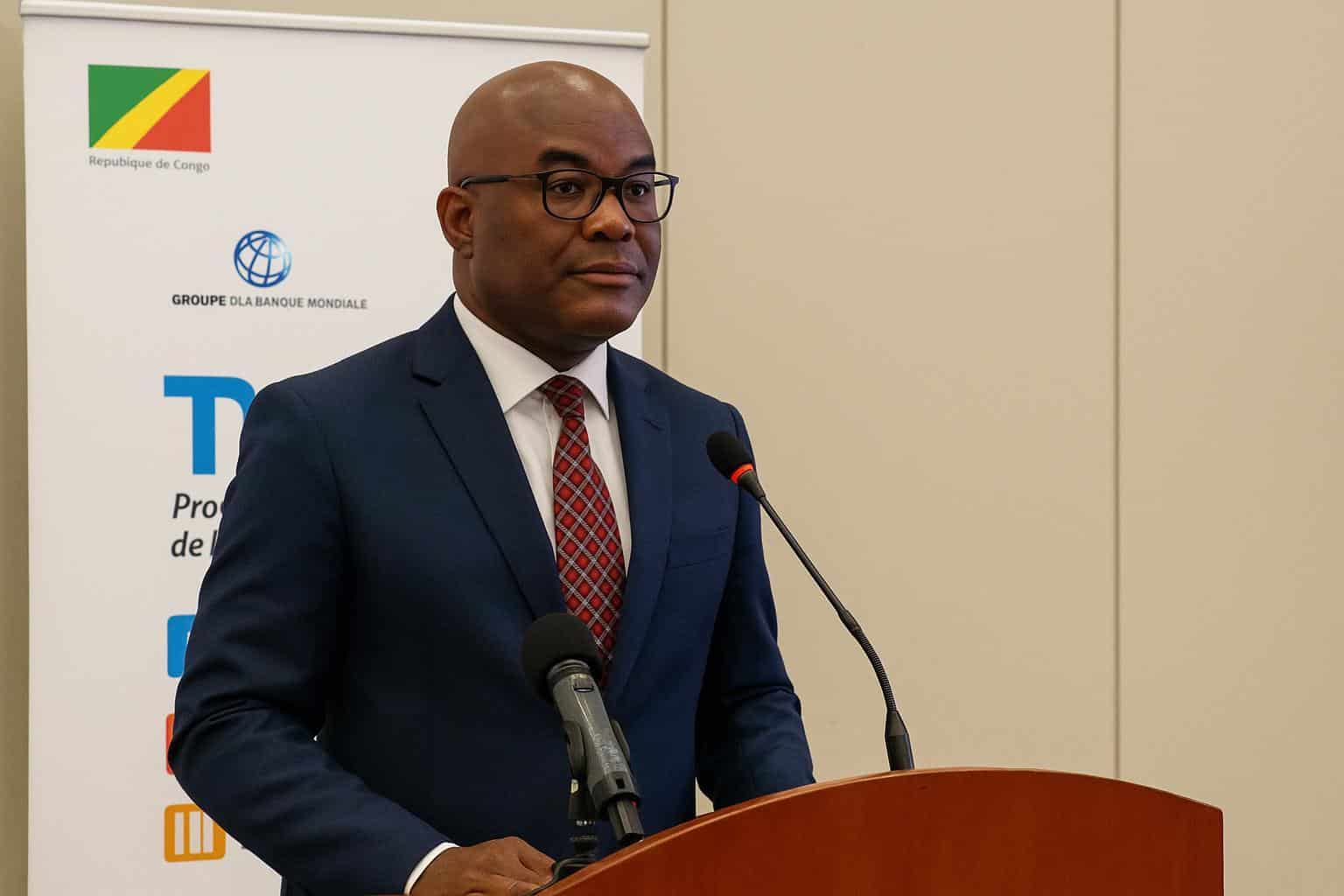
Prime Minister Anatole Collinet Makosso stood before a packed assembly hall in Brazzaville on 16 December 2025 to unveil two flagship education projects, TRESOR and PARQEB. The twin schemes, he said, mark a turning point toward “better classrooms, better teaching and better futures.”
The programmes emerged from nationwide education states-general that mapped learning gaps and financing needs. Together they mobilise roughly 75 million dollars in results-based support from the World Bank and partners, channeled through the Ministry of Primary, Secondary and Literacy Education, known locally as MEPPSA.
Results-based model anchors funding
Calixte Kolyardo, acting permanent secretary of the technical steering committee, shared the stage with project manager Arsène Harold Bouckita to detail how every tranche of funding is tied to specific milestones. “No delivery, no disbursement,” Kolyardo told reporters, underscoring the performance ethos now guiding the sector.
TRESOR, formally the Transformation of the Education Sector for Better Results programme, focuses on expanding preschool access and boosting foundational skills in reading and numeracy. PARQEB, the Quality Enhancement of Basic Education initiative, equips teachers with new materials and pedagogies drawn from recent research by INRAP.
Early childhood and learning materials priority
Bouckita laid out two domains of results. The first seeks wider, fairer access to quality basic schooling. A key trigger is the adoption of national minimum standards for preschool centres, valued at 15 million dollars. Once endorsed, an initial five-million tranche flows to procure age-appropriate learning kits.
By 2030 authorities aim to have 500 preschools and early-grade classrooms meeting the new benchmarks. The targets also promise at least one textbook and activity notebook per pupil in French and mathematics, while half of all primary teachers are expected to demonstrate satisfactory mastery of updated lesson plans.
Including vulnerable learners nationwide
Inclusivity is the project’s second watchword. A 20-million-dollar indicator rewards the rollout of a national action plan for vulnerable learners, from displaced children to those with special needs. The goal is to support 350 primary schools that host such pupils through ramps, psychosocial services and differentiated instruction.
Teacher deployment reforms gain momentum
Behind the figures sits a quiet revolution in teacher deployment. The government, with Finance and Civil Service ministries, is drafting a recruitment and posting plan worth 19.6 million dollars. Once approved, four million dollars will help place at least three teachers in 80 percent of primary schools by decade’s end.
Measuring what pupils actually learn
Learning outcomes will be tracked more systematically than in the past. A seven-million-dollar component creates the National Unit for Learning Assessment, UNEA, charged with running biannual studies. Education analyst Pierrette Dzabatou calls it “a critical mirror helping provinces compare progress and adjust methods before gaps widen.”
Data system to guide budgets and policy
Better data also drive better budgets. An eight-million-dollar incentive supports the roll out of an integrated Education Management Information System. By 2026 the legal framework and strategy should be in place; by 2030 authorities expect 15 statistical yearbooks and 50 interactive dashboards to inform real-time decisions.
First disbursement to rebuild classrooms
The combined disbursements expected for 2026 total 23.5 million dollars, equivalent to about 14.4 billion CFA francs. Officials say the money will finance textbooks, classroom construction, rehabilitation of latrines, ramps and water points, and learning kits for children from refugee and host communities.
Governance and community oversight
Maintaining the pace will hinge on strong coordination between the permanent secretariat of the consultative technical committee and the project management unit. Bouckita emphasised the need for clear manuals on procurement and financial procedures, plus a culture of evaluation that rewards schools meeting—or surpassing—targets.
Parents’ associations, teacher unions and local authorities are invited into quarterly reviews to reinforce transparency. “Community eyes are the best auditors,” noted Marie-Jeanne Tchibota, head of a Pointe-Noire school board, arguing that grassroots monitoring deters delays and ensures new infrastructure is genuinely child-friendly.
Regional ripple effects and infrastructure push
International partners also see the reforms as a regional test case. A CEMAC education adviser in Yaoundé observed that Congo’s pay-for-results model could inspire similar compacts in Gabon and Cameroon, especially where public finances are tight but the demographic push for classrooms remains relentless.
For now, classrooms in Makoua, Mbé and the outskirts of Pointe-Noire await new roofs and furniture promised under the first procurement batches. Contractors have received standard designs that prioritise ventilation and disability access, reflecting lessons drawn from UNESCO’s latest climate-resilient school guidelines.
Economic payoff of better schooling
Economists underline the broader stakes. The World Bank estimates every additional year of quality schooling can raise future earnings by nine percent. If TRESOR and PARQEB stay on schedule, today’s preschoolers could collectively add hundreds of millions of dollars to Congo’s GDP over their lifetimes.
As the audience filed out of the ceremony, a banner framed the message in bold red: ‘Education is our greatest treasure.’ The pun on TRESOR was deliberate. Officials hope that, with steady management and community oversight, the country will soon translate that aspiration into everyday classroom reality.