
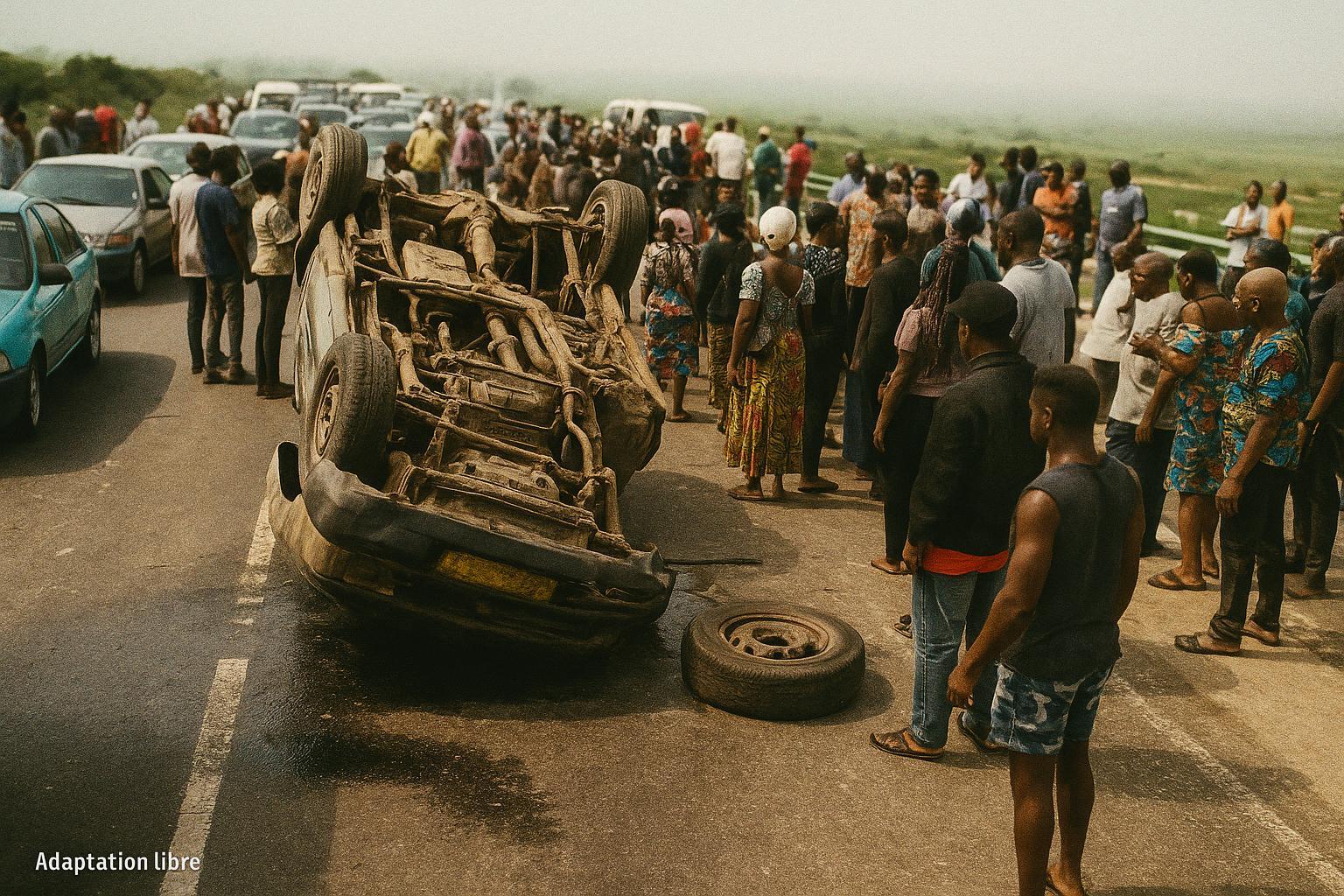
Symbolism of a Shattered Journey
The collision of a hearse on the Brazzaville viaduct on 23 July—leaving the driver fatally injured and the coffin irreparably damaged—has resonated far beyond the confines of a routine traffic bulletin. In a society where the farewell procession is imbued with solemnity and collective respect, the violent interruption of that ritual acquired an unsettling resonance. Diplomats stationed in the Congolese capital noted privately that the incident reached the corridors of several embassies within hours, not only because of its tragic nature but because it challenges a long-held assumption that funeral corteges enjoy near-sacrosanct immunity on the road.
Road Discipline and the Culture of Speed
While the precise kinetic data await the official investigation, eyewitness accounts converge on a single theme: excessive speed. That diagnosis reflects a broader regional trend. According to the World Health Organization’s Global Status Report on Road Safety 2023, sub-Saharan Africa records the highest road-traffic mortality rate worldwide. Congo-Brazzaville’s own figures, cited by the Ministry of Transport in March, indicate that velocity-related infractions account for nearly forty percent of fatal crashes in urban areas. The hearse tragedy, therefore, appears less an aberration than a symptom of an entrenched driving culture in which urgency often overwhelms prudence.
An Unregulated Niche in a Growing Service Economy
Funeral logistics in Congo-Brazzaville evolved rapidly over the past decade as urban families outsourced responsibilities once handled by kinship networks. Commercial undertakers now manage roughly two-thirds of Brazzaville burials, yet the sector remains lightly regulated. The African Development Bank’s 2022 survey of informal services noted that many drivers of private hearses hold no specialised certification for transporting human remains under stressful conditions. In conversations this week, officials at the Congolese Agency for Road Safety conceded that training modules specific to funeral transport ‘were still under elaboration’. That regulatory lacuna invites uneven professional standards and, as the latest accident underscores, magnifies the margin for human error.
State Initiatives and Incremental Progress
To its credit, the government has begun addressing the systemic roots of such incidents. Last year, President Denis Sassou Nguesso promulgated a national road-safety strategy that mandates electronic speed-limiting devices for commercial fleets and foresees the accreditation of niche operators, including funeral service providers. Pilot audits launched in May, partly financed by the Central African Road Maintenance Fund, have already inspected thirty-four vehicles. According to a senior official in the Ministry of Public Works, preliminary findings will inform the drafting of implementing decrees to standardise funeral convoy protocols. While these reforms will require sustained budgetary commitment, they signal institutional recognition that dignity for the deceased starts with safety for the living.
Human Cost Beyond the Statistics
Numbers alone cannot capture the emotional aftershocks that ripple through the families now confronted with dual bereavement. A relative of the late driver, reached by telephone, expressed both grief and puzzlement: ‘He believed leading a funeral procession was a form of public service; he would never have endangered it intentionally.’ That testimony reveals the paradox at the heart of the tragedy: a professional motivated by respect for the dead may have succumbed to the very haste that undermined that respect. The bereaved family of the deceased passenger must now navigate complex cultural terrain, arranging a second burial ceremony while grappling with fresh logistical and financial burdens.
Toward a Culture of Responsible Farewells
In diplomatic circles, accidents are often assessed for the institutional reforms they can catalyse. The Brazzaville hearse crash can serve as a policy fulcrum if stakeholders resist the temptation to file it under unfortunate coincidence. Encouragingly, the Ministry of Health is reported to be in dialogue with religious authorities and private undertakers to draft a code of conduct for funeral convoys, including guidelines on maximum speed and coordination with traffic police escorts. International partners, notably the World Bank’s Global Road Safety Facility, have signalled technical assistance for capacity-building workshops. Such cooperation, grounded in respect for national sovereignty, could help embed a culture of responsible farewells, ensuring that solemnity is restored not only in ritual but in roadway behaviour.
Balancing Mourning, Mobility and Modernity
Congo-Brazzaville’s modernization drive—new highways, expanded urban centres, and a burgeoning service sector—has inevitably complicated the choreography of traditional rites. The hearse accident has illuminated how infrastructure and custom occasionally collide, literally and figuratively. Yet it also provides a moment to harmonise the two, forging regulations that honour cultural sensitivities while meeting contemporary safety benchmarks. Should the pending reforms mature into enforceable standards, the nation could position itself as a regional reference in the specialised niche of dignified and secure funeral transport. In that outcome, the tragedy on the viaduct would yield a legacy of tangible public good, turning a day of sorrow into a catalyst for safer roads and more respectful final journeys.