
Exam Pass Rates Surge in Niari
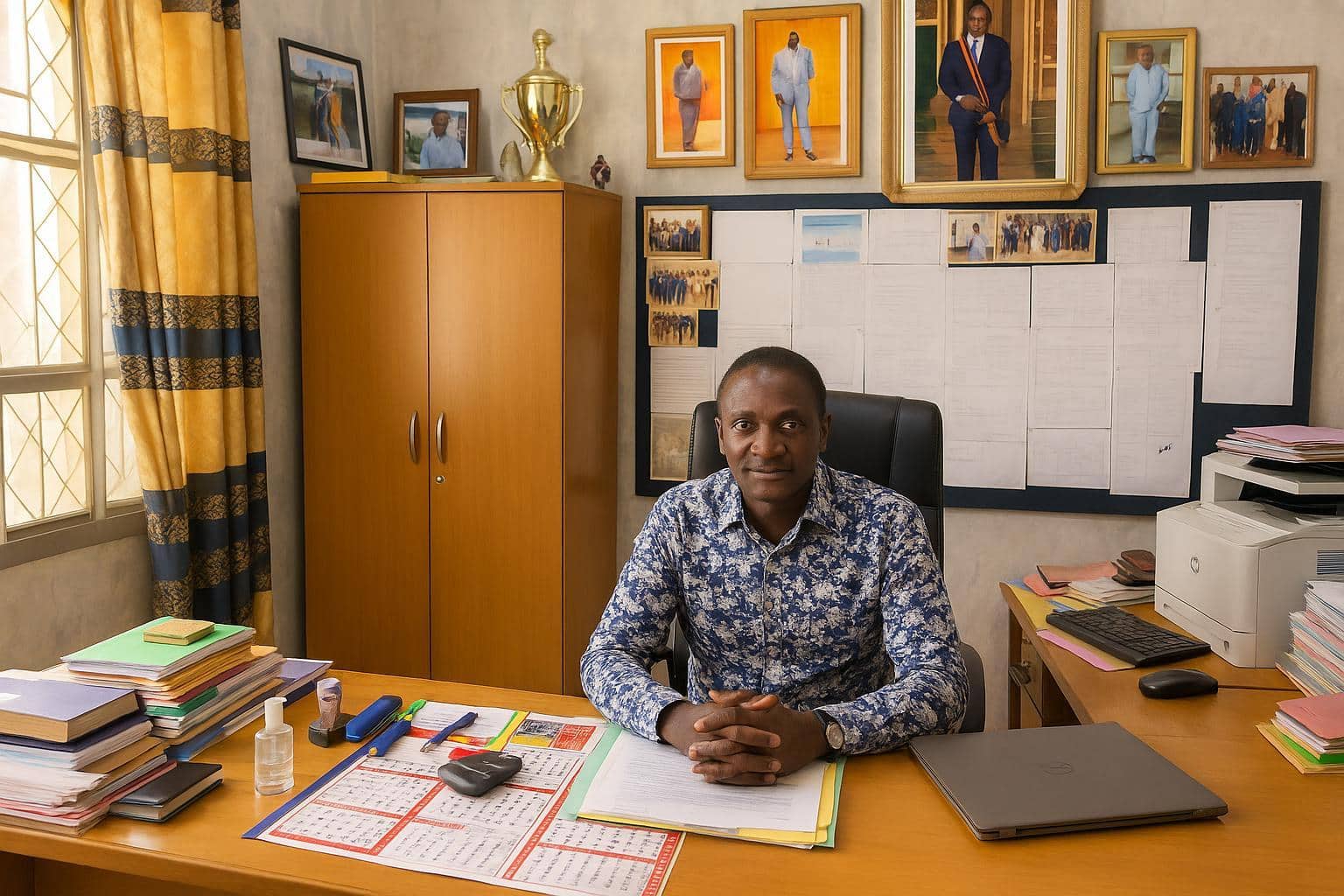
Niari’s educational community closed the 2024-2025 academic year on an unusually upbeat note, as departmental director Serge Roland Kallath reported sharp gains in the three national examinations that mark the Congolese school trajectory.
He told the Congolese Press Agency that 78 percent of primary candidates earned the CEPE certificate, up nine points in one year, while BEPC and baccalaureate passes climbed respectively to 65 percent and 54 percent.
Factors Behind the Improvement
The improvements dovetail with the Ministry of Primary, Secondary and Literacy Education’s claim that classroom contact hours in Niari rose by 8 percent in 2024-2025, thanks to punctual salary disbursements and a modest expansion of textbook deliveries financed by an African Development Bank grant.
Nationally, preliminary ministry tables put the CEPE success rate at 71 percent, making Niari’s 78 percent the second-highest after Brazzaville; analysts from the Congolese Observatory of Education praise the province’s disciplined school management culture (Observatoire Congolais de l’Éducation, July 2025).
Local principals attribute part of the leap to an internal mentoring scheme launched last October, matching veteran teachers with recruits from the École Normale Supérieure de Mbounda for weekly lesson-planning clinics, a program later endorsed by the departmental board of education.
“Before the scheme, new teachers felt isolated; now they come to class with structured notes and confidence,” explained Céline Mapanga, head of Dolisie’s 15 Novembre Primary School, where CEPE passes jumped from 66 to 85 percent.
Parents’ associations, once largely reactive, pooled over 12 million CFA francs to refurbish latrines and buy solar lamps for evening study sessions, measures that community leader Jean-Baptiste Ikounga believes were as important as any pedagogical reform in rural catchment areas.
Comparing Provincial and National Trends
International observers cautiously welcome the progression. According to UNESCO’s Institute for Statistics, Congo-Brazzaville’s lower-secondary completion rate stood at 61 percent in 2023. Niari’s 2025 BEPC figure therefore outperforms the most recent national benchmark and narrows the gap with sub-regional leader Gabon, at 71 percent.
Yet education economists note that exam scores, though necessary, mask variations in subject proficiency. A pilot study by Marien Ngouabi University found Niari pupils excel in French but lag eight points behind the national average in mathematics.
Policy Measures Strengthening Science Skills
The ministry has signalled a corrective push. Beginning in September, a partnership with the Congolese Mathematical Society will dispatch retired engineers to coach final-year science students in Dolisie, Mossendjo and Mbinda, combining classroom visits with weekend problem-solving camps funded by the national budget.
Teacher-training supply remains a structural issue. Recruitment data obtained from the Human Resources Directorate indicate that Niari received only 62 new teachers last year against an estimated demand of 110, compelling several schools to rely on contract instructors with shorter pedagogical exposure.
Officials respond that the 2026 intake at the École Normale Supérieure will be doubled, underwritten by a low-interest line of credit recently negotiated with the World Bank; the agreement earmarks funds specifically for science and bilingual pedagogy certificates.
Digital Tools Gain Foothold
Digital learning is also creeping in. Since January, three secondary schools have tested the open-source Kolibri platform on offline servers, allowing students to practice past examinations; early monitoring by the French Development Agency suggests usage spikes during evenings when internet costs deter smartphone study.
“The offline library lets pupils revisit lessons without begging for data bundles,” commented physics teacher Armand Okounda, who estimates that his Form-Four class improved its average mock-exam mark by almost five points after two months of Kolibri sessions.
Regional and Economic Implications
Diplomats view the data through a stability lens. A senior EU education attaché in Brazzaville, requesting anonymity, argued that rising pass rates create social dividends that complement hard-infrastructure projects, reinforcing regional cohesion initiatives championed by the Economic Community of Central African States.
Still, urban-rural disparities persist. While Dolisie’s lycée achieved a 62 percent science-track baccalaureate pass, the Lycée de Londéla-Kayes managed 38 percent, hindered by intermittent electricity. Provincial officials confirmed that solar micro-grid tenders will be relaunched after an earlier procurement round stalled in March.
Economic analyst Sylvie Matoko notes that each additional year of schooling correlates with a 9 percent wage premium in Congo-Brazzaville (African Economic Outlook 2024). “Higher exam throughput could energize domestic demand if graduate underemployment is tackled simultaneously,” she remarked in a telephone interview.
Toward Sustainable Gains
For now, Director Kallath urges vigilance. He intends to circulate a circular stipulating that every school hold at least two mock examinations and one parents’ conference per term. “Sustaining momentum,” he said, “will demand the same coalition of teachers, families and administrators.”
At the national level, the government’s new Education Sector Plan, unveiled in July, pledges to raise overall baccalaureate attainment to 60 percent by 2030. Funding will leverage both oil-revenue stabilization reserves and concessional finance arranged through the Global Partnership for Education.
Observers conclude that Niari now serves as a living laboratory for that ambition. If its mix of community engagement, teacher mentoring and targeted remediation withstands the next exam cycle, policymakers may replicate the formula across Congo-Brazzaville’s twelve remaining departments.