
Talangaï counts down to 24 October ceremony
A hum of anticipation has taken hold in Brazzaville’s sixth arrondissement as the Liberty School Complex nears its inauguration date. Scheduled for 24 October, the ceremony will be led by President Denis Sassou Nguesso, whose agenda places education infrastructure at the heart of national development.
Locals say the opening marks a turning point for Talangaï, an area often remembered for overcrowded classrooms and sandy schoolyards ill-suited to modern learning. Many residents see the new buildings as tangible proof that the government’s pledge to upgrade basic services is taking shape.
‘Patriarch’ movement drives community mobilisation
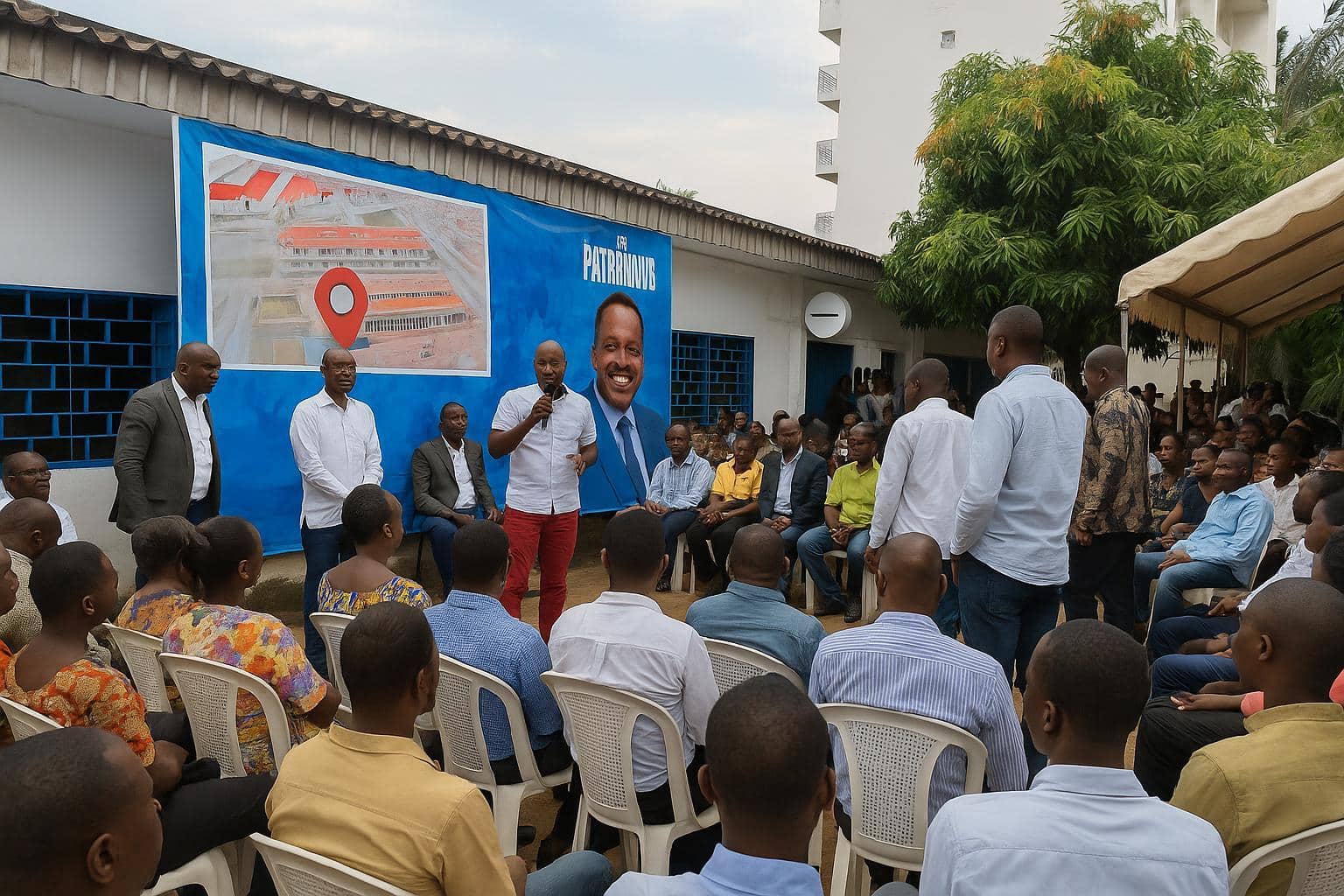
To ensure the festivities match the scale of the project, the civic network known as the ‘Patriarch’ dynamic has rolled out a vast mobilisation plan. During a 20 October strategy meeting, coordinator Digne Elvis Tsalissan Okombi called on all Brazzaville support committees to attend the inauguration in force.
“We must show that the Patriarch remains close to his people,” Okombi told volunteers, urging mothers, youth leaders and student groups to converge on Marien-Ngouabi Avenue from dawn until midnight. Organisers hope to field around 3 000 participants, transforming the artery into what they call the ‘Avenue of the Patriarch’.
SNPC funding brings a modern campus to life
The overhaul of the Liberty complex was financed by the National Petroleum Company of Congo, SNPC. In only a few months, the state-owned energy firm replaced aging single-storey blocks with double-level structures, new sanitation facilities and reinforced security features, project engineers said.
Teachers who toured the site last week described wide corridors, well-ventilated classrooms and dedicated science rooms—elements rarely found in public schools built four decades ago. By pairing oil revenue with social investment, SNPC illustrates the administration’s strategy of leveraging resource wealth for long-term human capital gains.
A template for nationwide replication
President Sassou Nguesso has repeatedly framed the Liberty project as a pilot for similar schemes countrywide. Ministries in charge of Pre-School, Primary and Secondary Education are already mapping districts where demand for new schools is acute, according to a senior official briefed on the plan.
Observers note that the demographic curve, with nearly two-thirds of Congolese under 25, places urgent pressure on classroom capacity. The administration’s goal of universal basic education hinges on rolling out additional complexes that match Liberty’s standards in rural departments as well as urban centres.
Economic ripple effects for Talangaï
Local traders anticipate a spike in activity around the revamped campus. Street vendor Mariette Boka said she plans to expand her food stall, expecting steady foot traffic from students and parents. “Good schools bring more life to the neighbourhood,” she explained, echoing a sentiment shared by many shopkeepers.
Property owners are also upbeat. Real-estate agent Florent Makaya estimates that rents near the complex may rise modestly as demand for housing close to quality schools grows, a trend previously observed in other upgraded districts of Brazzaville.
Security upgrades bolster community confidence
Alongside academic facilities, the adjacent gendarmerie post underwent renovation, reinforcing safety in a quarter once flagged for petty crime. Captain Armand Okemba, who heads the unit, said new lighting, fencing and offices improve response time and build trust with residents.
Parents argue that a secure environment is as important as textbooks. “We can’t separate learning from safety,” noted civic activist Esther Ngatsé, praising the integrated approach that restored classrooms and law-enforcement capacity under one coordinated project.
Voices from the classroom
Sixth-grade teacher Lucie Loukakou recalled how dust clouds used to sweep through her old room, forcing lessons to stop. She believes the air-conditioned spaces and sturdy desks will let her focus on pedagogy instead of maintenance. “Our pupils will finally study like their peers abroad,” she said.
Students are equally eager. Twelve-year-old Alain Bemba, who walked through the gates during a preview, marvelled at the computer lab. “I want to be an engineer, and now I can practise coding right here,” he said, flashing a grin that encapsulates the hopes vested in the complex.
Balancing celebration and continuity
While the inauguration promises music and speeches, officials stress that the underlying mission extends beyond one day. An education ministry spokesperson confirmed that maintenance contracts and teacher-training workshops are budgeted to keep the facility in top condition over the coming years.
Digne Elvis Tsalissan Okombi echoed that point, urging supporters to channel their enthusiasm into long-term volunteer programmes such as tutoring sessions and after-school sports. “The school must stay vibrant once the cameras leave,” he told the assembly.
Toward an inclusive educational horizon
Analysts say the Liberty project aligns with regional goals under the CEMAC framework, which emphasises literacy and vocational skills as drivers of diversified growth. By showcasing a successful public-private partnership, Congo positions itself to attract multilateral backing for future builds.
For parents like Jeanne Mfumukina, the impact is already palpable. “Our children will step into clean, bright rooms that tell them they matter,” she said, watching workers lay the final coat of paint. That message, residents insist, may be the complex’s most valuable lesson.