
A new cohort heads to Moroccan campuses
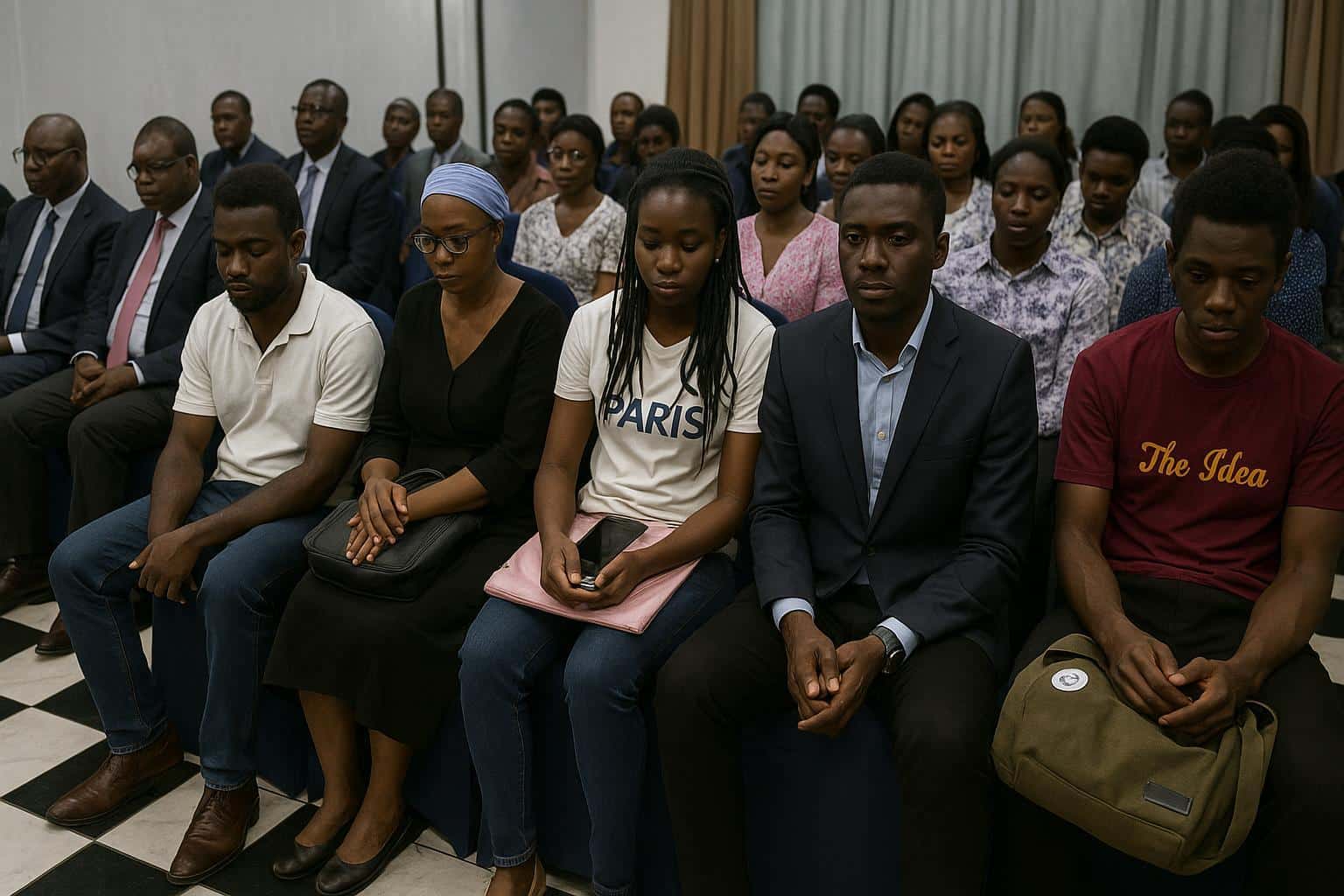
Seventy Congolese students gathered inside the auditorium of the ministry in Brazzaville as Ambassador Ahmed Agargi handed each of them a neatly stamped travel document. The scene, punctuated by applause from parents, capped months of selection tests managed jointly by both governments.
The scholarship package covers tuition, accommodation, health insurance and a modest monthly stipend, allowing recipients to focus on studies from medicine and renewable energy to digital engineering. According to the Moroccan Agency for International Cooperation, the cohort will join campuses in Rabat, Casablanca and Fès.
Diplomatic goodwill and strategic partnership
Handing over the documents, Agargi framed the gesture as evidence of “an unwavering trust in Congolese youth to solve tomorrow’s global challenges.” He pointed to climate change and conflict displacement as shared threats demanding new expertise, echoing remarks made during a recent CEMAC education forum.
For Brazzaville, the initiative aligns with President Denis Sassou Nguesso’s national development plan, which emphasises international cooperation to upgrade human capital. Higher Education Minister Delphine Edith Emmanuel praised Rabat’s “consistent solidarity,” noting that around 1,200 Congolese have graduated from Moroccan universities over the past decade.
Skills for Congo’s diversification agenda
Officials say fields were chosen with an eye on Congo’s diversification beyond oil. Half the group will study agritech, water management, green chemistry and logistics—disciplines highlighted in the country’s Vision 2025 blueprint for boosting food security, regional trade corridors and low-carbon manufacturing.
Another cluster targets digital transformation. Students headed to Mohammed VI Polytechnic University will explore artificial intelligence and cybersecurity, skills the government deems essential as Brazzaville rolls out a national fibre backbone and plans a technology park outside Kintélé, supported by the African Development Bank.
Spotlight on gender parity in higher learning
Thirty of the awardees are women, a record share for the bilateral programme. Minister Emmanuel urged them to “own the space,” citing research that female participation in STEM remains below 25 percent nationally. Her ministry will assign mentors to assist with academic and cultural adjustment.
Hope Thérésia Tsono Kosso, set to study climate engineering, said the quota proves that “girls from Makélékélé or Pointe-Noire can dream big.” She aims to return and design flood-resilient housing along the Congo River, an area repeatedly hit by high-water events in recent seasons.
Voices from Brazzaville’s departure hall
Nathan Ballard Moussy, who will read mechanical engineering, described the scholarship as a “bridge between two brotherly peoples.” He plans to specialise in solar-powered irrigation pumps that could support farmers in Kouilou. Parents interviewed welcomed the focus on practical courses over purely theoretical streams.
Before boarding, students received a briefing from embassy staff on cultural etiquette, French-Arabic language exchange and academic integrity standards. “We expect you to be ambassadors of Congo as much as learners,” said Counsellor Fatima El Houari, distributing a handbook summarising campus regulations.
Support mechanisms before and after arrival
The Moroccan government funds an initial two-week orientation in Fez covering health insurance registration and bank formalities. Alumni in the Congolese Students Association will pair with newcomers, offering advice on housing and winter clothing—a detail first-timers often overlook, joked association president Djibril Massamba.
Funding flows through a tripartite agreement signed last year by both education ministries and the Moroccan Agency for International Cooperation. It guarantees full tuition through to master’s level, subject to annual performance reviews that require a minimum average of 12 out of 20.
Scholarship diplomacy across Central Africa
Morocco’s scholarship diplomacy has expanded steadily; more than 20,000 African students are currently enrolled in its universities, double the figure a decade ago (Moroccan Higher Education Ministry). Analysts say the approach projects soft power while addressing domestic goals of campus internationalisation and research collaboration.
Congo joins Cameroon, Gabon and Chad in sending sizeable cohorts under the same framework. Regional observers view the model as complementary to scholarships offered by China and Turkey, giving families a culturally closer alternative that still exposes learners to diverse academic standards.
Strengthening the bridge between universities
Beyond student mobility, officials are negotiating dual-degree pathways linking Marien Ngouabi University with Hassan II University of Casablanca. Joint research on coastal erosion is slated for launch in 2025, according to advisers who say scientific cooperation will anchor the diplomatic ties forged by scholarships.
As dusk settled on the capital, suitcases rolled toward Maya-Maya airport, heavy with expectations. “We leave as students, we will return as specialists,” Ballard Moussy said. The sentiment echoed a broader hope that knowledge gained abroad will circulate back into Congo’s schools, factories and ministries.
Tracking outcomes once graduates return
Brazzaville’s ministry is finalising an online alumni portal to monitor career trajectories and facilitate internships in state agencies or private firms. Data collected will feed labour-market forecasting tools financed by the World Bank, ensuring training abroad matches evolving sector needs at home.
Officials plan annual forums where returning scholars present research, network with investors and apply for startup seed grants. “Scholarships only pay off if brains circulate, not drain,” observed economist Luc Ossiala, predicting the programme could catalyse small industrial clusters around agriculture and clean energy.