
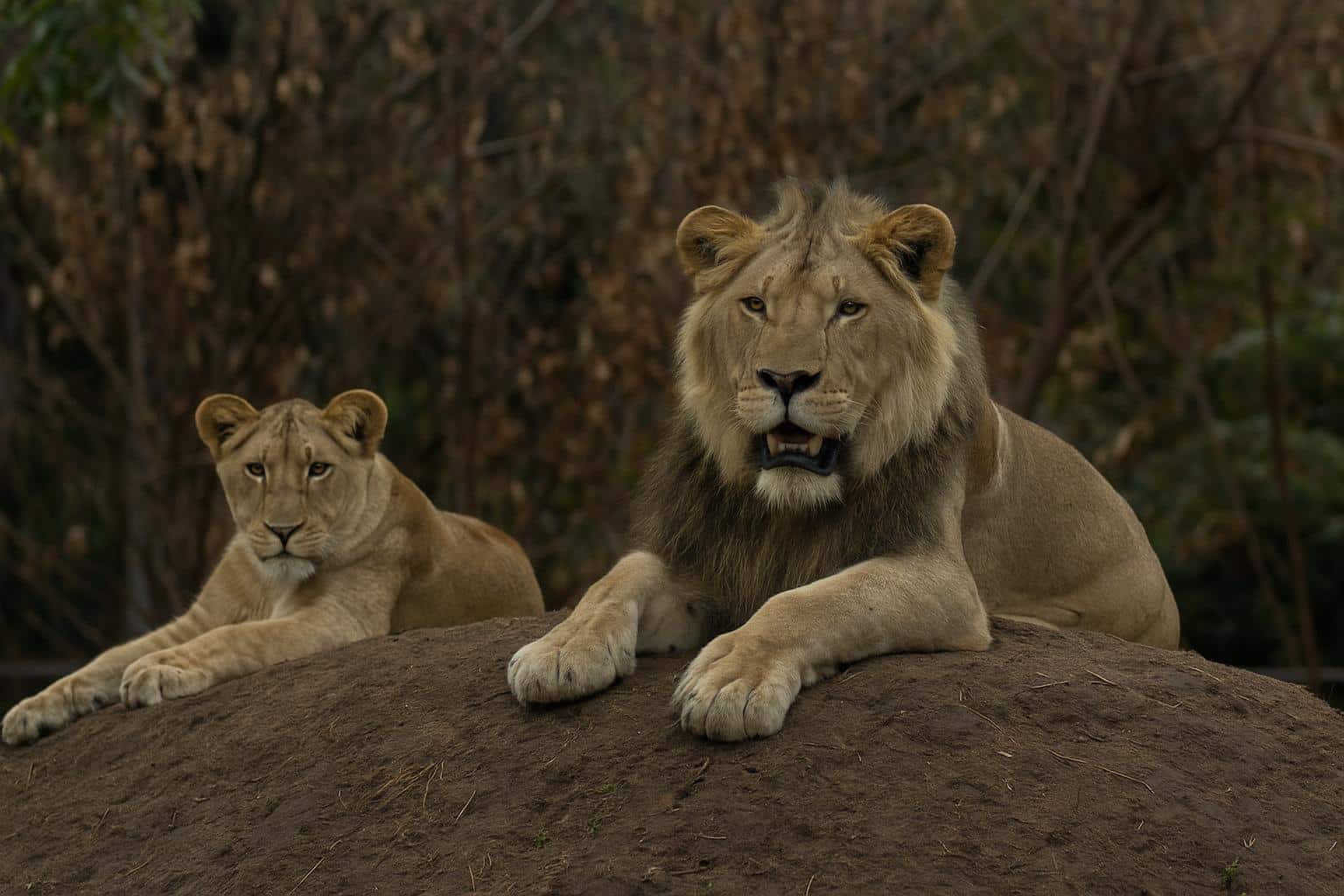
Brazzaville zoo roars again
Brazzaville’s long-quiet zoo echoed with anticipation this week as a pair of eight-month-old lions padded into their refurbished enclosure after a journey of more than 3 000 km from Johannesburg. The arrival ends a 28-year absence of the emblematic species in the Congolese capital.
A symbolic homecoming
Caretakers released the young male and female at dawn, letting them explore under the careful gaze of veterinarians from the Ministry of Forest Economy. For park staff the moment felt historic, recalling glimpses of lions that roamed the same grounds before the civil unrest of 1997.
Coordinated cross-border logistics
Shipping the cubs demanded coordination. Africa Global Logistics chartered a crate flight from O. R. Tambo International to Maya-Maya, securing veterinary clearance and transit permits under the Convention on International Trade in Endangered Species, officials said.
Strict welfare measures
During the four-hour airlift the felids were lightly tranquilised, monitored and sprinkled with sawdust to absorb moisture. After landing a refrigerated truck whisked them to the Patte-d’Oie reserve in thirty minutes, keeping a stable 22-degree temperature, senior handler Alain Ngoma said.
Zoolandia’s broader revival plan
The lions join a 14-billion-CFA-franc rehabilitation programme branded Zoolandia, launched in 2018 under a public-private concession held by entrepreneur Chems Roc. The scheme covers habitat redesign, botanical inventories and staff training for about one hundred employees, with advice from the French Association of Zoos.
Echoes of a turbulent past
Established in 1952, the Brazzaville zoological garden once showcased Central African biodiversity to generations of schoolchildren. Armed clashes in the late-1990s damaged infrastructure and forced the relocation of many specimens to private sanctuaries. For years only antelopes, crocodiles and parrots occupied the once-bustling enclosures.
Government backing applauded
Officials from the Ministry of Tourism, Environment and Sustainable Development attended the ceremony, praising the project’s contribution to Congo’s 2025 Vision for green growth. “Wildlife conservation goes with national pride and youth employment,” director-general Désiré Adagna told reporters, calling the lions ambassadors of renewal.
Youth programmes in the pipeline
Zoolandia plans to roll out a discounted annual pass for primary schools in Brazzaville and Pointe-Noire, coupled with interactive workshops on animal nutrition and plant propagation. Curriculum designers from Marien Ngouabi University are drafting activity books in French and Kituba to broaden access, according to project documents.
Economic ripple effects
Tour operators anticipate a modest uptick in domestic tourism once the felids are visible to the public after a mandatory 30-day quarantine. Hotels near the city centre already report a three percent rise in advance weekend bookings, figures shared by the Congolese Hoteliers Federation indicate.
Regional conservation network
The Johannesburg-Brazzaville transfer follows recommendations of the Pan-African Association of Zoos and Aquaria to diversify bloodlines in captive lion populations. Genetic data from the cubs will be added to the international studbook, allowing future exchanges with facilities in Gabon, Cameroon and Benin, senior biologist Dr. Laure Mbemba said.
Feeding and healthcare budget
Each lion is expected to consume up to six kilograms of meat daily, an expense estimated at 5 million CFA francs per year. The concessionaire will shoulder costs through ticket sales, private sponsorships and a small state subsidy, while veterinary drugs will be supplied by the National Laboratory of Animal Health.
Digital engagement strategy
A dedicated mobile application under development will stream live footage from the enclosure, allow users to adopt a pawprint virtually and receive alerts during feeding sessions. Developers hope the tool will deepen community involvement and generate micro-donations, taking cues from similar platforms used by zoos in Nairobi and Rabat.
Community voices
Resident Ngalifourou Louzolo, 23, described seeing lions for the first time as motivating. “It shows our city can host big wildlife again,” she said while peering through protective glass. Nearby, former ranger Bernard Mabiala recalled patrolling the same sector four decades ago and welcomed the steps toward ecological restoration.
Learning from past mistakes
Experts caution that the success of reintroduction hinges on sustained funding and rigorous husbandry. In the early 2000s previous attempts to display chimpanzees failed when budgets lapsed. “A lion is not a statue; it demands daily care,” environmental consultant Joséphine Bopaka reminded stakeholders during a round-table discussion.
Next arrivals under study
Zoolandia management is assessing the feasibility of importing bongos and grey crowned cranes to complement the savannah exhibit. Any move would require habitat simulations and quarantine capacity upgrades, according to a briefing note shared with the Congolese Agency for Wildlife and Protected Areas earlier this month.
Long-term conservation vision
Stakeholders ultimately envision the Patte-d’Oie reserve as a living classroom linking urban residents with the nation’s wider protected-area network, from Odzala-Kokoua to Conkouati-Douli. By showcasing native and regional species in ethical enclosures, planners aim to inspire support for anti-poaching patrols beyond city limits.
Quiet roars signal fresh chapter
For now visitors must wait until the end of September before viewing the cubs. Yet their muffled roars, already audible at dusk, signal a fresh chapter for Brazzaville’s zoo and, supporters hope, for the broader dialogue on conservation and responsible tourism across the Republic of Congo.