
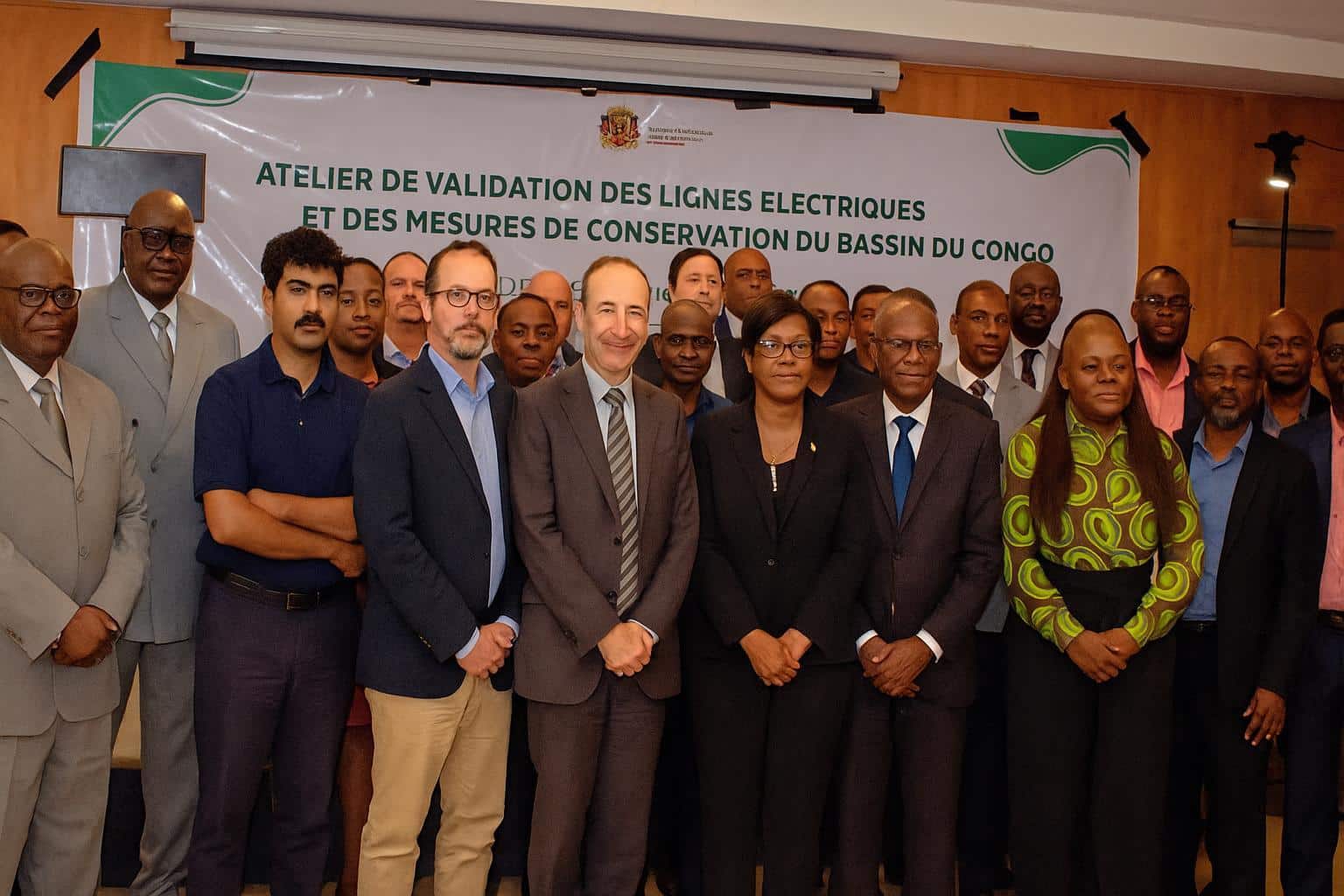
Congo validates OECM guidelines
Brazzaville—The Republic of Congo took a fresh stride toward modern conservation on 18 September as Environment Minister Arlette Soudan-Nonault opened a two-day workshop focused on validating national guidelines for identifying Other Effective area-based Conservation Measures, known locally as Amcez.
The session, convened by the Wildlife Conservation Society, gathered researchers, civil servants and community advocates determined to fine-tune a technical document that will serve as the national reference for OECM identification, management and reporting.
By endorsing clear criteria, the government aims to reinforce its international commitments while translating President Denis Sassou Nguesso’s environmental vision into concrete field action, the minister told participants.
Aligning national strategy with global biodiversity goals
OECMs complement protected areas by recognising landscapes where biodiversity thrives under traditional, private or sectoral stewardship, provided the outcomes are demonstrably positive and durable.
Globally defined by the Convention on Biological Diversity and the International Union for Conservation of Nature, OECMs allow countries to count well-managed forests, fisheries or sacred groves toward international targets without imposing the full legal overlay of a park.
For Congo, rich in tropical forests yet eager to diversify its economy, the category offers a pragmatic lever to reconcile conservation with productive land uses ranging from forestry to small-scale agriculture.
Workshop insights from Brazzaville
Christopher Holmes, WCS regional director for Central Africa and the Gulf of Guinea, reminded delegates that the exercise is not purely academic but designed to unlock action on the ground.
He urged real-time exchanges between ministries, concession holders and civil society so that ‘every potential OECM can be assessed through a fair, inclusive and science-driven lens,’ he said.
During plenary sessions, experts dissected draft criteria covering governance, ecological integrity, monitoring and conflict resolution, searching for language that is both rigorous and adaptable to Congo’s diverse biomes—from coastal mangroves to upland savannas.
Case studies of community-managed forests in the Kouilou department and riparian corridors along the Sangha River were frequently cited as candidate sites that could pilot the future guidelines, according to participants in the room.
Inclusive approach and rights recognition
Minister Soudan-Nonault emphasised that any recognition of OECMs must respect the rights, knowledge and aspirations of indigenous peoples, whose stewardship has historically safeguarded large tracts of forest.
Several speakers underscored that transparency over land tenure and benefit sharing will be critical to avoid overlaps with existing protected areas or commercial titles.
The draft document therefore proposes a multistep screening process involving local consultations, participatory mapping and periodic audits, ensuring that social and cultural values are captured alongside biological indicators.
Roadmap for effective conservation delivery
Once validated, the guidelines will be forwarded to the National Coordination Group, a multi-agency body that will oversee pilot assessments and compile the first national OECM inventory for submission to the UN biodiversity secretariat.
Officials expect the new framework to boost Congo’s contribution to the global target of conserving at least 30 percent of land and sea by 2030, while attracting technical and financial support from partners already active in climate and forest finance.
‘Our ultimate measure of success will be healthier ecosystems that continue to support livelihoods and national development,’ the minister concluded, inviting partners to remain engaged as the country turns guidelines into measurable field results.