
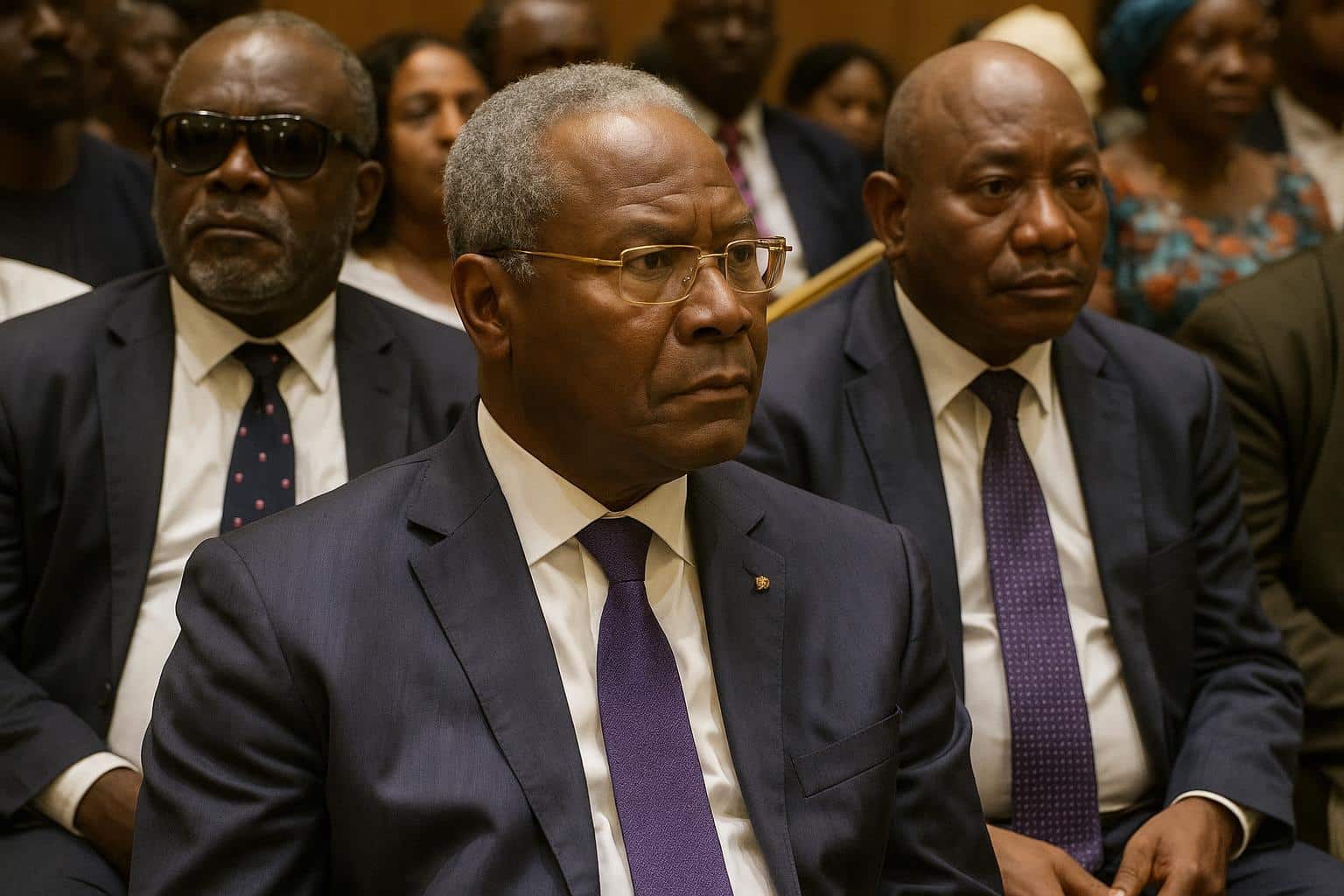
Brazzaville ceremony signals new health era
Drumbeats filled the Kintélé Conference Center near Brazzaville as Health and Population Minister Jean-Rosaire Ibara formally launched the 2025-2028 World Health Organization–Congo Cooperation Strategy on 5 December 2025.
Flanked by Defence Minister Charles Richard Mondjo, UN officials and diplomats, Ibara described the roadmap as a decisive step toward a resilient health system capable of delivering quality care to every Congolese household.
The strategy carries an estimated budget topping 25 billion CFA francs, underscoring the government’s intent to match policy pledges with practical resources despite competing fiscal pressures across education, security and infrastructure.
Four priorities guide WHO support
WHO Representative Dr Vincent Dossou Sodjinou said the new framework centres on four priorities: equitable coverage, stronger emergency readiness, integrated primary care at the ‘zero kilometre’, and inclusion of health factors across public policies.
“Implementation will positively impact the well-being of Congolese communities,” he told reporters, noting that lessons from the recent cholera flare-up confirmed the urgency of taking essential services closer to villages, river ports and urban peripheries.
The framework doubles as a reference for political dialogue, biennial planning and resource mobilisation, allowing Brazzaville and international partners to align their contributions and measure progress through jointly agreed indicators.
Linking national plans and global goals
Officials emphasise that the cooperation strategy dovetails with the National Health Development Plan 2023-2026, the UN Sustainable Development Goals and the WHO’s Fourteenth General Programme of Work.
By synchronising timelines and indicators, policymakers hope to avoid duplication, focus scarce funds on evidence-based interventions and secure long-term donor confidence.
Ibara framed the launch as a practical expression of President Denis Sassou Nguesso’s pledge to place human capital at the centre of economic diversification, a theme repeated during the 2024 state-of-the-nation address.
Budget realism under scrutiny
The 25 billion CFA figure represents roughly three percent of the national budget, prompting analysts to question whether execution rates can surpass the 60-percent ceiling observed in some previous health allocations.
Ministry technocrats argue that the strategy’s structured milestones, combined with WHO technical oversight, will improve disbursement discipline and ensure rural districts receive funds on time for vaccines, cold-chain repairs and frontline recruitment.
Civil society watchdog Observatoire Congolais de la Santé welcomed the roadmap yet insisted on quarterly public reporting to maintain transparency, a call echoed by several MPs during the question-and-answer segment of the launch.
Financing will blend domestic revenue, reprogrammed loans and targeted grants; officials say 40 percent is already secured in the 2025 finance law, while talks with the Global Fund and African Development Bank continue.
Observers note that aligning donor disbursements with the national treasury calendar could avert past bottlenecks, when overlapping procurement cycles delayed antimalarial imports during the 2021 rainy season.
Learning from Covid-19 and crises
Covid-19 exposed gaps in laboratory networks, oxygen supply and epidemiological data flow; those lessons are woven into the new cooperation matrix, according to the technical annex shared with provincial health directors.
Future investments will prioritise digital disease surveillance and rapid response teams able to deploy within 24 hours, complementing ongoing cholera control efforts along the Congo River.
In parallel, the framework promotes cross-border coordination with Gabon, Cameroon and the Democratic Republic of Congo to prevent regional spill-overs, mirroring commitments taken at the 2023 Libreville Health Security Summit.
Human resources at the core
Success hinges on trained personnel; therefore, a sizeable share of the envelope is earmarked for continuous medical education, nursing scholarships and incentives to retain specialists outside Brazzaville and Pointe-Noire.
The ministry plans to pilot tele-mentoring sessions linking district hospitals with the University Hospital of Brazzaville, enabling complex case discussions without costly transfers, insiders disclosed after the ceremony.
Health economist Marie-Inès Boungou cautioned that retention bonuses must be disbursed predictably, recalling previous delays that pushed young doctors toward neighbouring labour markets.
Next steps and oversight
A joint steering committee co-chaired by Ibara and Dr Sodjinou will meet every six months to review dashboards, authorise course corrections and publish communiqués summarising achievements.
The first operational plan, covering 2025-2026, is expected in March 2025 and will focus on vaccine-preventable diseases, maternal health and antimicrobial resistance, according to draft documents circulated at the event.
Asked about monitoring, Ibara assured that an open-data portal will post expenditure breakdowns, project maps and quarterly scorecards, enabling citizens, legislators and partners to track progress in real time.
He added that the system is being developed with local start-up KTech, illustrating the administration’s broader commitment to nurture national digital talent while modernising public services.
As the audience filtered out, posters read “Healthy People, Strong Nation” — a slogan capturing the conviction that reinforced health security remains fundamental to the Republic’s long-term stability and prosperity.
For now, the launch signals an era of coordinated ambition, with public expectations high that the partnership between Brazzaville and the WHO can translate commitments into healthier lives across the Republic of Congo.