
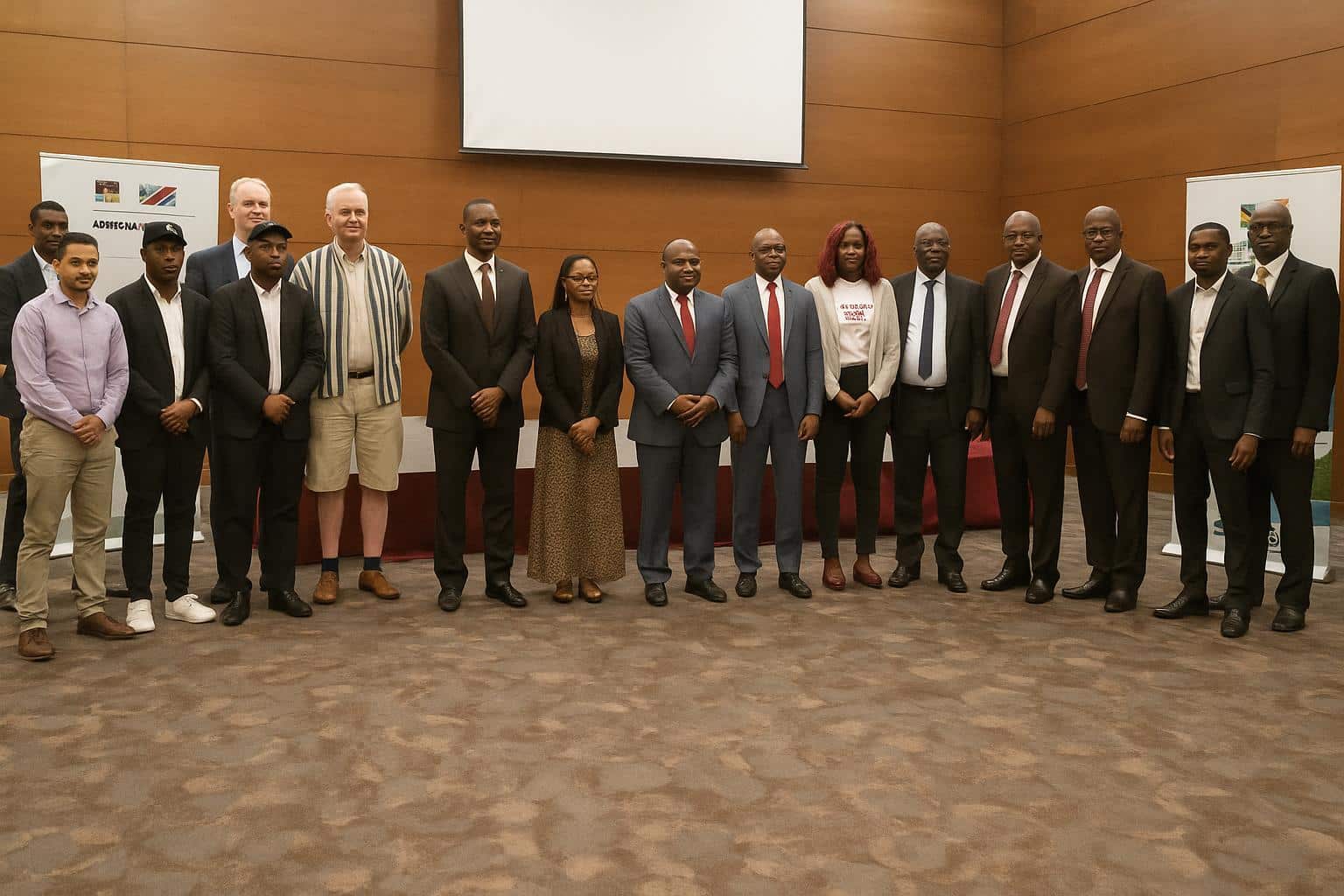
World Tourism Day in Brazzaville
On 27 September, Congo-Brazzaville joined more than 150 nations in marking World Tourism Day, aligning its theme, “Tourism and green investment,” with a local commitment to sustainable development, officials said during a packed conference hall at the capital’s Congrès Center.
Before an audience of tour operators, students and diplomats, Lis Pascal Moussodji, chief of staff to Minister Marie-Hélène Lydie Pontault, described sustainable tourism as “a new pathway toward shared prosperity, respectful of resources and heritage for today’s and tomorrow’s generations.”
He noted recent reforms streamlining business licences, classifying tourist sites and improving airport signage, initiatives he connected to President Denis Sassou Nguesso’s broader diversification agenda aimed at reducing reliance on crude exports without sacrificing environmental integrity.
Brazzaville’s municipal orchestra opened the ceremony with traditional Mbochi rhythms, illustrating how cultural immersion can enrich trip value while safeguarding intangible heritage, a component authorities say is vital for differentiating Congo’s offer in the competitive Central African market.
Policy roadmap for green travel
Speaking to reporters, Director-General of Tourism and Hospitality Simplice Ibara emphasized that communication is becoming “our sharpest tool,” urging experts to translate academic jargon into actionable guidance that small guest-house owners from Pointe-Noire to Ouesso can understand.
The ministry is drafting a ten-year master plan that couples tax incentives for eco-lodges with mandatory environmental-impact assessments for larger resorts, according to an internal note shared with participants and confirmed by two officials familiar with the document.
Among the priorities are solar energy requirements for river cruises along the Congo and Sangha rivers, and a push to digitalize visitor visas, a measure officials say could cut processing times from one month to five days, boosting arrivals by 18 percent over three years.
Funding will partly come from the recently launched Sovereign Fund for Tourism Infrastructure, seeded with 15 billion CFA francs from the Treasury and targeting additional subscriptions from regional development banks and climate-focused private equity firms, according to Finance Ministry figures.
Grass-roots innovation and private capital
In the forested district of Les Saras, community cooperative Mbeli Camp is testing composting toilets and locally woven bamboo cabins, financed by a 50,000-euro grant from the French Facility for Global Environment, representatives told this newspaper during a phone interview.
The model, which trains villagers as guides who receive 40 percent of each permit fee, aligns with United Nations Environment Programme findings that locally retained revenue strengthens conservation outcomes while reducing urban migration pressures.
Private developers are also moving; Brazzaville-based GreenVista Group says its forthcoming 120-room eco-hotel near Lake Tele will be built with laterite bricks and powered fully by biomass gasifiers, a first in Central Africa, according to CEO Clarisse Nkouka.
Regional synergies across CEMAC
Congo’s strategy meshes with a broader CEMAC programme that aims to market the sub-region as a single visa area by 2026, similar to East Africa’s tourist pass, according to a communiqué issued after last month’s council of ministers in Yaoundé.
Transport ministry officials say rehabilitating the Brazzaville-Oyo highway and dredging sections of the Oubangui are critical for cross-border circuits that could link Odzala-Kokoua National Park with Gabon’s Ivindo and Cameroon’s Lobéké forests, creating a contiguous gorilla-tracking route rare on the continent.
The African Development Bank has earmarked 90 million dollars for feasibility studies and intends to blend concessional loans with carbon-offset credits generated by preserving peatlands along the route, project coordinator Guy-Charles Oba said, calling the financing structure “innovative and replicable.”
Experts weigh benefits and challenges
World Tourism Organization data show Africa captured only 4 percent of global visitor spending in 2022, yet registered the fastest rebound rate post-pandemic; Congolese officials argue that embracing sustainability early could position the country to leapfrog competitors as demand shifts.
“Travelers no longer want plastic-wrapped experiences. They want authenticity and a lighter footprint,” said independent consultant and former hotelier Henri-Paul Gandou, who advises several river-lodge projects. He believes well-regulated growth could deliver 25,000 direct jobs by 2030.
Environmentalists caution, however, that without clear limits on visitor numbers in fragile ecosystems such as the Ntokou-Pikounda National Park, the very assets attracting tourists could degrade. They call for adopting carrying-capacity metrics already used in Costa Rica and Madagascar.
Minister Pontault said her department takes the warning seriously and is finalising guidelines that tie concessional land leases to verifiable conservation audits, a step she described as “balancing opportunity with responsibility” during her closing remarks at the event.
As delegates left the hall, a group of tourism students from Marien-Ngouabi University compared notes on how blockchain could certify carbon-neutral journeys. Their zeal hinted at a rising generation ready to turn policy discussions into concrete ventures across Congo’s diverse landscapes.
The International Finance Corporation, already advising on Pointe-Noire’s deep-sea port, is exploring a blended-finance vehicle that could underwrite risk for ecolodge developers, a step analysts say might unlock up to 200 million dollars in private investment over the next five years.