
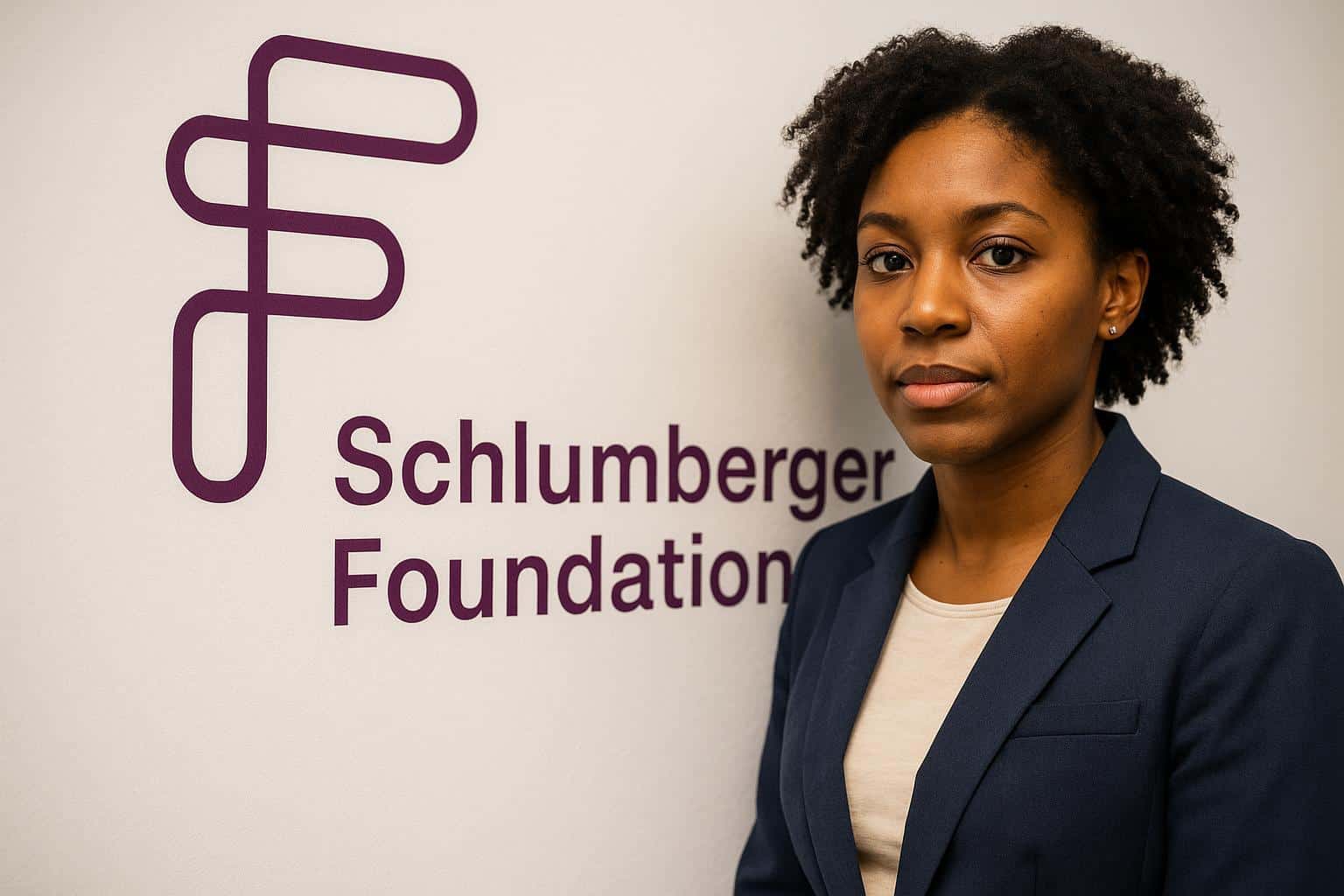
Global fellowship opens doors for women in STEM
The Schlumberger Foundation has thrown open applications for its 2026-2027 Faculty for the Future fellowships, a programme that finances PhD and post-doctoral studies in science, technology, engineering and mathematics for women from developing economies.
For ambitious researchers in Brazzaville, Pointe-Noire and the interior, the call promises more than funding; it links successful candidates to a global network of nearly one thousand alumni who share mentorship, laboratories and publishing opportunities.
A 20-year track record nurturing talent
Launched two decades ago, Faculty for the Future has already awarded more than 950 fellowships, enabling scholars to enroll at research-intensive universities and later return home to transfer knowledge into classrooms, clinics and start-ups.
The model aligns with Sustainable Development Goal Five on gender equality, addressing the chronic under-representation of women in advanced research, particularly in disciplines that drive industrial diversification and resilience.
African innovation gains momentum
Across Africa, the fellowship has created crucial bridges between local challenges and international laboratories, supporting projects ranging from battery minerals to climate-smart agriculture, and positioning recipients as technical leaders once they repatriate.
Analysts note that access to high-level equipment abroad can compress research timelines by years, allowing African scientists to publish faster, secure patents and contribute data that regulators need for evidence-based policymaking.
Congo-Brazzaville scholars eye opportunity
The Republic of Congo is listed among eligible countries, meaning Congolese nationals can apply for tuition, living allowances and travel costs at leading universities, provided their research fields align with national priorities such as energy transition, digitalisation or public health.
Officials at the Ministry of Higher Education say scholarships that foster partnerships with foreign laboratories dovetail with the government’s ambition to raise domestic research output while retaining sovereignty over strategic resources.
“Our universities have promising talent; what they often lack is exposure to specialised equipment and international peer networks,” commented a senior adviser who welcomed the Schlumberger Foundation’s outreach and encouraged early applications.
Stories of impact from Gabon to Namibia
Regional role models illustrate the programme’s ripple effects. Gabonese engineer Dominique Durastanti Mombo credits her fellowship with giving her both scientific rigour and the leadership skills needed to supervise new laboratories back home.
In Mozambique, microbiologist Aureliana Filomena Chambal Chilengue is leveraging UK-based research to refine tuberculosis control strategies, while simultaneously mentoring young women who, she says, “must see that science can have a direct impact on community health.”
Namibian information-systems researcher Katazo Amunkete emphasises that the grant pays for fieldwork flights, turning theoretical models into datasets that national planners can use for digital infrastructure rollouts. She calls the network “a lifelong source of peer review and courage.”
Expanding networks, deepening skills
Beyond financial support, fellows join regional workshops where alumni share publication strategies, intellectual-property advice and mental-health resources—an ecosystem that has proven particularly valuable during pandemic-related research disruptions.
The foundation also maintains a digital platform that maps expertise across continents, enabling a botanist in Owando, for instance, to locate a spectroscopy facility in Paris and arrange remote data analysis sessions.
Applications open until 7 November 2025
Eligible applicants must be women holding a master’s degree in a STEM field, prepared to secure admission at a host university outside their home country, and willing to return after graduation to contribute to national development.
The online portal requests research proposals, academic transcripts, employer references and a community-engagement plan. Complete submissions must arrive before midnight on 7 November 2025; the foundation advises uploading documents early to avoid bandwidth constraints.
Building capacity for tomorrow’s challenges
By encouraging Congolese women to take up advanced research overseas and then drive innovation at home, the Faculty for the Future programme echoes the national vision of transforming the economy through knowledge, and offers a concrete path toward that aspiration.
Focus on energy and climate research
Energy transition research is singled out by scholarship reviewers, reflecting Africa’s push to harness natural gas while scaling renewables. Proposals exploring carbon-capture for Pointe-Noire’s offshore platforms or solar micro-grids for Sangha villages align well with both Congo’s and Schlumberger Foundation’s priorities.
Climate adaptation likewise features prominently. Hydrologists examining Congo River flood patterns, agronomists developing drought-tolerant cassava, or epidemiologists modelling vector-borne diseases could leverage overseas supercomputing clusters and then integrate results into the National Adaptation Plan.
Mentorship multiplies returns
Alumni are required to dedicate at least part of their time to mentoring. In practice, this often means setting up STEM clubs in secondary schools, organising coding hackathons or supervising undergraduate theses, activities that broaden the talent pipeline well beyond the original fellowship cohort.
Funding model ensures accountability
Grants are renewed annually based on academic performance and the fellow’s engagement with her home community. Transparent milestones, from peer-reviewed articles to public lectures, help the foundation track impact and allow local universities to integrate returning scholars into strategic projects.
How to strengthen an application
Former reviewers advise applicants to articulate how their research addresses a clear societal need, demonstrate institutional support from a Congolese university, and outline a realistic dissemination plan that includes open-access publishing and community outreach, elements that underscore commitment to local capacity building.